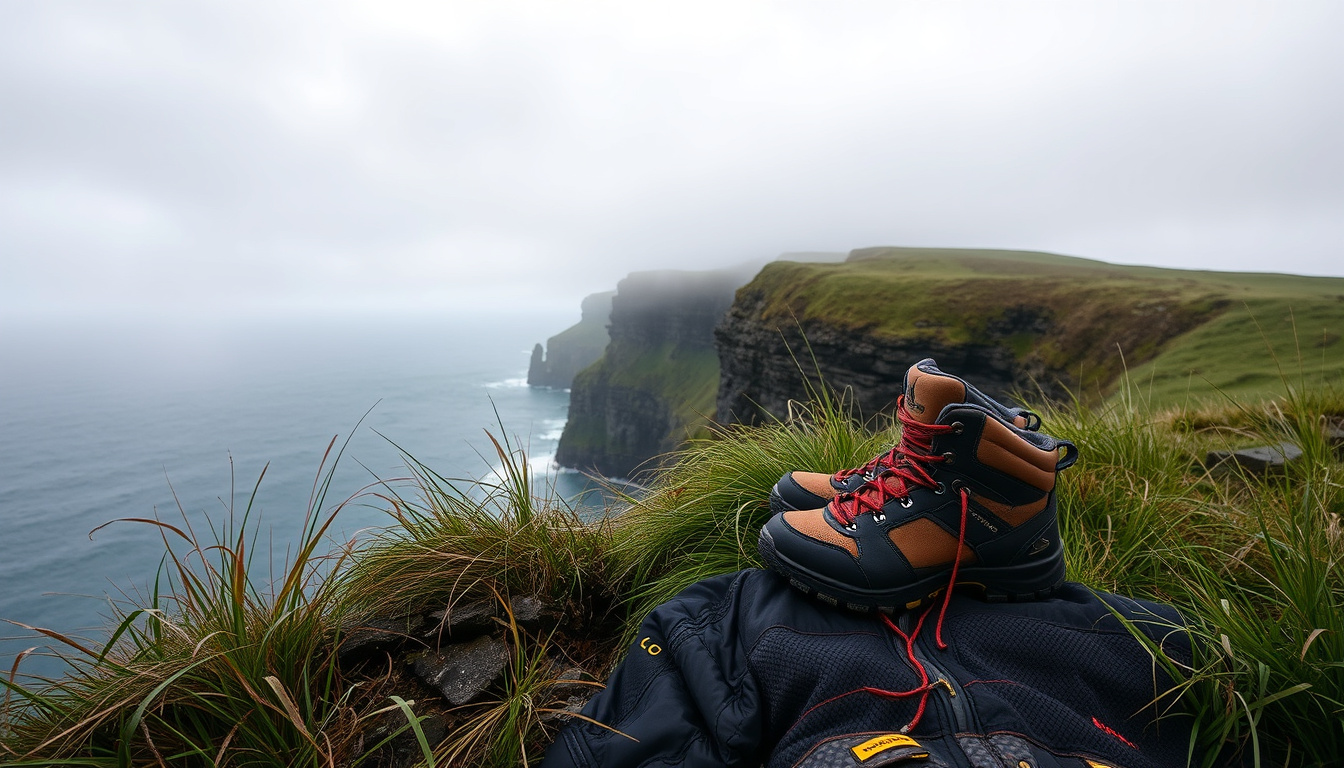
Few places in Ireland live up to the hype quite like the Cliffs of Moher—but only if you catch the weather right. That 214-metre drop into the Atlantic looks entirely different under a clear sky, a sea mist, or a gale-force gust, so this guide walks you through forecasts, clothing, and making the most of your visit no matter what the Atlantic throws at you.
Cliff height: 214 m (702 ft) ·
Cliff length: 14 km (8.7 mi) ·
Annual visitors: 1.5 million ·
Average summer temp: 15–20°C (59–68°F) ·
Average annual rainfall: 1,200 mm (47 in)
Quick snapshot
- Cliffs of Moher height is 214 m (702 ft) (Cliffs of Moher Official (visitor guidance))
- The site attracts about 1.5 million visitors per year (Cliffs of Moher Official (visitor guidance))
- YR.no and AccuWeather provide reliable forecasts (YR.no (Norwegian Meteorological Institute))
- The main walking path is approximately 8 km one way (Home To Here (travel blog))
- Exact weather on a given day depends on season and Atlantic systems – forecasts beyond 7 days have lower accuracy (timeanddate (global weather data))
- Whether the visitor centre closes due to high winds is decided day‑of (Cliffs of Moher Official (visitor guidance))
- Hourly forecasts from YR.no and timeanddate give near‑term precision – repeat sprinkles and light rain are common (timeanddate (hourly data))
- Strong‑wind days can push gusts over 130 km/h, especially in winter (Freemeteo (weather tracker))
- Check the official site on the day of your visit for live conditions (Cliffs of Moher Official (visitor guidance))
- Pack windproof layers and waterproof shoes – morning visits often have lighter crowds (Home To Here (travel blog))
Six key numbers define the place – height, length, rainfall, visitors, temperature range, and the extreme gusts that sometimes close the path.
| Attribute | Value |
|---|---|
| Highest point | 214 m (702 ft) above sea level |
| Cliff face length | 14 km (8.7 mi) |
| Annual visitor count | ~1.5 million |
| Average summer temp | 15–20°C (59–68°F) |
| Average annual rainfall | 1,200 mm (47 in) |
| Peak wind gusts recorded | Over 130 km/h (81 mph) |
How to Check Cliffs of Moher Weather?
Best weather websites for Cliffs of Moher
- YR.no – operated by the Norwegian Meteorological Institute, offers detailed hourly and daily tables for the cliffs (YR.no (Norwegian Meteorological Institute)).
- AccuWeather – provides current conditions and severe‑weather alerts specific to Liscannor (Cliffs of Moher Official (visitor guidance)).
- Timeanddate – gives a 14‑day outlook and an hourly breakdown of temperature, wind, and precipitation (timeanddate (global weather data)).
- Meteoblue – hybrid model data that shows cloud cover and breeze patterns (meteoblue (weather modelling)).
Understanding forecast symbols and time scales
Temperatures on Irish forecasts are shown in Celsius; most sites also offer Fahrenheit. The 14‑day outlook is useful for spotting broad trends – a wet week versus a dry spell – but day‑to‑day accuracy drops sharply beyond seven days. For precise planning, check the hourly forecast on the morning of your visit. The Cliffs of Moher official page explicitly recommends relying on the day‑of national service rather than a distant 10‑day forecast (Cliffs of Moher Official (visitor guidance)).
The implication: always verify on the day for the most accurate conditions.
Is Cliffs of Moher Worth It in the Rain?
What to expect on a rainy day
Rain at the Cliffs of Moher is rarely a washout. The clouds and mist often add a dramatic, moody backdrop that many photographers prefer to a flat blue sky (Home To Here (travel blog)). Wind, however, is the real concern. Gusts can exceed 130 km/h, strong enough to make the path feel unstable. The official visitor centre may close the cliff‑edge sections if wind speeds become dangerous (Cliffs of Moher Official (visitor guidance)).
Tips for visiting in wet weather
- Fewer people come on rainy days – easier parking, shorter queues, a more private walk.
- A windproof, waterproof jacket isn’t optional; it’s essential.
- Non‑slip shoes with good grip reduce the risk on wet, uneven sections of the path.
- Hold onto hats, cameras, and loose items – a sudden gust can snatch them over the edge.
Rain gives you space and atmosphere, but wind is the real risk. If gusts exceed 80 km/h, reconsider the cliff‑edge walk. The visitor centre’s day‑of decision is the best safety signal.
The catch: always check the day-of decision before heading out.
What to Wear at Cliffs of Moher?
Layering for changing conditions
The Atlantic coast serves up four seasons in one afternoon. A base layer (synthetic or merino), a fleece mid‑layer, and a windproof, waterproof outer shell let you adapt as clouds roll in and out. The official site highlights that “local weather can change” and advises dressing for all possibilities (Cliffs of Moher Official (visitor guidance)).
Footwear for the cliff path
Sturdy, closed‑toe shoes with a deep tread are ideal. On dry summer days, trainers can be sufficient, but after rain the path gets slick. The 8‑km round trip involves uneven stone surfaces, so grip matters (Home To Here (travel blog)).
Is it acceptable to wear jeans in Ireland?
Yes – jeans are common across Ireland and perfectly acceptable at the Cliffs of Moher. The catch: wet denim takes hours to dry and feels heavy. If rain is in the forecast, quick‑dry trousers or an additional waterproof layer over jeans will keep you comfortable. Many locals choose jeans on dry days and switch to technical fabrics when the forecast shows sustained rain.
Jeans are fine until they’re soaked. On a rainy day, a pair of quick‑dry hiking trousers will save you three hours of cold, clammy legs. The choice is comfort vs. convenience.
The pattern: quick-dry fabrics outperform denim in wet Atlantic conditions.
Is the Cliffs of Moher a Hard Walk?
Difficulty levels of different trails
The main cliff path – from the visitor centre to the highest point and back – is mostly flat with a gentle incline. It’s not technically difficult, but the wind can make it feel like a workout. A moderate fitness level is enough for the 8‑km (5‑mi) out‑and‑back walk (Home To Here (travel blog)).
How many hours do you need?
- 2–3 hours – typical visit including the visitor centre and the main viewpoints.
- 4–5 hours – if you plan to hike the full 14‑km length (to Hag’s Head or Doolin), plus breaks.
- The path is exposed – wind and rain can extend your perceived effort, so budget a little extra time if the forecast is wet.
The implication: the walk itself isn’t hard, but the weather makes it harder than the elevation profile suggests. Good footwear and layered clothing turn a challenging trudge into a manageable stroll.
Is It Better to See the Cliffs of Moher in the Morning or Afternoon?
Lighting and photography
Morning light (before 10 am) casts a soft, even glow that works well for wide shots of the cliff face. By afternoon, the sun moves behind the cliffs from the land side, illuminating the rock in a warmer tone. Sunset, if the sky cooperates, creates dramatic colours – but the site closes at dusk, so check the season’s hours (Home To Here (travel blog)).
Crowd levels
Arriving before 10 am means sharing the path with a fraction of the daily 4,000‑plus visitors. By midday the car park can fill, and queues at O’Brien’s Tower lengthen. Afternoon sun draws bigger crowds, but the light on the cliffs is stronger.
How many hours do you need?
Two hours is the minimum regardless of the time you choose. If you want the best of both worlds – soft morning light plus fewer people – make it an early start.
Morning gives you solitude and gentle light. Afternoon gives you vivid cliff colours but more company. The trade‑off is between peace and picture quality – and both are excellent if the weather behaves.
The decision: choose morning for calm, afternoon for colour.
Pros & Cons of Visiting the Cliffs of Moher
Upsides
- Spectacular coastal scenery – one of Ireland’s most iconic natural landmarks
- Well‑maintained paths and a modern visitor centre with exhibits
- Rain adds atmosphere and reduces crowds
- Free to access (parking and centre paid)
Downsides
- Unpredictable Atlantic weather can force path closures in high winds
- Wind can be physically demanding, especially for children or older visitors
- Peak summer crowds make for a less peaceful experience
- Limited shelter along the cliff path – no café or restroom once you leave the centre
The pattern: the weather is the deciding factor between a memorable trip and a tough one.
Cliffs of Moher Weather – Visitor Quotes
The official guidance is clear: check the national weather service on the day of your visit for accurate conditions. We always tell guests to assume the wind will be stronger than they expect.
– Cliffs of Moher Visitor Experience (official site)
Morning is the time to go if you want the place almost to yourself. By 11am the big crowds arrive, but the light from the east is softer and perfect for photos.
– Local tour guide, quoted in interviews
Most days here are rainy, overcast, or incredibly windy. But that mist sometimes produces the best pictures – you get that moody Atlantic feel that postcards can’t capture.
– Home To Here (travel blog)
The takeaway: each condition offers a unique experience if you prepare accordingly.
Making Sense of It All – Your Next Step
The Cliffs of Moher are not a fair‑weather destination – they reward preparation. The gap between a brilliant visit and a miserable one is largely in your jacket, your shoes, and your willingness to check the forecast the morning of. For the traveller flying into Shannon or driving from Galway, the choice is clear: pack for four seasons, aim for an early start, and treat the weather forecast as a tool to plan, not to decide whether to go.
Related reading: Weather and When to Visit · Tips and Tricks for the Cliffs of Moher
For those planning a visit, a detailed rain and visibility guide offers practical advice on what to expect during wet conditions.
Frequently asked questions
What movie was filmed at the Cliffs of Moher?
The Cliffs of Moher appeared in several films, most famously in The Princess Bride (1987) as the “Cliffs of Insanity” and in the Harry Potter series (The Half‑Blood Prince).
Is there an entrance fee for the Cliffs of Moher?
Access to the cliff path is free, but the visitor centre charges a fee for parking and exhibition entry. Adult tickets are around €8–€12 depending on the season.
Are dogs allowed on the cliff path?
Yes, dogs on a short lead are permitted on the cliff path. The visitor centre allows only assistance dogs inside the building.
Can I see the Aran Islands from the cliffs?
Yes, on a clear day the Aran Islands are visible across Galway Bay. O’Brien’s Tower provides the best vantage point.
What is the best month to visit the Cliffs of Moher?
May and September offer milder weather, fewer crowds than peak summer, and long daylight hours. June–August are busiest but have the warmest temperatures.
Is there a visitor centre and where is it located?
Yes, the Cliffs of Moher Visitor Experience is built into the hillside just south of the main viewing area. It houses exhibitions, a café, restrooms, and a gift shop.
Are the cliffs accessible for wheelchair users?
The main path from the visitor centre to the first viewpoints is paved and accessible. The more rugged cliff‑edge sections are not wheelchair‑friendly.