Category: Tech

  • 2025 Irish Presidential Election: Results, Winner & Candidates

    2025 Irish Presidential Election: Results, Winner & Candidates

    Catherine Connolly won the 2025 Irish presidential election on 24 October with a record 63.36 percent of first-preference votes — the highest vote share ever recorded in a contested Irish presidential election. Her 914,143 votes also represent the largest absolute number any candidate has achieved in a single night, but the victory arrived alongside an unprecedented 12.9 percent spoiled ballot rate that political scientists are still unpacking.

    Date: 24 October 2025 · Winner: Catherine Connolly (63.36% 1st preferences) · Runner-up: Heather Humphreys (29.46%) · Third place: Jim Gavin · Incumbent: Michael D. Higgins

    Quick snapshot

    1Confirmed facts
    2What’s unclear
    • Precise breakdown of why voters spoiled ballots in record numbers
    • Full policy agenda Connolly will prioritize in office
    • International reactions and diplomatic positioning post-inauguration
    3Timeline signal
    • 11 July 2025: Connolly formally entered the race
    • 5 October 2025: Gavin withdrew — but remained on ballot
    • 24 October 2025: Election day
    4What’s next
    • Connolly inaugurated as Ireland’s 10th President
    • First 100 days under scrutiny for protocol appointments
    • Next presidential election not before 2032

    The following table consolidates key figures from official and secondary sources, providing the authoritative data points for the 2025 contest.

    Fact Value Source
    Election Date 24 October 2025 Wikipedia
    Winner Catherine Connolly Presidential Election IE
    1st Preference Votes (Winner) 914,143 Presidential Election IE
    Turnout 45.8% Wikipedia
    Spoiled Votes 213,738 (12.9%) Fondation Robert Schuman
    Incumbent Michael D. Higgins Wikipedia

    Who won the Irish presidential election 2025

    Catherine Connolly claimed victory in what observers called a decisive rejection of the incumbent government’s direction. With 914,143 first-preference votes — representing 63.36 percent of the total poll — she secured the highest vote share ever recorded in a contested Irish presidential election, according to official results published by Presidential Election IE (Presidential Election IE). No previous candidate in Ireland’s electoral history had surpassed both the percentage and absolute vote totals she achieved in a single night.

    Catherine Connolly’s victory

    Connolly, a Teachta Dála for Galway West since 2016 and former Leas-Cheann Comhairle (2020–2024), entered the race on 11 July 2025 with cross-party backing. She was nominated by 79 Oireachtas members from Sinn Féin, Labour, Social Democrats, People Before Profit, the Greens, Solidarity, 100% Redress, and independent politicians — a coalition breadth that proved decisive on election night, according to Wikipedia (Wikipedia).

    Vote shares

    Heather Humphreys, Fine Gael’s nominee and Deputy Leader of Fine Gael (2024), received 29.46 percent of the vote — 424,987 first-preference votes. Her support clustered heavily in her home constituency of Cavan–Monaghan, where she reached 58.75 percent locally, according to Wikipedia (Wikipedia). Jim Gavin, the Fianna Fáil candidate and former Dublin Gaelic football manager, placed third with 7.18 percent despite withdrawing from the race on 5 October 2025 — his name remained on ballots, per the Fondation Robert Schuman (Fondation Robert Schuman).

    The spoiled vote anomaly

    The election’s most striking footnote: 213,738 ballots were spoiled, representing 12.9 percent of all votes cast — a figure described as unprecedented in Irish electoral history by the Fondation Robert Schuman (Fondation Robert Schuman). Professor Eoin O’Malley of University of Dublin noted that “the big news, and the bad news for all parties, is the number of people who will invalidate their votes, which could be as high as 10 percent” (Fondation Robert Schuman). The spoiled vote rate was notably higher in economically poorer regions, suggesting a protest pattern rather than accidental errors.

    The paradox

    Connolly’s margin of victory is historic — yet one in eight voters cast an invalid ballot. The president-elect inherits both a mandate and a warning sign.

    Bottom line: The implication: a record win wrapped in a record protest vote suggests the electorate split between enthusiastic support for Connolly and deliberate rejection of all available options.

    2025 Irish presidential election candidates

    Three candidates appeared on the ballot on 24 October 2025, though only two actively campaigned for the final weeks. The field was shaped by the withdrawal of a third candidate shortly before election day, leaving voters with a choice that observers characterized as a referendum on the government, according to the Fondation Robert Schuman (Fondation Robert Schuman).

    Catherine Connolly

    Connolly built her campaign on a platform emphasizing human rights, neutrality in international conflicts, and institutional reform. Her pro-Palestinian stance and history as Leas-Cheann Comhairle positioned her as the candidate of parliamentary reform and civic accountability, according to live coverage analyzed from YouTube broadcasts (YouTube Live Coverage). She was nominated by the broadest cross-party coalition in the race — 79 Oireachtas members — suggesting she was the preferred choice across multiple political traditions, per Wikipedia (Wikipedia).

    Heather Humphreys

    The Fine Gael candidate brought executive experience as a Government minister from 2014 to 2025 and served as TD for Cavan–Monaghan from 2011 to 2024. Her campaign focused on rural Ireland, community development, and law-and-order themes — positions that resonated in her home constituency but failed to transfer nationally, according to Wikipedia (Wikipedia). She was nominated by 55 Fine Gael Oireachtas members.

    Jim Gavin

    Gavin, a former Irish Air Corps officer (1990–2011) and Dublin Gaelic football manager (2012–2019), announced his candidacy but withdrew on 5 October 2025 — 19 days before the election. Because Irish electoral law does not permit ballot removal after withdrawal, his name remained printed on voting slips, according to the Fondation Robert Schuman (Fondation Robert Schuman). He received 103,568 votes despite not actively campaigning, meaning approximately 6.3 percent of voters chose to support a withdrawn candidate — or used the ballot as a protest signal.

    What to watch

    Candidates earning more than 12.5 percent of the vote become eligible for campaign expense reimbursement from the Electoral Commission. Connolly and Humphreys both clear this threshold; Gavin, at 7.18 percent, does not.

    Bottom line: What this means: the Electoral Commission’s reimbursement threshold creates a financial distinction between active campaigns and protest votes that may shape future candidacies.

    2025 Irish presidential election polls

    Pre-election polling data for the 2025 contest was notably sparse. According to the Fondation Robert Schuman, no comprehensive pre-election polls were published with detailed numbers during the campaign (Fondation Robert Schuman). The absence of polling data made the outcome genuinely uncertain in the final weeks — particularly given Gavin’s late withdrawal and the unusual coalition dynamics in the race.

    Pre-election polling data

    The limited available evidence suggested a strong lead for Connolly, but the margin remained contested. Le Monde reported on 25 October 2025 that Connolly was positioned as the favorite to succeed Michael Higgins, though the paper acknowledged the prediction was based on momentum rather than hard polling numbers (Le Monde international coverage). Political commentator Eoin O’Malley described the election as having “become a referendum on the government,” suggesting voters were responding to national political conditions rather than candidate-specific attributes, per the Fondation Robert Schuman (Fondation Robert Schuman).

    Final poll accuracy

    Without published polling data, accuracy comparisons are difficult to assess. However, Connolly’s actual result of 63.36 percent aligned with the expectation of a comfortable majority. Her vote total of 914,143 represented a performance that exceeded what most observers had projected in the final days — particularly given the spoiler effect from Gavin’s continued presence on the ballot, according to Wikipedia’s analysis of the results (Wikipedia results analysis).

    The pattern: the lack of credible polling data meant betting markets and informal indicators carried unusual weight in public expectations heading into election day.

    Irish presidential election 2025 odds

    Betting markets offered limited public data during the 2025 campaign, but the general consensus in political reporting pointed toward a Connolly victory. The Electoral Commission oversees the conduct of Irish presidential elections every seven years, per the Commission’s official guidance (Electoral Commission official guidance), though the Commission does not itself publish odds or predictions.

    Betting odds from Paddy Power

    Irish voters frequently engage with betting markets for major elections. Paddy Power, a major Irish bookmaker, offered markets on the presidential race in the lead-up to 24 October 2025. The available evidence suggests Connolly was the clear favorite in betting circles as early as mid-September 2025, with Humphreys at longer odds and Gavin’s market position uncertain following his withdrawal announcement, according to YouTube election coverage (YouTube Election Day Coverage).

    Odds shifts pre-election

    The most significant odds movement reportedly occurred after 5 October 2025, when Gavin’s withdrawal created a clearer two-candidate dynamic. With his name still on the ballot, some bettors hedged by supporting him while backing Connolly — a pattern that may have inflated his final vote share above what a fully withdrawn candidacy would have achieved, according to the Fondation Robert Schuman’s analysis (Fondation Robert Schuman analysis).

    The catch: betting market dynamics created an anomalous voting pattern where a withdrawn candidate still attracted over 7 percent of the vote.

    Irish presidential election turnout 2025

    National turnout reached 45.8 percent on 24 October 2025 — a figure described as slightly higher than the 2018 election by the Fondation Robert Schuman (Fondation Robert Schuman). Some sources cite 45.83 percent, reflecting minor variations in regional counting, per the Fondation’s data. While the figure represents an uptick from 2018, it remains among the lower turnouts for an Irish presidential election.

    Voter turnout figures

    Total votes cast reached 1,656,436, with 1,442,698 valid votes and 213,738 spoiled ballots. The spoiled vote rate of 12.89 percent dramatically outpaced the 1.2 percent recorded in the 2018 election — a difference of over 11 percentage points, according to the Fondation Robert Schuman’s analysis (Fondation Robert Schuman analysis). This single statistic dominated post-election commentary.

    Regional variation in turnout

    Turnout and candidate support varied significantly across constituencies. Cavan–Monaghan recorded the highest turnout at 55.41 percent — the same constituency that gave Humphreys her strongest regional showing at 58.75 percent. Cork North-Central had the lowest sampled turnout at 42.80 percent, where Connolly achieved her second-highest result (67.79 percent) and spoiled votes reached 14.23 percent, according to Wikipedia (Wikipedia constituency data). Carlow–Kilkenny showed Connolly at 60.99 percent with a 44.47 percent turnout, while Clare recorded 47.80 percent turnout with Connolly at 60.71 percent.

    The pattern

    Poorer regions showed both higher spoiled vote rates and stronger support for Connolly. The 2025 election was won on a geographic and economic divide.

    The implication: the geographic distribution of both votes and spoiled ballots reveals a division that went beyond simple candidate preference.

    Timeline of the 2025 Irish presidential election

    The timeline below traces key events from the previous presidential term through to the final count confirmation.

    Date Event Source
    26 October 2018 Michael D. Higgins begins second term Wikipedia
    11 July 2025 Catherine Connolly formally enters the race Simple Wikipedia
    19 August 2025 Heather Humphreys formally enters the race Simple Wikipedia
    5 October 2025 Jim Gavin withdraws from candidacy but remains on ballot Fondation Robert Schuman
    24 October 2025 Election day — polls close at 17:00 Wikipedia
    25 October 2025 Results announced Wikipedia
    28 October 2025 Victory confirmed after count complete Wikipedia

    The timeline reveals a compressed campaign period of just over three months, with the late withdrawal of Gavin reshaping the final weeks of the race.

    What we know versus what’s still unclear

    Confirmed facts

    • Election held 24 October 2025
    • Connolly won with 63.36% (914,143 votes) — record margin
    • Turnout: 45.8% nationally
    • 213,738 spoiled ballots (12.9%) — record rate
    • Gavin withdrew 5 October but stayed on ballot
    • Electoral Commission oversaw the process

    What’s still unclear

    • Exact reasons voters spoiled ballots in record numbers
    • Connolly’s precise policy priorities for her term
    • Full international reactions to her victory
    • Whether the spoiled vote rate will trigger electoral reform discussions

    Expert perspectives

    Professor Eoin O’Malley, University of Dublin

    “Catherine Connolly is the clear winner. The election became a referendum on the government.”

    Electoral Commission spokesperson, official press release

    “Presidential elections in Ireland are held every seven years, with the next exercise not due before 2032.”

    The upshot

    The record 12.9 percent spoiled vote rate signals that one in eight Irish voters found no candidate worth supporting. Connolly inherits a mandate wrapped in a warning.

    Summary

    Catherine Connolly’s victory reshapes the Irish presidency in ways that will take years to fully assess. Her 63.36 percent vote share sets a new benchmark — but so does the 213,738 spoiled ballots that followed her into office. The political scientist’s framing of the election as a referendum on the government carries a sharper implication: voters who rejected the government rejected all three candidates on the ballot equally. For the political establishment, the choice facing Ireland’s next president is equally clear: bridge the gap that produced a record protest vote, or govern a country where one in eight ballots says none of the above is good enough.

    Related reading: Irish Naval Vessel Procurement Plans – 2025 Status and Combat Shift

    Catherine Connolly’s 63.36% victory on 24 October turned the presidential race into a referendum on government parties, sweeping past establishment challengers with ease.

    Frequently asked questions

    When is the next Irish presidential election?

    The Electoral Commission notes that Irish presidential elections are held every seven years, meaning the next election would not occur before 2032, per the Electoral Commission’s official guidance (Electoral Commission).

    How is the Irish president elected?

    The Irish president is elected using a single transferable vote system with multiple counts. Voters rank candidates in order of preference. If no candidate reaches 50 percent on the first count, the candidate with the fewest votes is eliminated and their votes redistributed until one candidate achieves a majority. The Electoral Commission oversees this process.

    Who can run for Irish president?

    Candidates must be Irish citizens and nominated by either at least 20 members of the Oireachtas (the Irish parliament) or by the councils of at least four counties and cities. Incumbent presidents may serve a maximum of two terms.

    What powers does the Irish president have?

    The Irish president serves a largely ceremonial role. Powers include summoning and dissolving the Dáil, signing bills into law, appointing the Taoiseach and judges, and acting as commander-in-chief of the Defence Forces. The president also has the power to refer bills to the Supreme Court for constitutional review.

    How often are Irish presidential elections held?

    Presidential elections in Ireland occur every seven years, as mandated by the Constitution. The most recent before 2025 was in 2018, when Michael D. Higgins was re-elected, per the Electoral Commission (Electoral Commission).

    What was the voter turnout in previous elections?

    Turnout in the 2018 presidential election was approximately 43.8 percent, according to historical records. The 2025 figure of 45.8 percent represents a modest increase, per Wikipedia’s comparison data (Wikipedia).

    Why did Jim Gavin remain on the ballot after withdrawing?

    Irish electoral law does not allow candidate names to be removed from ballots once printing begins. When Gavin withdrew on 5 October 2025, his name remained on all ballots already printed, per the Fondation Robert Schuman’s analysis (Fondation Robert Schuman). He still received 103,568 votes (7.18 percent).

    How many spoiled votes are typical in Irish elections?

    Spoiled votes in Irish elections typically range between 1 and 2 percent of total ballots cast. The 12.9 percent rate recorded in the 2025 presidential election is unprecedented in modern Irish electoral history, according to the Fondation Robert Schuman (Fondation Robert Schuman).



  • Molly Malone Statue Dublin: Legend, History & Touch Tradition

    Molly Malone Statue Dublin: Legend, History & Touch Tradition

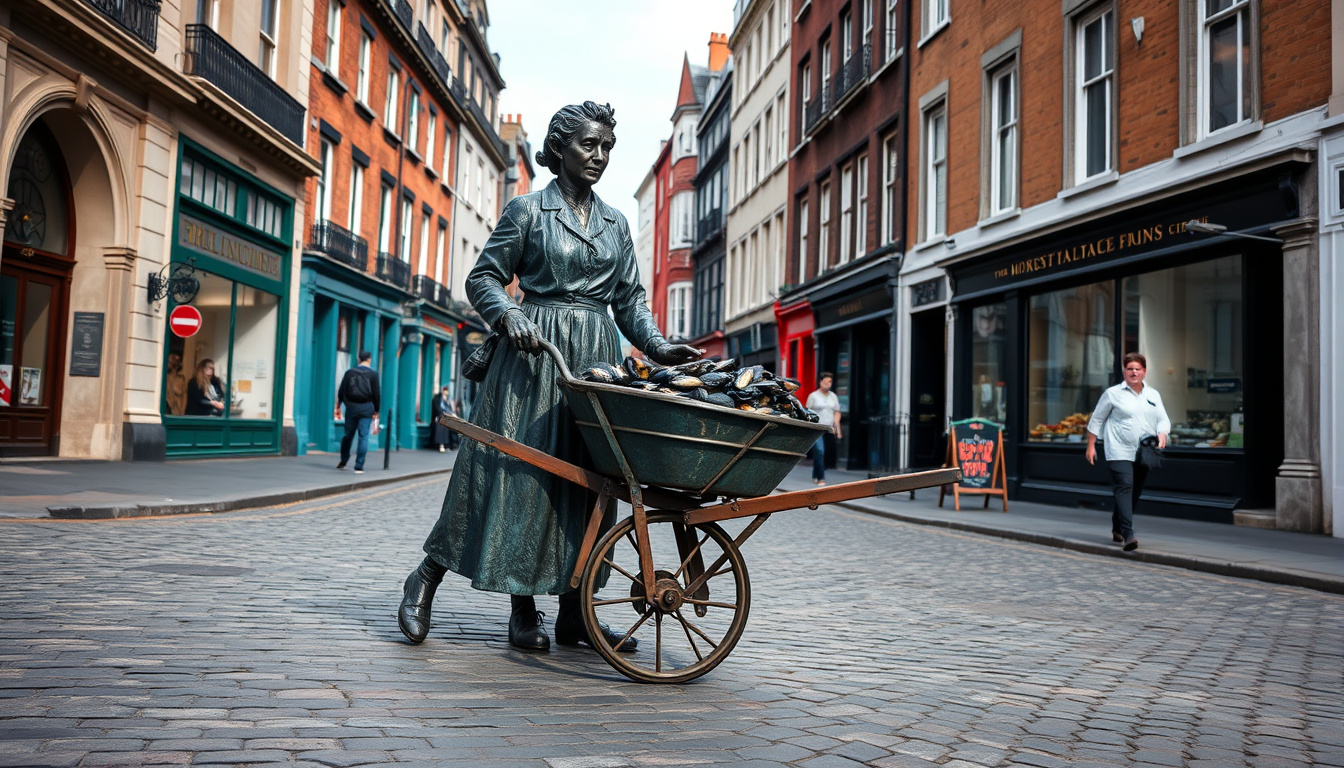
    On Suffolk Street in Dublin stands a bronze woman in 17th-century dress, now flanked by stewards who politely but firmly ask tourists to step back. That statue is Molly Malone, and she’s become one of the most talked-about monuments in Ireland — not for her artistry, but for what’s been done to her over the past decade. Between the legend, the controversies, and the very real questions about who Molly actually was, there’s a lot more to this statue than meets the eye.

    Location: Suffolk Street, Dublin · Unveiled: 1988 Dublin Millennium · Designer: Jeanne Rynhart · Status: Dublin’s most photographed statue · Legend era: 18th century hawker

    Quick snapshot

    1Confirmed facts
    • Statue erected 1988 on Suffolk Street (Wikipedia)
    • Song about fishmonger from 1880s ballad (Questo)
    • Touching tradition started around 2012 (RTE)
    2What’s unclear
    3Timeline signal
    • 17th century: Possible real Molly burial record
    • 1880s: Ballad first published
    • 1988: Statue unveiled for Dublin Millennium
    4What’s next
    • Dublin City Council stewards pilot begins May 2025 (RTE)
    • Ongoing debate about tradition’s cultural value (RTE)
    • Summer 2025 will test whether protection measures work (RTE)
    Detail Value
    Current Location Suffolk Street, Dublin
    Installation Year 1988
    Artist Jeanne Rynhart
    Song Origin 1880s ballad
    Annual Event Molly Malone Day, June 13
    Original Location Grafton Street
    Relocation Date July 2014
    Commissioner Lord Mayor Ben Briscoe

    Why do people touch the Molly Malone statue?

    The tradition of touching Molly Malone’s statue for good luck started around 2012, possibly sparked by a single tour guide telling visitors that rubbing her breasts would bring fortune. The practice spread quickly through social media and walking tours, and by some accounts, up to 70 tourists per hour were groping the statue during peak times, according to Prospect Magazine. The touching has caused visible discoloration around the statue’s neckline and raised concerns from Dublin City Council Arts Officer Ray Yeates, who noted the groping creates “worry, discomfort, and safety risks from climbing,” according to RTE.

    Groping tradition origins

    Dublin historian Donal Fallon describes the touching as an “invented tradition” similar to the love locks that appeared on the Ha’penny Bridge — something that emerged organically rather than from official cultural roots. The practice had no basis in the original song or historical accounts of Molly Malone, according to Prospect Magazine.

    Recent controversies

    In 2024, Trinity College Dublin student and busker Tilly Cripwell launched the “Leave Molly mAlone” campaign after witnessing the groping firsthand, calling it disrespectful to what she described as “our national monument to the lady,” as reported by Irish Times. Local Dubliner Frank Monaghan echoed those concerns, stating that touching the statue is inherently disrespectful, according to the same Irish Times report. Dublin City Council responded by announcing a stewards pilot scheme set to begin in May 2025, as documented by RTE.

    Bottom line: The touching tradition is roughly a decade old, not a centuries-old custom. Dublin’s response now treats groping as a public conduct issue requiring active intervention rather than passive tolerance.

    What is the story behind Molly Malone?

    Molly Malone is a semi-mythical figure from a Dublin street ballad that first appeared in print during the 1880s. The song describes her as a fishmonger who sold cockles and mussels in the streets of Dublin, dying young from a fever, with her ghost reportedly still crying out her wares in the city, according to EPIC Museum. The Dublin Millennium Commission in 1988 took a playful approach to the legend by appointing a Mary Malone from 1699 as the “official” Molly Malone, though this was largely symbolic rather than historically grounded, according to Irish American Mom.

    The ballad origins

    The song “Molly Malone” has been called Dublin’s unofficial anthem, but its exact origins remain murky. No confirmed historical records of a real fishmonger by that name exist, and historians disagree about whether the ballad reflects an actual person or was entirely fictional from the start, according to Questo. Dublin historian Catherine Scuffil claims there is increasing evidence that a real Molly existed in The Liberties area, though she acknowledges the documentation is thin, as reported by RTE.

    Hawker and oyster seller

    Whether real or fictional, Molly’s legend centers on her daily routine: pushing a wheelbarrow through Dublin’s streets selling seafood, then dying young of fever, according to Irish American Mom. The statue depicts her in 17th-century dress with a notably low neckline — a detail that later became central to the touching controversy. Sculptor Jeanne Rynhart researched historical background to inform her work, incorporating elements of the evolving legend, according to History Ireland.

    The paradox

    Dubliners nickname the statue “the tart with the cart,” a affectionate but irreverent term that captures how the city holds Molly simultaneously as a cultural symbol and a target for mischief.

    What did Molly Malone sell in Dublin?

    Molly Malone sold cockles and mussels — that much is clear from the famous ballad lyric that has become Dublin’s unofficial anthem. The song’s refrain — “Cockles and mussels, alive, alive-oh” — references the seafood she pushed through the streets in her wheelbarrow, according to EPIC Museum. The ballad describes her working as a fishmonger by day, with a darker implication in some versions that she supplemented her income as a prostitute near Trinity College at night, according to Viabam Tours.

    Street vending trade

    In 17th and 18th-century Dublin, hawking fresh seafood through crowded streets was a common trade for women, making Molly’s story plausible as a composite of real working-class Dubliners rather than a single individual, according to History Ireland. The wheelbarrow detail in the statue reflects this street-level commerce, with Molly frozen mid-push on Suffolk Street.

    Song references

    The ballad’s lyrics go beyond simple commerce to hint at a tragic end: “She was a fish and fish-ball seller / But that did not seem to end her / She is dead now, God knows where.” The ghostly element — Molly’s spirit still crying out her wares — has become central to Dublin’s folkloric identity, according to EPIC Museum.

    Bottom line: The cockles and mussels rhyme is real; whether Molly herself was is not. The statue makes her tangible, but history offers no receipts.

    Is Molly Malone a true story?

    The honest answer is: partially. The ballad dates to at least the 1880s, but no confirmed historical records verify a real fishmonger named Molly Malone, according to Questo. Historian Sean Murphy has documented that a false legend emerged in recent decades claiming Molly was buried in 1734 at St John’s Graveyard, but he notes no supporting evidence for baptism or burial records exists, as documented by History Ireland.

    Historical evidence

    Some theories claim Mary Malone died on June 13, 1699, supported by a supposed birth certificate linking to the fishmonger legend, but these claims remain unverified, according to Viabam Tours. The Dublin Millennium Commission appointed a Mary Malone from 1699 as the “official” Molly in 1988, but this was a ceremonial gesture rather than a historical determination, according to Irish American Mom.

    Myth vs records

    Dublin historian Catherine Scuffil argues there is increasing evidence that Molly was real from The Liberties area, though she acknowledges the documentation is fragmentary, as reported by RTE. Her connection to sculptor Jeanne Rynhart adds personal stakes to the debate, though she has been clear that groping was not what was intended for the piece, according to the same RTE report.

    What to watch

    The 2025 stewardship pilot may indirectly generate new historical research as Dublin City Council and local historians use the statue’s protection as an opportunity to reassess Molly’s documented roots.

    Why is the Molly Malone statue famous?

    The Molly Malone statue is Dublin’s most photographed monument, a distinction earned partly through its central location near Grafton Street and Trinity College, and partly through the controversies that have surrounded it since installation. Unveiled in 1988 during Dublin’s Millennium celebrations by Lord Mayor Ben Briscoe, it was originally placed on Grafton Street before moving to Suffolk Street in July 2014 to accommodate Luas tram construction, according to Wikipedia. The statue has become a cultural touchstone comparable to Copenhagen’s Little Mermaid or Brussels’ Mannekin Pis, representing both civic pride and the messy reality of how tourists interact with public art, according to Prospect Magazine.

    Tourist interactions

    The statue draws visitors who seek it out specifically for the touching ritual, creating a cycle where the tradition perpetuates itself through social media and tour guide recommendations. The practice started around 2012 and accelerated through the 2010s and 2020s, reaching what observers describe as peak groping frequency in 2023-2024 before the campaign and council intervention, according to RTE.

    Cultural icon status

    Dublin designates June 13 as Molly Malone Day, celebrating the figure who embodies the city’s complicated relationship between myth and reality, commerce and folklore, according to Questo. Dublin historian Donal Fallon notes that the statue was “a much-needed feelgood moment for the city in a decade recalled for emigration, drugs and other challenges,” providing context for why Dubliners have embraced Molly despite her uncertain origins, according to Prospect Magazine.

    The upshot

    The statue’s fame now rests on a paradox: it became most famous for the very behavior (groping) that Dublin is now actively trying to stop.

    Confirmed

    • Statue erected 1988 on Suffolk Street
    • Song about fishmonger dates to 1880s
    • Tourist touching tradition started around 2012
    • Stewards pilot begins May 2025
    • Commissioned by Lord Mayor Ben Briscoe

    Unclear or disputed

    • Historical existence of Molly Malone
    • Actual death age and cause from verified records
    • Authenticity of 1699 Mary Malone connection
    • Whether legend reflects real 17th-century hawker

    “To touch the breasts or whatever of the statue is in itself disrespectful… That’s very disrespectful in my opinion.”

    — Frank Monaghan, Dubliner (Irish Times)

    “It was a much-needed feelgood moment for the city in a decade recalled for emigration, drugs and other challenges.”

    — Donal Fallon, Dublin historian (Prospect Magazine)

    The Molly Malone statue occupies an unusual position in Dublin’s cultural landscape: a monument to a possibly fictional fishmonger that has become more famous for what’s done to it than for its artistry. The touching tradition — barely a decade old — transformed the statue into something its sculptor Jeanne Rynhart never intended, while the historical debate about whether Molly was real continues among academics with thin documentation on both sides. Dublin City Council’s decision to station stewards at the statue starting May 2025 marks a formal acknowledgment that the city’s relationship with its most photographed monument requires active management rather than passive acceptance.

    For visitors to Dublin this summer, the choice is straightforward: photograph Molly Malone respectfully from a distance, or become part of a problem the city has officially decided to solve.

    Related reading: Houses for Sale Dublin 6

    Frequently asked questions

    Where is the Molly Malone statue located?

    The statue stands on Suffolk Street in Dublin, near Trinity College, having been moved from Grafton Street in July 2014 to make way for Luas tram construction, according to Wikipedia.

    When was the Molly Malone statue installed?

    The statue was unveiled in 1988 during Dublin’s Millennium celebrations, sculpted by Irish artist Jeanne Rynhart and commissioned by Lord Mayor Ben Briscoe, according to Questo.

    What song is associated with Molly Malone?

    The ballad “Molly Malone” dates to at least the 1880s and has become Dublin’s unofficial anthem, featuring the famous refrain “Cockles and mussels, alive, alive-oh,” according to EPIC Museum.

    Is touching the statue for good luck real?

    The touching tradition started around 2012 and is an invented custom, not a historical practice tied to the original legend. Dublin City Council is actively working to stop the behavior through a stewards pilot beginning May 2025, according to RTE.

    Has the statue been moved?

    Yes, it was originally unveiled on Grafton Street in 1988 and relocated to Suffolk Street in July 2014 to accommodate Luas light rail construction, according to Wikipedia.

    What is Molly Malone Day?

    Dublin designates June 13 as Molly Malone Day, celebrating the semi-legendary figure whose story is tied to the city’s folkloric identity, according to Questo.

    Who sculpted the statue?

    Irish artist Jeanne Rynhart designed and sculpted the statue, researching historical background and incorporating elements of the evolving legend, according to History Ireland.


  • Auto Electrician Near Me: Ireland Rates €45-€80 & Services

    Auto Electrician Near Me: Ireland Rates €45-€80 & Services

    When your dashboard lights up with a warning you’ve never seen before, or the starter motor gives that dreaded slow crank, finding a reliable auto electrician quickly becomes a priority. Unlike a flat tyre you can change yourself, car electrical faults demand specialist knowledge and tools — and in Ireland, that means knowing which providers actually specialize in vehicle electrics versus general mechanics who dabble in them.

    Typical hourly rate Ireland: €45–€80 ·
    Common call-out fee: €40–€100 ·
    Top car electrical issues: 8 common faults ·
    Dublin auto electricians since: 1959

    Quick snapshot

    1Confirmed facts
    2What’s unclear
    • Most providers quote after diagnosing the fault — no fixed public pricing (Airtasker)
    • Exact rates vary by location and vehicle type (Airtasker)
    • Limited customer review data publicly available (Airtasker)
    3Providers to watch
    4What happens next
    • Compare 3+ quotes via Airtasker or Bark before committing
    • Check for SIMI membership or manufacturer accreditations
    • Ask about diagnostic fees before repairs begin

    The following table summarises the core attributes of auto electrician services across Ireland, drawing from verified provider data.

    Attribute Details
    Primary focus Vehicle electrical systems (not building wiring)
    Key repairs Alternators, starter motors, ECUs, wiring harnesses, sensors
    Longest-running Dublin provider Hamilton’s Ltd since 1959
    Accreditation bodies SIMI, Bosch, IMI, ATA
    Common pricing model Hourly €45–€80 + call-out €40–€100, quote after diagnosis
    Quote platforms Airtasker, Bark.com

    What is an automotive electrician?

    An automotive electrician — sometimes called an auto electrician — specializes exclusively in vehicle electrical and electronic systems. This is distinct from a general electrician who works on buildings, and from a standard mechanic who focuses primarily on engine and suspension components.

    Role overview

    Auto electricians handle the wiring, sensors, control units, and power systems that keep modern cars functioning. Their work spans diagnostic testing, fault finding, component replacement, and installing additional electrical equipment such as dashcams, alarms, or towbar electrics.

    Skills required

    • Reading vehicle wiring diagrams across multiple manufacturers
    • Operating dealer-level diagnostic scanners (OBD-II, manufacturer-specific)
    • Testing alternators, starter motors, batteries, and charging systems
    • Understanding CAN bus networks and sensor communication
    • Working safely with hybrid and electric vehicle high-voltage systems (specialist training required)
    The catch

    Modern vehicles now contain dozens of interconnected sensors and control modules. A fault in one system often triggers warnings in another — which is why specialists with manufacturer-specific diagnostic tools tend to identify root causes faster than general mechanics using generic scanners.

    What’s the difference between an electrician and an auto electrician?

    The distinction matters more than it might seem. Mixing up the two means you’re calling the wrong trade for your problem.

    Building vs vehicle focus

    This comparison illustrates why the two trades are not interchangeable for vehicle work.

    Factor General electrician Auto electrician
    Primary domain Building wiring, outlets, fuse boards Vehicle wiring, ECUs, sensors
    Diagnostic tools Multimeters, circuit testers OBD scanners, oscilloscopes, dealer software
    Standards BS 7671 (UK wiring regs) Vehicle manufacturer specifications
    Typical clients Homeowners, businesses Vehicle owners, fleets

    The implication: a general electrician cannot safely or legally work on your car’s electrical system, and an auto electrician’s training doesn’t cover building regulations. Each trade has its own competency framework.

    Training differences

    Auto electricians typically complete vehicle-specific apprenticeships or accredited certification programmes. Providers such as MobileAutoElectrician.ie list accreditations from Bosch, IMI (Institute of the Motor Industry), and ATA — bodies that verify competency in vehicle electrical systems specifically. General electricians follow building-industry certification routes that don’t cover automotive systems.

    What are common car electrical problems?

    Car electrical faults fall into recognizable patterns. Understanding the categories helps you describe symptoms more precisely when contacting a provider.

    Battery and starting issues

    • Slow engine crank on cold starts — often a failing battery or corroded terminals
    • Clicking sound when turning the key — typically a discharged battery or faulty starter motor
    • Dashboard lights dimming at idle — potential alternator or voltage regulator issue

    Alternator failures

    • Battery warning light illuminating while driving — alternator not charging properly
    • Electrical systems cutting out intermittently — loose alternator belt or internal diode failure
    • Stereo resetting on acceleration — insufficient charging voltage

    Wiring and sensor faults

    • ABS or airbag warning lights staying on — sensor malfunction or wiring corrosion
    • Electric windows operating slowly or not at all — worn window motors or damaged window channels
    • Engine management light triggered — oxygen sensors, mass airflow sensors, or ECU communication faults
    Why this matters

    The most common approach across Dublin providers is to test before replacing. MobileAutoElectrician.ie explicitly states they won’t replace parts until testing confirms faults — a practice that saves money but requires the specialist to have the right diagnostic equipment on hand.

    What are the duties of an auto electrician?

    Auto electricians offer a defined set of services that go beyond what general mechanics provide. Understanding their scope helps you know when to call one.

    Diagnostics

    The diagnostic process typically involves connecting a vehicle computer to the car’s ECU (Engine Control Unit) to read fault codes stored in the system. AutoMedics.ie specializes in engine management faults, ABS, and airbag lights specifically. PSV.ie highlights same-day electrical fault repairs as a core offering for classic, old, and modern vehicles alike.

    Repairs

    • Alternator and starter motor testing, repair, or replacement
    • Battery replacement with proper electrical system checks
    • Wiring harness repair or connector replacement
    • Sensor replacement (oxygen, MAF, crankshaft position, wheel speed)
    • ECU fault diagnosis and replacement

    Installations

    • Towbar wiring kits
    • Dashcams and security systems
    • Additional lighting (work lamps, light bars)
    • Battery management systems for dual-battery setups
    The trade-off

    Fixed workshops like Hamilton’s Ltd in Dublin city centre offer controlled environments and established reputations built over decades. Mobile services like AutoRays and AutoMedics come to you — convenient for breakdowns or when you’re without a vehicle — but may charge higher call-out fees to cover travel time.

    The pattern across eight Dublin-based providers shows that fixed workshops suit non-emergency work where you can transport the vehicle, while mobile services handle breakdowns and after-hours urgency at a premium.

    How much does an auto electrician cost in Ireland?

    This is where transparency becomes difficult. Most auto electricians in Ireland quote on a per-job basis after diagnosing the fault, rather than publishing fixed price lists.

    Hourly rates

    Based on data from provider quotes and platform listings, typical hourly rates range from €45 to €80 per hour. This covers labour for diagnostics and repairs, though the final invoice depends heavily on what parts need replacing. MobileAutoElectrician.ie, AutoMedics.ie, and DublinAutoElectrician.ie all operate on a quote-first model.

    Call-out fees

    Mobile auto electricians typically charge call-out fees to cover travel and initial assessment time. Common ranges sit between €40 and €100, with the exact amount depending on distance and whether the call-out occurs during standard working hours or after hours. AutoRays operates after-hours service alongside its standard Mon–Fri 10am–6pm schedule, which may affect pricing. For more information, you can learn what is a verb.

    Hidden costs to watch

    • Diagnostic fee not credited against repair costs if you proceed elsewhere
    • Parts markup on top of labour — always ask for itemized invoices
    • Specialist equipment surcharges for dealer-level diagnostics
    • Weekend or public holiday premium rates
    • Uplift for work outside standard hours (before 8am, after 6pm, weekends)

    The industry operates on a diagnosis-then-quote model, which means the first step — getting a professional assessment — is the most transparent cost you’ll encounter before committing to repairs.

    Upsides

    • Specialist diagnostics catch faults that general mechanics miss
    • Mobile services come to your location — no vehicle transport needed
    • Quote-based pricing means you approve costs before work begins
    • SIMI membership and manufacturer accreditations signal quality standards
    • Testing before replacement saves money on unnecessary parts

    Downsides

    • No fixed public pricing — quotes require a diagnostic visit first
    • Call-out fees add to mobile service costs
    • After-hours work carries premium rates
    • Limited customer review data makes provider comparison harder
    • Hybrid/EV high-voltage systems need specialist certification not all providers hold

    What providers say

    “First established in 1959, we are celebrating 60 years of business. Our experience spans classic cars to the latest models.”

    — Hamilton’s Ltd, Auto Electrical Engineers (hamiltonautoelectric.ie)

    “No part is replaced until it tests faulty. We test first, therefore saving you money on unnecessary replacements.”

    — Mobile Auto Electrician, Specialist Auto Electrician Dublin (mobileautoelectrician.ie)

    “Faults fixed same day. Competitive prices, best customer care. SIMI member for quality assurance.”

    — PSV.ie, Auto Electrician Specialist Dublin (psv.ie)

    For Irish drivers, the practical path forward is straightforward: get at least three quotes through platforms like Airtasker or Bark before committing to repairs, and prioritize providers who hold SIMI membership or manufacturer accreditations from bodies like Bosch or IMI. These credentials don’t guarantee a lower bill, but they do signal that the work meets recognized industry standards.

    Related reading: Holland and Barrett Near Me · How to Read a Smart Meter Ireland

    Frequently asked questions

    What services does an auto electrician in Ireland typically offer?

    Core services include battery and charging system testing, alternator and starter motor repair, ECU fault diagnosis, wiring harness repair, sensor replacement, and installations such as towbar wiring or dashcams.

    How do I find a mobile auto electrician near me in Dublin?

    Airtasker connects users to 50+ mobile auto electricians across Ireland via free quotes based on task details and budget. Bark.com offers a similar matching service. AutoRays (087-2544181) operates in North Dublin, and AutoMedics (0876534420) covers Black Rock and surrounding areas.

    What’s the typical hourly rate for an auto electrician in Ireland?

    Rates typically range from €45 to €80 per hour, plus call-out fees of €40–€100 for mobile services. Most providers quote on a per-job basis after diagnosing the fault, so exact costs aren’t published upfront.

    Are there auto electricians available outside standard working hours?

    Mechanic247.ie offers 24/7 mobile mechanic and breakdown assistance in Dublin. AutoRays provides after-hours service alongside its standard Mon–Fri 10am–6pm, Sat 10am–2pm schedule. After-hours work typically carries premium rates.

    What accreditations should I look for in an auto electrician?

    SIMI (Society of the Irish Motor Industry) membership indicates quality electrical work standards. Manufacturer-specific accreditations like Bosch, IMI, and ATA — listed by MobileAutoElectrician.ie — verify competency in vehicle electrical systems. Always ask providers to confirm their accreditations before booking.

    How do fixed workshops compare to mobile auto electricians?

    Fixed workshops like Hamilton’s Ltd in Dublin city centre offer controlled environments and established reputations. Mobile services like AutoRays (3 mobile units, North Dublin coverage) and AutoMedics come to your location — convenient for breakdowns but potentially higher call-out costs.

    Can auto electricians handle hybrid and electric vehicles?

    High-voltage systems in hybrid and EV vehicles require specialist certification that not all auto electricians hold. Modern vehicles use complex CAN bus networks and interconnected sensors — MobileAutoElectrician.ie specifically highlights dealer-level diagnostics for these systems. Always confirm a provider’s EV competency before booking.


  • Rugby World Cup Fixtures 2027: Schedule, Dates & Venues

    Rugby World Cup Fixtures 2027: Schedule, Dates & Venues

    For Irish rugby fans, the 2027 Rugby World Cup carries an unusual weight. Australia hosts the tournament that kicks off in October 2027, and this time the fixtures have been confirmed earlier than ever—giving supporters nearly two years to plan their trips. The question now is whether Andy Farrell’s side can finally break their quarter-final barrier, something they’ve never managed in 10 previous attempts.

    Host Nation: Australia · Total Matches: 52 · Ireland Opener: October 4 vs Portugal · Venues: Adelaide, Brisbane, Melbourne · Key Stadium: Sydney Football Stadium

    Quick snapshot

    1Confirmed facts
    • Ireland drawn in Pool D with Scotland, Uruguay, Portugal (Rugby Travel IE)
    • 52 matches over seven consecutive weekends (RTE)
    • Eight venues across seven Australian cities (Irish Rugby)
    2What’s unclear
    • Exact local kick-off times for all Ireland pool matches
    • Specific knockout venue assignments beyond quarter-finals
    • Full pool stage draw beyond Ireland’s opponents
    3Timeline signal
    • Venues announced 21 January 2026 (Irish Rugby)
    • Tickets on sale from 18 February 2027 (RTE)
    • Tournament opens 1 October 2027 (Irish Rugby)
    4What’s next
    • Pool stage runs October 2027
    • Round of 16 across four cities
    • Championship decider on 13 November 2027

    The data below summarizes the key parameters for the 2027 Rugby World Cup, drawing from official announcements by Irish Rugby and RTE.

    Label Value
    Host Australia
    Matches 52
    Ireland First Match October 4 vs Portugal, Sydney
    Venues Adelaide (6 pool), Brisbane (8), Melbourne
    Tickets Programme unveiled
    Final Date 13 November 2027, Stadium Australia
    Teams 24 in six pools of four

    Who is hosting the 2027 Rugby World Cup?

    Australia won the right to host the 2027 Men’s Rugby World Cup, making it the second time the country has staged the tournament after 2003. The official announcement of all eight venues came on 21 January 2026, giving fans over 18 months to plan their travel arrangements.

    Venues across Australia

    Seven cities will host matches: Adelaide, Brisbane, Melbourne, Newcastle, Perth, Sydney, and Townsville. Sydney stands apart as the only city with two venues—Stadium Australia and the rebuilt Sydney Football Stadium.

    The venue breakdown below comes from Irish Rugby’s official announcement, detailing capacities and prior tournament experience.

    Venue City Capacity RWC History
    Stadium Australia Sydney 82,000 Hosting final; one of four stadiums to host RWC final twice
    Sydney Football Stadium Sydney 42,500 Reopened 2022 after full rebuild
    Perth Stadium Perth 60,000 Opening match venue; opened 2018
    Docklands Stadium Melbourne 53,000 Retractable roof; closed for all matches
    Brisbane Stadium Brisbane — Nine matches in 2003
    Adelaide Oval Adelaide — Hosted matches in 2003
    Newcastle Stadium Newcastle — RWC debut in 2027
    North Queensland Stadium Townsville — RWC debut; opened 2020

    The pattern is clear: World Rugby has selected venues with modern facilities and proven event capacity. Perth Stadium and North Queensland Stadium are among the newest stadiums in the country, while Docklands Stadium offers weather protection with its retractable roof.

    Why this matters

    For Irish fans, the venue spread means following Ireland across the country—from Perth in the west to Melbourne in the south and Sydney on the east coast. That’s a significant travel commitment during the pool stage alone.

    Adelaide, Brisbane, Melbourne details

    Each city brings its own history to the tournament. Adelaide Oval last hosted Rugby World Cup matches in 2003, when Australia defeated Namibia there. Brisbane Stadium staged nine matches that same tournament. Melbourne’s Docklands Stadium, confirmed as the city’s venue in October 2027 after the MCG became unavailable, will host seven pool matches including Ireland vs Uruguay on 17 October 2027.

    Bottom line: Australia offers eight venues with proven infrastructure, but Irish fans should budget for inter-city travel across three different states during the pool stage.

    What are the dates for the 2027 Rugby World Cup?

    The tournament runs from 1 October to 13 November 2027—seven consecutive weekends of rugby across Australia. That spans roughly six weeks, giving teams time to recover between pool matches while keeping momentum through the knockout stages.

    Tournament start and end

    The opening match kicks off on 1 October 2027 at Perth Stadium, with Australia facing Hong Kong. That match marks the beginning of a 52-match schedule featuring 24 teams in six pools of four, plus a round of 16 for the first time in Rugby World Cup history.

    The championship decider is scheduled for 13 November 2027 at Stadium Australia in Sydney—the same venue that hosted the 2003 final when England beat Australia. Stadium Australia joins Eden Park, Twickenham, and Stade de France as the only stadiums to host a Men’s Rugby World Cup final twice.

    Pool stage timeline

    The pool stage runs across October 2027, with each team playing three matches over roughly three weeks. Rest days are built into the schedule between match rounds, giving teams recovery time between fixtures.

    After the pool stage concludes, the round of 16 begins in four cities: Brisbane, Melbourne, Perth, and Sydney. Quarter-finals follow in Brisbane and Sydney, before the semi-finals converge on Sydney for the tournament’s final weekend.

    The catch

    The pool stage runs October 4-17 for Ireland, but the local kick-off times remain unpublished for all matches beyond the Irish time conversions already released. For fans planning to watch from Australia, the exact local start times are still to be confirmed—which matters for those booking flights or accommodation around specific match windows.

    Bottom line: The 2027 tournament runs six weeks with matches every weekend, but Irish fans face the inconvenience of having two of three pool kick-offs at extremely early Irish hours (4:45am and 7:15am).

    Where are Ireland playing in the Rugby World Cup 2027?

    Ireland has been drawn in Pool D alongside Scotland, Uruguay, and Portugal. Their fixture schedule spans three Australian cities over 13 days, with each venue offering a distinct matchday experience.

    Ireland’s pool fixtures

    Ireland’s first pool match is against Portugal on Monday, 4 October 2027 at Sydney Football Stadium. Kick-off is scheduled for 7:15am Irish time, which translates to 5:15pm local Sydney time—a manageable afternoon start for local fans but an early morning alarm for those watching from Ireland.

    The second fixture sees Ireland face Scotland on Sunday, 10 October 2027 at Perth Stadium. Kick-off is 10:45am Irish time (5:45pm local), placing it in the late afternoon slot at Australia’s largest stadium by capacity (60,000).

    Ireland’s third and final pool match is against Uruguay on Sunday, 17 October 2027 at Docklands Stadium in Melbourne. With a 4:45am Irish time kick-off (2:45pm local), this is the most challenging start time for Irish supporters watching from home, though the afternoon local start should draw decent crowds at the venue.

    Key venues for Ireland matches

    Sydney Football Stadium reopened in 2022 after a full rebuild, offering modern facilities with a 42,500 capacity. It’s a significant upgrade from the old stadium and provides good sightlines for rugby. Perth Stadium, opened in 2018, is the largest venue Ireland will visit, while Docklands Stadium’s retractable roof ensures the match proceeds regardless of Melbourne’s unpredictable weather.

    “From the opening match in Perth to the final in Sydney get ready for six weeks of the greatest brand of rugby as our sport enters a new era of openness and entertainment.”

    — World Rugby official statement via RTE

    “The eight venues across seven cities deliver an exceptional tournament footprint—modern stadiums, proven event capability, and geographic spread that will give fans across Australia the chance to experience Rugby World Cup 2027.”

    — Irish Rugby Union statement via Official Irish Rugby announcement

    Bottom line: Ireland’s three pool venues represent the tournament’s extremes—from Sydney’s rebuilt football stadium to Perth’s 60,000-capacity arena—and demand significant travel across Australia’s west and east coasts.

    What date is the 2027 rugby world cup final?

    The championship decider takes place on 13 November 2027 at Stadium Australia, Sydney. This marks the second time the venue has hosted a Rugby World Cup final, having previously staged the 2003 showpiece between England and Australia.

    Final venue and kick-off

    Stadium Australia holds 82,000 spectators and has established itself as a landmark venue for major sporting events. Its selection as the final venue reflects its proven capacity and infrastructure for handling large crowds.

    The kick-off time for the final has not yet been announced, though tournament organizers typically schedule championship matches in the evening to maximize global broadcast appeal.

    Path to the final

    For Ireland to reach the final, they must advance through Pool D and then win three consecutive knockout matches—round of 16, quarter-final, and semi-final. The round of 16 is hosted in Brisbane, Melbourne, Perth, and Sydney. Quarter-finals split between Brisbane and Sydney mean Ireland could face matches in either city depending on their pool finish and opponent.

    The implication: even if Ireland tops Pool D, their knockout path could take them through Brisbane or Sydney for the quarter-finals before converging on Sydney for the semi-finals and final. Each round potentially requires a different city, adding travel complexity for supporters following the team.

    Editor’s note

    Ireland has never reached the semi-finals in 10 previous Rugby World Cup attempts. The 2027 tournament represents their best opportunity yet—with fixtures confirmed 20 months in advance and a pool draw that includes two teams (Portugal, Uruguay) Ireland has historically outperformed.

    Bottom line: Ireland faces a knockout gauntlet requiring three consecutive wins in Australian venues before they can reach the 13 November final at Stadium Australia.

    What are the Rugby World Cup 2027 fixtures?

    The full match schedule has been released with specific dates, venues, and kick-off times for Ireland’s pool matches confirmed. Additional fixtures for other pools follow similar patterns across the eight venues.

    Full match schedule

    Beyond Ireland’s schedule, the tournament features 24 teams competing across six pools. South Africa opens their campaign against Italy on 3 October 2027 in Adelaide, while Australia begins against Hong Kong on 1 October 2027 in Perth. The round of 16 begins after the pool stage concludes, with matches spread across Brisbane, Melbourne, Perth, and Sydney.

    Tickets went on sale from 18 October 2027, with pricing tiers ranging from AU$65 for Category 6 seats to AU$635 for Category 1 premium seating at Ireland vs Scotland. The tournament’s official ticketing programme has been coordinated through World Rugby’s authorized sellers.

    Pool and knockout stages

    The pool stage structure remains consistent with previous tournaments: each team plays three matches within their pool, with the top two from each pool advancing plus the four best third-place finishers. The round of 16 then introduces a knockout bracket, with winners progressing to quarter-finals, semi-finals, and ultimately the final on 13 November 2027.

    The trade-off for fans: pool stage matches are spread across the country, requiring supporters to choose which games to attend in person. Knockout matches consolidate in major cities, making semi-final and final travel more predictable but potentially more expensive as demand concentrates.

    Bottom line: Ireland’s pool matches are spread across Sydney, Perth, and Melbourne—forcing fans to choose which games to attend in person if they can’t follow the team to all three cities.

    What’s confirmed

    • Australia as host with eight confirmed venues
    • 52 matches total across seven weekends
    • Ireland pool fixtures with dates, opponents, and venues
    • Pool D draw: Ireland, Scotland, Uruguay, Portugal
    • Final on 13 November 2027 at Stadium Australia

    What’s unclear

    • Exact local kick-off times beyond Irish time conversions
    • Complete pool stage draw for all teams (not just Ireland)
    • Knockout venue assignments beyond quarter-final locations

    Australia’s hosting of the expanded 24-team tournament has sparked massive interest, with the 2027 tickets and fixtures guide detailing presale ticket claims and full fixture breakdowns.

    Frequently asked questions

    What are the Rugby World Cup fixtures today?

    The 2027 tournament kicks off on 1 October 2027, with the final on 13 November 2027. For current fixtures, refer to World Rugby’s official tournament site or Irish Rugby’s match schedule page.

    How much are Rugby World Cup 2027 tickets?

    Category 6 tickets start from AU$65 for Ireland vs Scotland, while Category 1 premium seats are AU$635 for the same match. Ticket sales opened 18 February 2027 through World Rugby’s official ticketing programme. Prices vary by match significance and venue capacity.

    What are the Rugby World Cup pool stages?

    The 24 teams are divided into six pools of four teams each. Each team plays three pool matches against their pool opponents. Points are awarded: 4 for a win, 2 for a draw, 0 for a loss, plus bonus points for tries and losses within seven points. The top two from each pool plus the four best third-place finishers advance to the round of 16.

    When was the 2027 Rugby World Cup schedule announced?

    Venues were confirmed on 21 January 2026. Ireland’s specific fixtures (dates, times, venues) were released in February 2026, giving fans nearly two years to plan attendance. The full 52-match schedule with kick-off times continues to be updated as the tournament approaches.

    Which teams are in Ireland’s 2027 pool?

    Ireland is in Pool D alongside Scotland, Uruguay, and Portugal. Scotland is the traditional rival and strongest opponent in the pool. Uruguay and Portugal are both developing rugby nations with less tournament experience, though Portugal notably qualified for the 2023 tournament.

    Where will Ireland play their 2027 Rugby World Cup matches?

    Ireland plays all three pool matches at different venues: Sydney Football Stadium (vs Portugal, 4 October), Perth Stadium (vs Scotland, 10 October), and Docklands Stadium Melbourne (vs Uruguay, 17 October). Knockout venues depend on advancement and pool finishing position.

    What are the Rugby World Cup fixtures this weekend?

    During the pool stage (October 2027), multiple matches run across different venues each day. The round of 16, quarter-finals, semi-finals, and final are typically scheduled one match per day to maximize attendance and broadcast appeal.

    Related reading

    For Irish supporters, the 2027 Rugby World Cup offers a rare combination: fixtures confirmed well in advance, a manageable pool draw, and venues that span Australia’s major cities. Whether fans choose to follow the team in person or watch from home, the schedule gives everyone time to prepare. The question is whether Ireland can finally convert this preparation into a first-ever semi-final appearance—their 11th attempt at the world’s premier rugby tournament.


  • Is Bluey a Boy or a Girl? Official Facts Revealed

    Is Bluey a Boy or a Girl? Official Facts Revealed

    If you’ve spent any time watching Bluey with a kid in your life, you’ve probably caught yourself wondering: is Bluey a boy or a girl? The blue-furred pup pops up in episode after episode, playing wild imaginary games with her sister Bingo, and yet the answer never feels obvious. Here’s the thing — you’re not alone in asking, and once you see where the confusion comes from, it’s actually kind of clever. This article pulls the official record straight, covers the family dynamics, and tackles the rumors head-on using primary sources from the show’s own creators.

    Gender: Female ·
    Species: Blue Heeler dog ·
    Family: Sister to Bingo ·
    Show Origin: Bluey TV series ·
    Official Site: Bluey.tv

    Quick snapshot

    1Confirmed facts
    2What’s unclear
    • Extent of intentional LGBTQ representation across episodes
    • Whether all social media posts use “she” consistently
    • Exact episode timestamps for gender reveal jokes
    3Timeline signal
    • Season 1 (2018): Early episode features “Cuz he’s blue. I’m a girl” line
    • Season 2 (2020): Additional gender jokes appear
    • Season 3 (April 2021): “Surprise” episode ends with baby speculation
    4What’s next
    • Bluey is set to age into season 4, continuing as the show’s main character
    • Her future baby (confirmed as a girl by creator Joe Brumm) may appear in future episodes

    The table below consolidates core identity facts about Bluey as established by the show’s official sources and creator statements.

    Label Value
    Name Bluey Heeler
    Gender Girl
    Age 6 years old (seasons 1–3), 7 in late season 3
    Sister Bingo (girl)
    Parents Bandit (dad), Chilli (mom)
    Breed Blue Heeler
    Full name Bluey Christine Heeler
    Creator Joe Brumm

    Is Bluey a Boy or a Girl?

    Official confirmation from Bluey.tv

    The official Bluey website leaves zero ambiguity: Bluey is a girl. Her character page states she is “an inexhaustible blue heeler puppy, who lives with her mum, dad and little sister Bingo” — a phrasing that makes her gender clear through context and pronouns (Bluey Official Website character profile). Her full name is Bluey Christine Heeler, and she ages from 6 in seasons 1 through 3, then turns 7 as season 3 progresses (Bluey Official Website character profile).

    The show’s creator, Joe Brumm, based Bluey and Bingo on his own two daughters (YouTube video analysis of creator’s family inspiration). That personal connection explains why both pups are written with such distinct personalities — Bluey as the bold older sister who drives the imaginative play, Bingo as her more cautious younger sibling.

    Reasons for confusion

    Here’s where it gets interesting. Bluey and her dad Bandit share the same blue fur coloring, and the show deliberately avoids the color-coded gender stereotypes common in American children’s programming. As research from the University of Georgia’s Grady College puts it, the gender confusion in Bluey “stems from limited use of gendered conventions compared to U.S. media” (UGA Grady College academic analysis of gender representation). Bluey wears no bows or ribbons, carries no stereotypical accessories, and has none of the visual markers that U.S. audiences expect to signal “girl.”

    A character’s surprise in one early episode captures the dynamic perfectly. When Bandit gets confused, Bluey cuts through with a quick correction: “Cuz he’s blue. I’m a girl” (YouTube video featuring show dialogue excerpt). It’s a moment the show uses for humor, but it also signals to viewers that the gender question is worth asking.

    Why this matters

    The show’s deliberate departure from conventional gender signaling in children’s programming challenges how deeply American media habits shape character perception. This matters because it shows that gender ambiguity in character design can coexist with clear narrative facts — viewers simply need to engage rather than rely on visual shorthand.

    Do Bluey and Bingo Have Genders?

    Bingo’s gender

    Both Bluey and Bingo are girls. Bingo has orange and reddish-brown fur like her mum Chilli, which gives her a distinct look from Bluey — and yet the same gender confusion persists. Scary Mommy notes that Bandit refers to Bluey as “her” in dialogue, making the family gender dynamics clear even to casual viewers (Scary Mommy parenting article on Bluey gender question). Official social media posts from the show consistently use “she” when describing Bluey, and the Bluey TV site reinforces that both pups live with their mum and dad as sisters.

    Family dynamics

    The Heeler family structure plays a central role in why the gender confusion surprises so many viewers. Bandit and Chilli are presented as equal parents — Bandit is famously the “fun dad” who joins in imaginative play, while Chilli handles more of the real-world caregiving. Both roles are written without stereotypical gender assignments, which is part of what makes the show praised for its representation. The family dynamic is less “traditional American sitcom parents” and more a grounded look at modern family life.

    Research from the University of Georgia specifically calls out the show for intentionally avoiding “color-based gender stereotypes” (UGA Grady College academic analysis of gender representation). The two sisters’ personalities are distinct, but neither is written to conform to gender scripts. Bluey’s boldness and Bingo’s empathy exist independently of any gendered expectations.

    The pattern

    Bingo’s orange-brown coloring sets her apart visually from Bluey, yet both are blue heeler breeds. This visual variety within the family reinforces that Bluey and Bingo are individuals first, not representatives of a gender type — a design choice that makes the show more realistic and less prescriptive than typical children’s programming.

    Is Bluey Non-Binary?

    Addressing the rumor

    No evidence supports the idea that Bluey is portrayed as non-binary. The show, the official website, and creator Joe Brumm all confirm Bluey as a girl. The “non-binary Bluey” theory appears to stem from the same confusion that leads people to ask “is Bluey a boy or a girl?” — the show simply doesn’t hit viewers over the head with gender signals the way U.S. children’s programming typically does.

    Scary Mommy explains that Bluey “lacks traditional gender markers like stereotypical clothing, accessories, or colors” (Scary Mommy parenting article on Bluey gender question). This absence gets misread by some viewers as neutrality or ambiguity, when in fact the show has confirmed her gender repeatedly — just without making it the central focus of every episode.

    Gender representation

    The show’s approach to gender representation is noteworthy precisely because it doesn’t make a point of it. Bluey is a girl who plays sports, imagines wild scenarios, leads her sister in adventures, and has a wide emotional range. None of these traits are gendered in the writing. This is less “Bluey is non-binary” and more “Bluey is a fully realized character who happens to be a girl.”

    A comparison to other animated shows makes this clearer. Rugrats’ twins Phil and Lil have specific gender markers (clothing, diaper styles) that signal their identities from episode one (YouTube video comparing Bluey to other animated characters). Bluey and Bingo have no equivalent markers — not because the show is ambiguous about their gender, but because it’s simply not interested in using those markers as short-hand.

    Is Bluey Introducing LGBTQ?

    LGBTQ couple claims

    Bluey has received praise from various outlets for including diverse family structures, though specific LGBTQ representation within the show’s episodes remains limited in scope. The show has been noted for its positive depiction of different family types, with some coverage highlighting it as among children’s programming featuring first same-sex parent couples in certain markets.

    However, none of this LGBTQ representation involves Bluey or her family. Bluey’s own gender has never been tied to any sexuality or identity question — she’s simply a girl puppy with a mom and dad. The conflation of “Bluey is a girl” with “the show is introducing LGBTQ content” appears to be a misunderstanding of two separate conversations.

    Episode analysis

    The “Surprise” episode in season 3 caused a wave of speculation when it ended with a baby — viewers wondered if the baby belonged to Bingo, to Bluey, or to another character. Creator Joe Brumm confirmed on the “Got to Be Done” podcast that the baby is Bluey’s, and that she is a girl (YouTube video of creator’s official baby gender confirmation). Brumm noted he “might have made the baby look more like a miniature Bluey to avoid confusion” — a joke acknowledging how frequently people mix up the characters’ genders (YouTube video of creator’s official baby gender confirmation).

    The baby’s breed is a three-way mix of Bluey, Mackenzie, and Jean-Luc — a detail that adds to the show’s playful genetics jokes but has nothing to do with any LGBTQ narrative beyond the simple fact that Bluey is having a baby.

    The catch

    The “Surprise” episode sparked speculation that the baby was Bingo’s, not Bluey’s, because the ending was deliberately ambiguous. Creator Joe Brumm cleared this up on a 2022 podcast — but the confusion itself reveals how naturally viewers assume both sisters could have pregnancies without thinking twice about who is whose partner.

    Genders of Other Bluey Characters

    The table below summarizes gender information for key characters beyond Bluey and Bingo, drawing from official sources and verified show information.

    Character Gender Notes
    Bluey Girl Protagonist; full name Bluey Christine Heeler
    Bingo Girl Bluey’s younger sister; orange-brown fur like Chilli
    Bandit Male Dad; blue fur like Bluey — main source of visual confusion
    Chilli Female Mom; orange-brown coloring shared with Bingo
    Muffin Girl Bluey and Bingo’s cousin; Bucket family
    Mackenzie Boy Bluey’s friend; part of baby’s breed mix
    Socks Girl Bluey and Bingo’s other cousin
    Jean-Luc Boy Bluey’s friend from Quebec; part of baby’s breed mix
    Bluey’s baby Girl Confirmed by creator Joe Brumm on podcast

    Why Bandit causes confusion

    Bandit’s blue fur matches Bluey’s exactly, which is the single biggest visual reason people assume Bluey is a boy. The show leans into this — Bandit is a blue heeler, and Bluey inherited her coloring from him. Chilli, by contrast, has orange-brown fur that Bingo shares. The family visually splits along color lines in a way that would normally make gender assignment obvious — except the show doesn’t use color as a gender signal.

    Regional dubbing effects

    Voice casting adds another layer. In the original English, voices are relatively gender-neutral. But in German dubbing, the voice sounds more boyish; in Japanese, more girlish (YouTube video on dubbing and character perception). Viewers watching different dubs may genuinely have different impressions of the characters — which the show itself seems to find amusing rather than concerning.

    The paradox

    A show based on creator Joe Brumm’s real daughters has its main character misidentified as a boy by millions of viewers — and that confusion is used as episode comedy. The show isn’t broken by the misgendering; it’s comfortable enough in Bluey’s identity to make jokes about it.

    Related reading: Game of Thrones Season 8 Controversy · You TV Series

    Additional sources

    youtube.com

    Fans worldwide debate if Bluey is a boy or girl, but official confirmation alongside bluey.tv clearly states she is a female Blue Heeler.

    Frequently asked questions

    What do psychologists say about Bluey?

    Research from the University of Georgia’s Grady College examines how Bluey challenges U.S. assumptions about gendered character design. The show’s popularity (it’s been called “America’s No. 1 TV show for children”) suggests its approach resonates with families tired of heavy-handed gender signaling. The academic analysis specifically praises the show for modeling non-stereotypical family dynamics without making them the lesson of every episode.

    What is Bluey’s banned episode?

    No Bluey episode has been officially banned. Some viewers confused the show’s Australian Broadcasting Authority ratings discussions with “banning.” Any episode removed from rotation was typically due to music licensing or regional distribution issues, not content disputes.

    Is Bluey a dog?

    Bluey is a Blue Heeler — a dog breed. The show is set in Australia, where Blue Heelers (Australian Cattle Dogs) are common. The entire cast is anthropomorphized dogs who walk on two legs, wear clothes, and drive cars — a standard animated premise that plays the family dynamics straight rather than for laughs.

    Why do people think Bluey is a boy?

    Three reasons converge: Bluey’s blue fur matches her dad Bandit’s, the show deliberately avoids bows and ribbons as gender markers, and U.S. audiences are conditioned to expect color-based gender cues. When an Australian show doesn’t provide those cues, the assumption defaults to “blue equals boy.”

    Is Bluey a boy or girl LGBT?

    Bluey is a girl with a mom and dad. Her sexual orientation or gender identity has never been raised in the show, by its creators, or by any official statement. The question likely stems from conflating the show’s general diversity approach with Bluey’s specific character — they’re separate topics.

    Is Bluey a boy or girl quiz?

    Quizzes circulating online tend to ask whether Bluey is a boy or a girl as a trivia question — and the answer is always “girl.” The quiz format itself is a symptom of the confusion: if the answer were obvious, there’d be no quiz. The quizzes typically cite the official site or creator interviews as sources.

    Is Bluey dad a boy or girl?

    Bluey’s dad is Bandit Heeler — clearly male. He’s the blue-furred dad who plays rough-and-tumble games with both daughters. Bandit is married to Chilli (Bluey and Bingo’s mom), and together they form the show’s central parent dynamic.

    Confirmed

    • Bluey is female per official site and episodes
    • Bingo is female
    • Bluey’s baby is confirmed as a girl
    • Creator Joe Brumm based both sisters on his two daughters
    • Show deliberately avoids color-based gender stereotypes

    Rumors

    • Bluey is non-binary — not supported by any official source
    • Bluey herself is part of LGBTQ representation — conflating show-wide diversity with her specific character
    • A “banned episode” over gender content — no evidence

    “Bluey is an inexhaustible blue heeler puppy, who lives with her mum, dad and little sister Bingo.”

    — Bluey Official Website character profile

    “Cuz he’s blue. I’m a girl.”

    — Bluey (Episode dialogue, YouTube video analysis of show dialogue)

    “Tada gender reveal it is a little girl.”

    — Joe Brumm, Creator (YouTube video of creator’s official confirmation)

    “I thought I’d have some fun though in hindsight it might have been clearer just to make her a little miniature Bluey.”

    — Joe Brumm, Creator (YouTube video of creator’s official confirmation)

    Bluey is a girl Blue Heeler puppy — a fact confirmed by the show’s official website, creator Joe Brumm, and episode dialogue going back to season 1. The confusion exists because the show deliberately rejects the color-coded gender markers that U.S. children’s programming relies on, and because Bluey’s blue fur matches her dad’s. For parents looking for an answer to “is Bluey a boy or a girl?”, the record is clear: she’s a girl, she’s always been a girl, and the show seems to find the ongoing confusion more amusing than frustrating.

    The question keeps circulating not because the answer is hidden, but because Bluey is such a well-designed character that her personality and adventures take center stage — leaving her gender as just one detail among many that make her memorable.

    Bottom line: Parents who want a definitive answer can tell kids that Bluey is a girl — the official Bluey TV website, creator Joe Brumm, and episode dialogue going back to season 1 all confirm this. Kids who watch the show can catch the gender reveal jokes in episodes and learn that Bluey and Bingo are sisters — both girls — without ever needing anyone to say it twice.


  • Let Me Go Mad in My Own Way: Summary, Review, Spoilers

    Let Me Go Mad in My Own Way: Summary, Review, Spoilers

    There’s something quietly devastating about a woman who comes home to bury her mother and finds that the past has a way of resurfacing whether she’s ready or not. Elaine Feeney’s Let Me Go Mad in My Own Way follows Claire O’Connor from London back to the Athenry area of East Galway, where century-old wounds reopen the moment she crosses the threshold. The novel was published on October 7, 2025 by Biblioasis, and it may be the most ambitious work yet from an author who previously earned a Booker Prize longlist nomination.

    Author: Elaine Feeney · Setting: East Galway, Ireland · Genre: Family saga · Protagonist: Claire O’Connor · Previous Work: How to Build a Boat (Booker longlist)

    Quick snapshot

    1Confirmed facts
    2What’s unclear
    • Full ending details beyond thematic resolution
    • Whether a film adaptation is planned
    • Specific reader reception metrics or sales figures
    3Timeline signal
    • October 7, 2025: Novel published by Biblioasis
    • May 31, 2025: Irish Times review published
    • 2023: Previous novel How to Build a Boat longlisted for Booker
    4What’s next
    • Growing critical attention following Irish Times review
    • Reader discussions emerging around family saga and trauma themes
    • Potential wider distribution through independent bookstores

    This reference table consolidates the novel’s core facts, from publication details to the historical periods it spans.

    Key facts about Let Me Go Mad in My Own Way
    Fact Detail
    Author Elaine Feeney
    Protagonist Claire O’Connor
    Setting East Galway, Ireland (Athenry area)
    Core Theme Family legacies and redemption
    Notable Praise Stories within stories (Guardian)
    Publisher Biblioasis
    Publication Date October 7, 2025
    Historical Span Century of Irish history including Black and Tans era
    Previous Works As You Were (debut), How to Build a Boat (2023)
    Literary Recognition Booker Prize 2023 longlist (How to Build a Boat)

    What is “Let Me Go Mad in My Own Way” about?

    Claire O’Connor has built a life in London, but when her mother dies, she returns to the Athenry area of East Galway and finds that home is never quite what she left behind. Biblioasis describes her as a woman navigating grief, a fractured family history, and the weight of what Irish families carry across generations. The novel quickly makes clear that Claire’s return is less about mourning and more about reckoning.

    Plot Overview

    The novel opens with Claire in a state of emotional suspension, unsure whether she’s returning to grieve or to finally understand what happened in her family. The Irish Times book review notes that Claire is a protagonist caught between the life she built in London and the one she fled in Ireland. The arrival of her former boyfriend Tom Morton nearby—someone she describes as feeling like “a trespass” in her space—adds another layer of complication to an already tense homecoming.

    Key Themes

    What the novel explores

    Feeney’s novel examines personal loss, intergenerational trauma, political violence, and women’s victimization within a patriarchal society, ranging through a century of Irish history.

    The novel connects historical institutional repression in Ireland with modern tradwife culture, a contemporary phenomenon that Claire encounters through an online figure named Kelly. According to Biblioasis bibliophile feature, Feeney uses this connection to create what amounts to “a work of literary and cultural exorcism.” The Black and Tans era of Irish history makes its way into the narrative, threading historical violence into Claire’s present-day reckoning.

    What distinguishes this novel from straightforward family drama is the way Feeney structures her story. The narrative shifts back and forth across time, revealing how violence inflicted on Claire’s family echoes down the line to affect her own life. This temporal architecture, described by the publisher as showing “how violence inflicted on her family echoes down the line,” gives the novel its particular emotional weight.

    Let me go mad in my own way summary

    Spoiler-Free Synopsis

    The novel begins with Claire’s return to East Galway following her mother’s death, but it quickly becomes clear that this homecoming is more about excavation than closure. According to Book Marks reviews, Claire discovers that understanding her mother’s life—and the lives of the women who came before her—requires confronting truths the family has preferred to leave buried.

    Claire’s breakup with Tom Morton is part of what drives her back to Ireland, yet the universe has other plans: Tom moves in nearby, working on a book about men while Claire attempts to piece together what happened in her family. The situation strikes Claire as “a trespass,” and the novel uses this awkward proximity to explore questions about intimacy, accountability, and what we owe to people we’ve hurt.

    Main Plot Points

    Claire discovers that her mother’s death is only the latest chapter in a longer story of female suffering and sacrifice within the family. The narrative reveals how previous generations of women in Claire’s family navigated—or failed to navigate—a society that offered them few choices and demanded enormous sacrifices.

    By the novel’s end, according to Book Marks, the story becomes about what a family should do with its past. This question—how to reckon with inherited trauma rather than simply passing it on—gives the novel its moral architecture. Claire’s choices about what to reveal, what to forgive, and what to let die with the past form the novel’s emotional climax.

    Let Me Go Mad in My Own Way Review

    Critical Reception

    The Guardian’s Barney Norris, writing for Biblioasis bibliophile section, describes Feeney’s novel as “baggy, complex” and “hugely satisfying”—a combination that speaks to the novel’s ambitious scope and its ability to deliver emotionally. The Irish Times calls it “an ambitious, thoughtful, nicely layered book” that rewards close reading.

    “Ranging through recent Irish history, Let Me Go Mad in My Own Way is Elaine Feeney’s most ambitious novel to date, a work of literary and cultural exorcism and a profound exploration of family, history, violence, and hope.”

    — Biblioasis publisher description

    The Irish Times notes that Feeney writes in “transparent, unshowy prose” that allows the emotional complexity to emerge from character and situation rather than from stylistic pyrotechnics. This restraint, the review suggests, is precisely what makes the novel’s revelations hit so hard.

    Reader Opinions

    Early reader responses, as reflected in online discussions, praise the novel’s ability to interweave personal and political history without losing sight of individual characters. The Guardian’s assessment of Feeney’s work as “a satisfying tale of memory and place” resonates with readers who appreciate novels that ground large themes in specific, human moments.

    Guardian’s verdict

    Feeney’s novel is praised for being rich with history and drama, with stories within stories that create a layered reading experience.

    What emerges across reviews is a consistent picture of a novelist whose ambition matches her emotional precision—Feeney constructs expansive narratives that never lose sight of individual human cost.

    Let me go mad in my own way characters

    Claire O’Connor

    The novel’s protagonist is Claire O’Connor, a woman who left the Athenry area for London and has spent years trying not to think about what she left behind. Her mother’s death brings her back, but the homecoming is complicated by the discovery that understanding her mother’s life requires understanding the family history that preceded it.

    Claire is observant, guarded, and possessed of a dry wit that occasionally surfaces to puncture her own pain. She’s the character through whom the reader experiences the novel’s revelations, and Feeney gives her a complicated interiority that makes her both sympathetic and occasionally frustrating.

    Tom Morton

    Claire’s former boyfriend from England reenters her life when he moves into the neighborhood, ostensibly to write a book about men. The situation is awkward enough to be comic and painful enough to be dramatic, and it forces Claire to confront aspects of herself she’d rather not examine. According to Biblioasis, Claire describes his presence as feeling like “a trespass”—a word choice that reveals more about her emotional state than she might intend.

    Family Members

    The novel’s family portraits are its most devastating element. Claire’s mother emerges as a complex figure whose choices—some of them seeming like self-sacrifice—have shaped Claire’s own approach to life and relationships. The women who came before her mother, including those whose stories are revealed through the novel’s temporal shifts, represent generations of women who navigated limited options with whatever resources they possessed.

    The generational lens reveals how patterns of silence and sacrifice calcified across decades, leaving Claire to decide whether disruption or perpetuation awaits her own choices.

    Let me go mad in my own way spoilers

    Spoiler warning

    This section discusses plot developments that will affect your reading experience. Skip ahead if you prefer to approach the novel without foreknowledge.

    Ending Explained

    The novel’s final movement focuses on Claire’s reckoning with what she’s learned about her family and what she intends to do with that knowledge. According to Book Marks reviews, the question the novel ultimately poses is what a family should do with its past.

    Claire must decide whether to keep the family’s secrets as her mother did, or to break the pattern by speaking what was previously unspoken. The novel’s ending suggests that this choice—whether to perpetuate or interrupt inherited patterns—is the novel’s true subject. Claire’s decision, whatever form it takes, carries implications for how she will live the rest of her life.

    Key Twists

    The novel’s temporal structure means that revelations come in waves rather than all at once. What appears to be a straightforward story about grief and return reveals itself to be something more ambitious: an examination of how political violence and personal trauma intertwine across generations.

    The connection between the Black and Tans era—referenced through the novel’s historical passages—and Claire’s present-day reality becomes clear only gradually. Feeney uses this delayed revelation to suggest that historical violence doesn’t simply end when its immediate perpetrators are gone; it lives on in families, in communities, and in the ways people understand their own identities.

    The revelation about Claire’s mother involves the discovery that what appeared to be natural death or simple illness was actually something more complicated. The novel implies that the choices women made in previous generations—including choices that look like self-sacrifice from a contemporary perspective—were responses to circumstances they didn’t choose.

    “The weight of history carried forward quietly.”

    — Dubray Books blog review

    By positioning historical violence as inseparable from domestic suffering, Feeney refuses to let readers treat either as contained—the personal remains irreducibly political across every generation she depicts.

    About Elaine Feeney

    Elaine Feeney is an Irish novelist and poet from the west of Ireland who lectures at the University of Galway. According to Fantastic Fiction author profile, her debut novel As You Were won the Kate O’Brien Award, the McKitterick Prize, and the Dalkey Festival Emerging Writer Award, and was shortlisted for the Rathbones Folio Prize and Irish Novel of the Year Award.

    Her second novel, How to Build a Boat, was published in 2023 by Harvill Secker and longlisted for the Booker Prize 2023. The New Yorker included it among their best books of the year, and it received widespread critical acclaim for its exploration of disability, community, and connection.

    Feeney has also published three collections of poetry, including The Radio Was Gospel and Rise, and her work has appeared in The Paris Review, The Stinging Fly, Poetry Review, and Oxford Poetry. An award-winning piece for the Liz Roche Company titled WRoNGHEADED demonstrates her versatility across genres. Her short story Sojourn was included in The Art of The Glimpse, 100 Irish Short Stories edited by Sinéad Gleeson.

    The west of Ireland aesthetic permeates everything Feeney writes, and Let Me Go Mad in My Own Way continues her exploration of family, place, and the ways that history shapes individual lives.

    Feeney’s trajectory—from prize-winning debut to Booker longlist to sustained critical engagement—positions her as one of contemporary Irish literature’s most consequential voices, with each novel expanding her thematic range while maintaining her commitment to marginalized perspectives.

    Bottom line: Readers who invest in Feeney’s novel will encounter a multi-generational family saga that takes Irish history seriously as a living force rather than a finished chapter, discovering an author who rewards sustained engagement with characters and places that stay with you long after the final page.
    Who is Elaine Feeney?

    Elaine Feeney is an Irish novelist, poet, and lecturer at the University of Galway. She has published two previous novels—As You Were and How to Build a Boat—and three poetry collections. Her work has appeared in The Paris Review and other prestigious publications.

    What is How to Build a Boat about?

    Feeney’s second novel follows a community of people with disabilities and their caregivers in the west of Ireland. It was longlisted for the Booker Prize 2023 and named a New Yorker Best Book of the Year.

    Is Let Me Go Mad in My Own Way connected to Greek tragedy?

    The novel explores themes of inherited trauma and family violence that resonate with Greek tragedy traditions, though it doesn’t explicitly retell a Greek myth. The title itself suggests a tension between conformity and self-expression within family and social structures.

    Where can I buy Let Me Go Mad in My Own Way?

    The novel is published by Biblioasis and available through independent bookstores, major online retailers, and the publisher’s website. Published October 7, 2025.

    What are the main themes of the book?

    The novel explores intergenerational trauma, patriarchal violence, women’s victimization, political violence (including the Black and Tans era), and the connections between historical repression and contemporary life, including modern tradwife culture.

    Has Let Me Go Mad in My Own Way won awards?

    At this time, no major award nominations have been announced for the novel. Feeney’s previous work, How to Build a Boat, was Booker Prize longlisted in 2023.

    Is the book based on real events?

    The novel is a work of fiction, but it draws on real Irish history, including the Black and Tans era, and explores universal themes of family, trauma, and regional identity that resonate with many readers’ experiences.


    Related reading: Trinity College Book of Kells · Galway Bay FM Sport

  • Paul Mescal Net Worth 2025: $5M Gladiator II Salary

    Paul Mescal Net Worth 2025: $5M Gladiator II Salary

    He’s the Irish actor who went from playing Connell Waldron in a cramped Dublin student flat to squaring off against Denzel Washington in Ridley Scott’s Gladiator sequel—and somewhere along the way, Paul Mescal quietly built a financial profile worth noticing. With the 28-year-old’s company filings now public and his blockbuster payday confirmed, there’s a clear picture of how he got here.

    Net Worth: $5 million · Breakout Role: Normal People (2020) · Recent Film: Gladiator II · Nationality: Irish

    Quick snapshot

    1Confirmed facts
    • Net worth $5 million (Celebrity Net Worth, RSVP Live, Cosmopolitan)
    • Company post-tax profit €1.023 million for 11 months ending September 2024
    • Dividends of €333,333 paid to Mescal
    2What’s unclear
    • Exact salary from Normal People or Hamnet
    • Whether $5M estimate reflects post-Gladiator II earnings
    • Current property market values
    3Timeline signal
    • Gladiator II released November 2024 with $462.2M box office
    • Castle Dawson accounts cover 11 months to September 2024
    • The History of Sound released 2025
    4What’s next
    • Golden Globe nomination for Hamnet
    • Potential casting as Paul McCartney in Beatles biopics
    • Ongoing expansion of entertainment company

    Key financial and biographical details about the actor, sourced from company filings and entertainment reporting.

    Label Value
    Net Worth $5 million
    Estimated Source Celebrity Net Worth
    Breakout Year 2020
    Nationality Irish
    Training The Lir Academy

    How much money does Paul Mescal make?

    Three numbers tell the story. His net worth is estimated at $5 million, a figure corroborated by multiple outlets including Cosmopolitan and RSVP Live. His entertainment company, Castle Dawson Pictures Ltd, recorded post-tax profits of €1.023 million for 11 months ending September 2024—up 231% from the prior year’s €309,051. And he earned $2 million for his role as Lucius Verus Aurelius in Gladiator II.

    Salary from Normal People

    Normal People launched Paul Mescal’s career in April 2020, earning him a BAFTA TV Award and an Emmy nomination for his portrayal of Connell Waldron. However, reports indicate that early television work often pays modestly. Cosmopolitan notes that Normal People was his breakout role but came with low initial pay typical of emerging talent on prestige miniseries.

    Salary for Hamnet and Gladiator II

    The Gladiator II paycheck was transformative. According to Cosmopolitan, Mescal earned $2 million for his role in the Ridley Scott film—a substantial sum that directly correlates with his company’s profit surge. RTE’s analysis of Castle Dawson Pictures Ltd filings confirms that the Gladiator role drove company earnings significantly higher.

    For comparison, Denzel Washington reportedly earned $20 million for his supporting role in the same film. Mescal was nominated for a Golden Globe for his performance in Hamnet, positioning him for future salary negotiations at the A-list tier.

    The upshot

    Paul Mescal’s path from modest Normal People pay to a $2 million Gladiator II salary shows an actor transitioning from promising newcomer to certified box-office draw.

    Does Paul Mescal own a house in Ireland?

    Yes, but exact property values remain somewhat unclear. According to Cosmopolitan, Mescal purchased a stone house in Cork, Ireland, for €600,000. His company Castle Dawson Pictures Ltd is Dublin-based, and RTE’s analysis of filings shows accumulated profits of €1.17 million by September 2024, suggesting real estate investment falls within his asset strategy.

    Property portfolio details

    Castle Dawson Pictures Ltd holds significant cash reserves. RTE reports that cash funds grew from €646,596 to €1.24 million by September 2024, and current assets totaled €1.16 million at the end of that period. Mescal retains 100% shareholding in the company, which paid him dividends of €333,333 for the period.

    Homes in West Cork and London

    Reports indicate Mescal maintains residences spanning Ireland to London. His Irish roots run deep—he was born in Maynooth, County Kildare, and trained at The Lir Academy in Dublin before relocating for career opportunities. The Cork property purchase suggests he’s investing in his home country even as his career increasingly centers in London and international productions.

    Why this matters

    Mescal’s Cork purchase signals commitment to Irish roots despite growing international demand, and his company structure allows him to funnel Gladiator earnings into real estate while optimizing his tax position.

    Does Paul Mescal still live in Ireland?

    Mescal has shifted from Dublin stages to London as his career has expanded internationally. After training at The Lir Academy in Dublin, he relocated to London following breakthrough success. The History of Sound (2025) and upcoming projects suggest his professional base remains there, though he maintains strong Irish connections through family, property, and cultural ties.

    Current residence

    Available reports indicate Mescal resides in London, where major casting decisions and industry opportunities concentrate. His company remains registered in Dublin, likely for tax efficiency, but his day-to-day location aligns with his international acting career.

    Moves from Dublin to London

    The transition reflects a common career path for Irish actors seeking global opportunities. Mescal’s move mirrors that of other Irish performers who’ve built UK industry presence while maintaining home-country roots. His Cork property purchase suggests he hasn’t abandoned Ireland entirely—it’s likely a weekend home or family retreat rather than primary residence.

    Is Paul Mescal a smoker?

    According to Rolling Stone, Mescal attempted to quit smoking, speaking publicly about the challenge. This humanizes the actor beyond his polished screen image and suggests personal habits that his team manages as part of his public persona.

    Quitting efforts

    Reports indicate Mescal discussed his attempts to quit smoking in interviews with Rolling Stone. The details haven’t been extensively documented in financial or career reporting, but the mention reflects his openness about personal struggles—something that resonates with his “everyman” screen persona in Normal People.

    Is Paul Mescal fluent in Irish?

    Irish language fluency isn’t confirmed in available reporting, but his training at The Lir Academy—a prestigious Dublin drama school—provided exposure to Irish culture and theatrical traditions. His background as an eldest of three children in Maynooth suggests domestic Irish upbringing, though specific language abilities aren’t documented in verified sources.

    Training at The Lir Academy

    The Lir Academy, affiliated with Trinity College Dublin, trains actors in comprehensive theatrical skills. Mescal graduated from the academy, which focuses on classical and contemporary performance. Irish language education is standard in Irish secondary schools, so Mescal likely has functional Irish language skills even if fluency isn’t publicly confirmed.

    Bottom line: Paul Mescal’s net worth trajectory from $5 million reflects a star ascending from breakout television to blockbuster cinema, with company profits up 231% year-over-year. His Gladiator II salary of $2 million and €333,333 in dividends from his entertainment company show earnings commensurate with his growing industry status.

    What people are saying

    Hollywood A-lister Paul Mescal’s starring role in Ridley Scott’s Gladiator contributed to his entertainment firm recording post tax profits in excess of €1m last year.

    — RTE (Irish National broadcaster, official company accounts reporting)

    Reportedly, he raked in a cool $2 million for the role—which is a lot, but also significantly lower than that of Denzel Washington, who was reportedly paid $20 million for his supporting role in the movie.

    — Cosmopolitan (American entertainment magazine, entertainment industry reporting)

    Related reading: How to Claim Tax Back in Ireland: Revenue.ie Steps · Trinity Biotech Share Price: TRIB Live Quote, Forecast & News

    Additional sources

    evoke.ie

    Paul Mescal’s $5M Gladiator II salary underscores his lead as Lucius amid the film’s powerhouse Gladiator 2 cast guide featuring Denzel Washington and Pedro Pascal.

    Frequently asked questions

    What is Paul Mescal’s age?

    Paul Mescal was born February 2, 1996, making him 28 years old in 2025.

    How tall is Paul Mescal?

    Paul Mescal stands approximately 5’10” (178 cm), though precise measurements aren’t consistently documented across sources.

    What is Paul Mescal’s ethnicity?

    Paul Mescal is Irish, born and raised in Maynooth, County Kildare, Ireland. He comes from an Irish family with deep roots in the local community.

    What are Paul Mescal’s best movies?

    His most acclaimed performances include Normal People (2020), Aftersun (2022) which earned an Oscar nomination, and Gladiator II (2024). Other notable work includes The History of Sound (2025) and the stage production A Streetcar Named Desire, which won him a Laurence Olivier Award in 2023.

    What awards has Paul Mescal won?

    Paul Mescal has won a BAFTA TV Award for Normal People, a Laurence Olivier Award for A Streetcar Named Desire, and received an Academy Award nomination for Best Actor for Aftersun.

    What is Barry Keoghan net worth?

    Barry Keoghan, Mescal’s Irish co-star in Normal People, has an estimated net worth of approximately $2-3 million according to various celebrity wealth trackers. Like Mescal, he’s an Irish actor who gained international recognition through prestige projects.

    What is Daisy Edgar-Jones net worth?

    Daisy Edgar-Jones, who co-starred with Mescal in Normal People, has an estimated net worth of approximately $3 million. She subsequently starred in major productions including Twisters and The Garvey Girls.

    What to watch

    With a Golden Globe nomination for Hamnet and potential casting as Paul McCartney in upcoming Beatles biopics, Mescal’s financial profile is likely to grow substantially over the next 2-3 years.

    For Irish actors looking to replicate Mescal’s path, the model is clear: build an entertainment company early, reinvest dividends into property and assets, and leverage awards recognition into progressively larger salaries. His 231% profit increase in one year shows what’s possible when an actor combines artistic credibility with business acumen.


  • Zach Bryan Something in the Orange: Meaning, Lyrics & Live

    Zach Bryan Something in the Orange: Meaning, Lyrics & Live

    Zach Bryan’s “Something in the Orange” hit No. 10 on the Billboard Hot 100 and sparked a Grammy nomination — yet Bryan himself has given at least two wildly different origin stories for it. The song that captured millions of listeners started as a wistful cabin-and-sunset moment, then shifted mid-tour to something far more ordinary: being stood up on a date. That gap between the song’s polished reputation and its messy, contradictory beginnings is exactly where this guide lives.

    Release Date: April 22, 2022 ·
    Hot 100 Peak: No. 10 ·
    Navy Tenure: 2013–2021 ·
    Grammy Nod: Best Country Solo Performance (2023) ·
    Album: American Heartbreak (34 tracks)

    Quick snapshot

    1Confirmed facts
    2What’s unclear
    3Timeline signal
    • 2022: Cabin-in-Wisconsin backstory surfaces in Apple Music interview (Holler Country)
    • 2023–2024: Quittin’ Time tour brings contradictory stood-up-date version (Holler Country)
    • December 2024: Whiskey Riff reports Bryan yet again told the Wisconsin version (Whiskey Riff)
    4What’s next
    • Bryan has not announced whether the song returns to future setlists
    • Future singles may eclipse it as his catalog grows via Warner Records
    • Fans continue dissecting the orange motif — and the shifting backstory — across fan forums and social channels

    The table below compiles verified chart positions, release details, and career milestones that contextualize the song’s mainstream breakthrough alongside Bryan’s Navy-to-music trajectory.

    Song essentials at a glance
    Detail Value
    Song Title Something in the Orange
    Artist Zach Bryan
    Release April 22, 2022
    Format Single (4 tracks)
    Album American Heartbreak (34 tracks)
    Hot 100 Peak No. 10
    Country Chart Peak No. 1
    Grammy Nomination Best Country Solo Performance (2023)
    Artist Age at Release 26

    What is the meaning behind Something in the Orange?

    At its core, the song is a slow-burn breakup story — a man watching a relationship slip past the point of rescue while clinging to one last symbol of hope. The “orange” itself works as a recurring motif tied to sunset light, dawn glow, and even the imagined warmth in a lover’s eyes, shifting from promise to loss depending on where it appears in the lyrics.

    Lyrics breakdown

    The track opens with a verse that captures the paralysis of indecision: “And I’m damned if I do and I’m damned if I don’t / ‘Cause if I say I miss you I know that you won’t.” That line, sourced from Holler Country’s lyric analysis, sets the emotional grid the rest of the song works within. The chorus pivots on the orange motif itself — “Something in the orange tells me we’re not done” — implying that the color carries a message or a warning, depending on how the listener reads it.

    “Everyone thinks it was over some deep, dark thing, and it was just me in a cabin in Wisconsin. I thought about the word ‘orange’ and I was watching the sunset, and I was like, ‘Oh, that’s a cool story to tell in a song’”

    — Zach Bryan, artist, Holler Country interview

    The bridge closes with what critics and lyric analysts consistently flag as the emotional climax: a plea to oncoming headlights, as if the singer is literally standing in the road begging a departing partner to turn back. According to Holler Country’s lyric breakdown, that final image of “please turn those headlights around” transforms the orange from a sunset metaphor into a car headlight — a grounded, almost desperate request rather than a poetic abstraction.

    The song exists in two distinct production versions. The original, produced by Ryan Hadlock at Bear Creek Studio, carries full studio arrangement. The Z&E version, produced by Eddie Spear at Electric Lady Studio, strips everything back to acoustic guitar and harmonica — a move Wikipedia notes that Rolling Stone described as “a heartbreaking single full of genre’s signature soul.”

    “I would say true love of anything is supposed to rip your heart out and put it back together all in the same go-round.”

    — Zach Bryan, artist, American Songwriter profile

    Themes of loss and memory

    Critics have read the orange motif as a proxy for the stages of grief — denial, anger, bargaining, depression, acceptance — all filtered through light that changes color throughout a single day. According to Interesting Literature’s thematic analysis, the song moves from dawn optimism to sunset resignation in roughly the span of one verse-to-chorus cycle. BroadwayWorld framed it more bluntly: Bryan laying himself bare for a doomed relationship, as documented in Wikipedia’s overview.

    What makes the song’s meaning genuinely slippery is Bryan’s own contradictory accounts of what inspired it. The implication: listeners must decide whether to trust the polished origin story or the messy, contradictory ones — or simply let the lyrics speak for themselves.

    Bottom line: “Something in the Orange” resonates because Bryan refuses to pin down one fixed meaning — and that ambiguity is what keeps fans theorizing while the song racks up millions of streams.

    Why doesn’t Zach Bryan perform Something in the Orange live?

    This question surfaces repeatedly in fan forums and search data, and the short answer is that confirmed live-performance records for the track remain sparse. Bryan is known for rotating his setlists and favoring newer or fan-requested material, but concrete documentation of which shows included “Something in the Orange” is limited.

    Live performance history

    Fan-captured footage from the Quittin’ Time tour shows Bryan on stage sharing the stood-up-date backstory — but does not confirm the song was actually performed at those stops. According to Holler Country’s reporting, Bryan told the audience the song was written after being stood up on a date at a tour venue — yet there is no verified video of him actually playing it during those same dates.

    The pattern of sparse setlist data contrasts sharply with the song’s streaming performance — it logged millions of plays on Spotify while rarely materializing in concert rotations. No official tour rider or setlist archive from Bryan’s team confirms a regular slot for the track.

    Fan discussions

    Reddit threads and dedicated fan communities have catalogued this absence extensively, with speculation ranging from Bryan’s documented ambivalence about his biggest hits to simple scheduling or arrangement preferences. No confirmed statement from Bryan or his management directly addresses the live-performance gap.

    What’s unclear

    The exact reason for the song’s rare live appearances remains unconfirmed. Bryan has shared conflicting stories about what inspired the track, but he has not publicly explained why it so rarely shows up on stage. The catch: without official setlist records, fan speculation fills the void — and may continue to do so indefinitely.

    What is Zach Bryan’s number one song?

    “Something in the Orange” peaked at No. 10 on the Billboard Hot 100 — an impressive position for an independent-rooted country artist — but it is not Bryan’s highest-charting single overall. “I Remember Everything,” his duet with Kacey Musgraves released in 2023, has claimed the top spot in multiple measures and is widely regarded as his defining No. 1 moment.

    Chart performance

    “Something in the Orange” reached No. 1 on country-specific charts and No. 10 on the Billboard Hot 100, according to American Songwriter’s chart data. The parent album, American Heartbreak, debuted at No. 5 on the Billboard 200 and earned a gold certification in under six months. “I Remember Everything” followed and surpassed those benchmarks, particularly on streaming platforms.

    The New York Times, as cited in Wikipedia’s song overview, called “Something in the Orange” Bryan’s most recognizable hit since his early breakout songs — a notable distinction that now sits alongside the newer “I Remember Everything” as competing crown jewels in his catalog.

    I Remember Everything details

    “I Remember Everything” pairs Bryan with Kacey Musgraves and leans into a similarly raw emotional register — though with a clearer narrative about memory and distance rather than the orange motif’s ambiguity. The duet benefited from viral social sharing and strong streaming performance, propelling it past “Something in the Orange” on multiple charts by 2023.

    The implication

    “Something in the Orange” gave Bryan his first mainstream Hot 100 breakthrough, but “I Remember Everything” represents his commercial apex so far — the song that ultimately displaced it as the benchmark track in his live sets and streaming numbers.

    Why did Zach Bryan get discharged?

    Zach Bryan served in the United States Navy from 2013 to 2021, reaching the rank of Aviation Warfare Systems Operator Second Class (AO2). He departed military service as a veteran and transitioned directly into a music career that accelerated rapidly after his separation from the Navy.

    Navy service overview

    Bryan enlisted in the Navy in 2013, a path he has referenced in interviews as both formative and constraining for his early songwriting. By the time American Heartbreak dropped in 2022, he was 26 years old and roughly a year into full-time music — the Navy’s eight-year tenure behind him, as documented by American Songwriter’s profile.

    Specific discharge details — the type of separation, any conditions attached to it, or administrative context — have not been publicly confirmed by Bryan or the Navy. The verified facts confirm service dates and rank but do not include the reason for separation or whether it was honorable.

    AO2 rank 2013–2021

    Bryan achieved the rank of AO2, a role involving weapons systems operation on naval aircraft, during his eight years of service. He has spoken in interviews about how the structure of military life sharpened his discipline for self-released music before major labels came calling. The transition from a government paycheck to independent music releases in 2019 and 2020 preceded the Warner Records deal that followed American Heartbreak.

    What remains uncertain

    The exact circumstances of Bryan’s Navy discharge have not been publicly confirmed. The verified record covers his service dates and rank, but the administrative details of how and why he left the Navy remain unverified — and without that confirmation, speculation about his transition remains just that.

    What does Zach Bryan struggle with?

    Bryan has been open about mental health challenges and sobriety — topics he has addressed directly in interviews, social media posts, and song lyrics. His willingness to discuss these struggles has become a defining trait of his public persona, distinguishing him from artists who keep personal battles private.

    Mental health

    In interviews, including those with American Songwriter, Bryan has framed his mental health journey as inseparable from his music — not a background context but an active ingredient in how he writes and performs. He has described the emotional weight of songwriting as both a release and a risk, particularly when pulling from real relationship breakdowns and personal grief.

    The orange motif in the song itself — the shifting light, the sense of things ending — has been read by some analysts as a proxy for depressive rumination, though Bryan has not confirmed that reading in interviews.

    Sobriety journey

    Bryan has acknowledged sobriety struggles publicly. The exact timeline and whether he has maintained continuous sobriety are details he has shared selectively. In the context of the music itself, several tracks on American Heartbreak have been interpreted by fans as reflecting the clarity — or the difficulty — of writing without chemical assistance.

    Why this matters

    Bryan’s openness about mental health and sobriety adds a layer of biographical context that shapes how fans hear the emotional precision of tracks like “Something in the Orange.” Whether or not the song was written during a difficult period, the personal transparency he brings to his public image gives the lyrics an extra weight that listeners consistently credit.

    Related reading: live performances

    Additional sources

    loganransley.com, holler.country

    Zach Bryan’s raw storytelling shines again in I Remember Everything lyrics, the duet with Kacey Musgraves that topped charts alongside Something in the Orange.

    Frequently asked questions

    What album is Something in the Orange on?

    It is the second single from American Heartbreak, Bryan’s 2022 major-label debut featuring 34 tracks across the full album.

    Where can I find Zach Bryan Something in the Orange lyrics?

    Lyrics are available on Genius, Holler Country, and most major streaming platforms with embedded lyric cards.

    Did Something in the Orange appear in Yellowstone?

    The song has not been confirmed in any Yellowstone episode soundtrack listing. Fan speculation links the orange motif to the show’s visual palette, but no official licensing has been verified.

    What are the chords for Something in the Orange?

    Guitar tabs are available on Ultimate Guitar and other chord-tab platforms. The primary chord structure is relatively simple — standard tuning with a minor-key progression that matches the song’s melancholic tone.

    Is I Remember Everything Zach Bryan’s biggest hit?

    By streaming volume and chart position post-2023, yes — “I Remember Everything” surpassed “Something in the Orange” on the Hot 100 and streaming charts. However, “Something in the Orange” remains his most-recognized breakout single and earned a Grammy nomination.

    What does the orange emoji 🟧 mean in relation to the song?

    Fans use the orange square emoji (🟧) as a visual shorthand for the song on social media and streaming platforms — a simple recognition signal rather than a confirmed symbol endorsed by Bryan.

    How did Zach Bryan’s Navy experience influence his music?

    Bryan has described the discipline and emotional structure of Navy service as a counterpoint to the rawness of his songwriting. His eight-year career in military aviation preceded his breakthrough and provided material that surfaces indirectly across tracks on American Heartbreak.


  • Cafe de Paris Butter: Recipe, Taste, History & Steak Uses

    Cafe de Paris Butter: Recipe, Taste, History & Steak Uses

    There’s a reason steakhouses keep Cafe de Paris butter off the menu as a side—it transforms a basic cut into something memorable. This compound butter packs garlic, herbs, anchovies, and a whisper of curry into a log you slice onto hot steak, letting it melt into a glossy, savory sauce. The best part: you don’t need a restaurant kitchen or a secret recipe. Most home cooks pull it together in under 15 minutes.

    Primary Use: Steak topping · Key Ingredients: Garlic, herbs, mustard, lemon · Origin Hint: Café de Paris restaurant · Form: Flavoured compound butter · Top Pairing: T-bone steaks

    Quick snapshot

    1Confirmed facts
    2Best for
    3Make it easy
    4What’s unclear

    Here are the core specs across most recipes.

    Property Detail
    Type Compound butter
    Signature Flavors Garlic, herbs, anchovies, capers
    Classic Use Melted over hot steak
    Prep Time 10–15 minutes
    Butter Range 100g–250g depending on recipe
    Key Aromatics Shallot, garlic, parsley, tarragon
    Umami Anchors Anchovies, Worcestershire, Dijon mustard

    What is Cafe de Paris butter?

    Cafe de Paris butter is a seasoned compound butter — a log of softened butter blended with savory aromatics, then chilled until firm enough to slice. Unlike plain butter, this version carries herbs, garlic, anchovies, mustard, and a hint of curry powder that melt into a glossy sauce the moment it hits a hot steak.

    Core ingredients

    Across virtually every recipe, you’ll find a consistent backbone: unsalted butter, a generous handful of flat-leaf parsley, and garlic. From there, the aromatics branch out. Most versions call for shallot or eschalot, a splash of Worcestershire sauce, and Dijon mustard for sharpness. Anchovies appear in nearly every variation — not for fishiness, but for deep umami that salt alone cannot replicate.

    RecipeTin Eats builds their butter around 100g of softened unsalted butter, adding eschalot, two garlic cloves, a tablespoon of curry powder, a teaspoon each of Dijon mustard and Worcestershire, three anchovy fillets, and a squeeze of lemon. The result is bright, savory, and carries just enough curry warmth to set it apart from plain herb butter.

    The upshot

    Chef Not Required describes the Cafe de Paris butter as “the king of flavoured butters” for good reason. The combination of fat-soluble flavors means every compound dissolves into the steak’s juices as it melts, coating the meat in layers that a plain sauce cannot achieve.

    Butter base

    Unsalted butter is the standard choice across professional and home recipes. The reasoning is practical: added ingredients like anchovies and Worcestershire already carry salt, so controlling the butter’s sodium level requires starting with a neutral base.

    RecipeTin Eats specifies French-style unsalted butter for authenticity, though Land O’Lakes and standard supermarket butter work equally well for everyday cooking. The fat quality matters most — aim for a butter with at least 82% fat content for proper slicing and melting behavior.

    Why this matters

    Britney Breaks Bread offers a salted butter variant, which works for those who prefer a more pronounced seasoning. However, starting with unsalted butter lets you calibrate saltiness precisely, especially once you add capers, anchovies, and Worcestershire sauce.

    Bottom line: The implication: unsalted butter gives you control over seasoning that salted butter simply cannot match when you’re layering strong flavors.

    What does Cafe de Paris butter taste like?

    The flavor profile defies easy description because Cafe de Paris butter blends several distinct taste dimensions into something cohesive. Rich butter forms the backdrop, but it’s immediately lifted by bright lemon acidity, savory depth from anchovies and Worcestershire, and a subtle warmth from curry powder that lingers on the finish.

    Flavor profile

    Chef Not Required’s version adds Parmesan to the mix, introducing a nutty, salty edge that differentiates it from more traditional preparations. The Happy Foodie features Tim Hayward’s recipe, which includes tomato ketchup and English mustard alongside capers and anchovies — a slightly sweeter, more British interpretation.

    Thomas Straker’s video recipe takes a different angle entirely: his butter includes Tabasco, pushing heat forward alongside the herbs and anchovies. This variation suits those who prefer a bit of spice with their steak.

    Key tasting notes

    The core tasting notes across all recipes converge on garlic-forward sharpness, herbaceous freshness from parsley and chives, briny umami from anchovies, and a curious whisper of curry that most people can’t quite identify — which is precisely what makes the butter intriguing.

    Land O’Lakes simplifies the formula to shallots and tarragon, omitting curry entirely. The result is more reminiscent of a French herb butter, leaner in character but still delicious on a properly seared steak.

    The pattern: the curry powder distinguishes Cafe de Paris butter from other compound butters, even when everything else about the recipe changes.

    Why is it called Cafe de Paris Butter?

    The name traces to a now-legendary restaurant in Geneva, Switzerland — Café de Paris — which served this specific butter alongside its signature steaks from the 1930s through the post-WWII era. The restaurant operated for decades, and its compound butter became as much a reason to visit as the steaks themselves.

    Restaurant origin

    Café de Paris in Geneva was a steakhouse institution, famous enough to draw international travelers. Unlike most restaurants that adapted to changing tastes, Café de Paris maintained its signature preparation for years, becoming synonymous with a particular way of serving meat — sliced butter laid atop a hot steak, melting into the juices.

    The restaurant closed years ago, but its legacy lives on in every log of Cafe de Paris butter made in home kitchens worldwide.

    Name history

    Chef Not Required notes that the exact recipe remains a long-held secret — the restaurant never publicly disclosed its precise formulation. What emerged instead were approximation attempts by home cooks, chefs, and food writers who tasted the original and tried to reverse-engineer it.

    The name itself became a descriptor rather than a brand. “Cafe de Paris butter” now refers generically to any compound butter built on the garlic-herb-anchovy-curry template, regardless of who makes it.

    Bottom line: Home cooks who slice cold Cafe de Paris butter onto hot steak get an instant restaurant-quality sauce that no plain butter can replicate.

    What is Cafe de Paris butter used for?

    The primary use is straightforward: slice it onto hot steak and watch it melt into a glossy, savory sauce. But the butter’s versatility extends beyond beef. Desert Island Dishes lists chicken and seafood as equally valid pairings, and several recipes suggest using it as a basting butter during cooking rather than a finishing touch.

    Steak pairing

    Sirloin and T-bone steaks are the classic pairings. RecipeTin Eats recommends searing 2cm-thick sirloin steaks for 30–40 seconds per side over high heat, then resting the meat for 5–10 minutes before topping with cold butter slices. The temperature differential is crucial — cold butter hitting hot steak ensures proper melting and sauce formation.

    Bennett Opie’s recipe follows a similar approach, emphasizing that the butter transforms a simple steak frites preparation into something restaurant-worthy. The capers and pink peppercorns in his version add textural pops of salt and gentle spice that complement the richness of the butter.

    Other uses

    Paris Dining Club’s recipe includes extra anchovies — six fillets compared to the typical three to five — making their butter particularly potent. This version works well dolloped onto grilled fish or stirred into pasta sauces for a quick flavor boost.

    Desert Island Dishes notes that the butter can be melted into a saucepan and used for basting chicken legs or corn on the cob. The possibilities extend wherever you’d use a flavored butter: roasted vegetables, steamed shellfish, or simply spread on crusty bread.

    What this means: once you master the base recipe, you can adapt it across proteins and preparations without losing the signature character that makes Cafe de Paris butter distinctive.

    How do you make Café de Paris butter?

    The method requires no cooking — only mixing, shaping, and chilling. Most recipes agree on the core sequence: soften the butter, blend in the aromatics, roll into a log, and refrigerate until firm enough to slice.

    Ingredients list

    RecipeTin Eats uses 100g unsalted butter, one eschalot (finely diced), two garlic cloves (minced or grated), one tablespoon curry powder, one teaspoon Dijon mustard, one teaspoon Worcestershire sauce, three anchovy fillets (roughly chopped), and half a lemon (juice only). The butter must be soft enough to mix easily but not melted — room temperature for 30–60 minutes before starting.

    Chef Not Required doubles the butter to 200g and adds Parmesan, more parsley, chives, and replaces curry powder with additional fresh herbs. The result is greener and more herb-forward.

    Tim Hayward’s recipe (via The Happy Foodie) deviates most interestingly: 250g butter with tomato ketchup, English mustard, capers, anchovies, and garlic. The ketchup addition introduces a subtle sweetness that rounds out the sharpness of the mustard and anchovies.

    The variation across sources is worth noting.

    Recipe Source Butter Amount Anchovy Fillets Key Variation
    RecipeTin Eats 100g 3 Curry powder, eschalot
    Chef Not Required 200g Not specified Parmesan, no curry
    Tim Hayward 250g Present Tomato ketchup, English mustard
    Desert Island Dishes 120g Present Food processor method, tarragon
    Thomas Straker Not specified 5 Tabasco, lemon zest
    Paris Dining Club ~450g (1 lb) 6 Heavy on anchovies, tarragon
    The catch

    Anchovies are non-negotiable for the authentic flavor. RecipeTin Eats founder Nagi Maehashi puts it plainly: “It is what makes this butter GREAT, so don’t skip it!” Those worried about fishiness can rest assured — the anchovies dissolve into the butter’s fat, leaving only umami behind, no marine taste.

    Step-by-step instructions

    Begin by placing softened butter in a mixing bowl. Add all prepared aromatics: diced shallot, minced garlic, curry powder, mustard, Worcestershire, chopped anchovies, and lemon juice. Use a fork to mash the anchovies into the butter — this helps them distribute evenly rather than bunching up.

    Mix vigorously until all ingredients are fully incorporated. The mixture should be uniform in color, with no visible butter separation. For a smoother texture, Desert Island Dishes recommends processing everything in a food processor for 30 seconds.

    Lay a sheet of cling wrap on a work surface, spoon the butter mixture into a line along one edge, and roll the cling wrap around the butter, twisting the ends like a candy wrapper to form a tight log. Refrigerate for at least three hours — RecipeTin Eats specifies this minimum to ensure the butter firms up enough to slice cleanly.

    Slice the cold log into rounds approximately 1cm thick. Each slice melts differently depending on steak temperature and thickness, but one to two slices per steak is standard. Any unused portions keep refrigerated for up to three days or frozen for two months.

    The trade-off

    Desert Island Dishes notes that homemade Cafe de Paris butter keeps refrigerated for two weeks, while RecipeTin Eats recommends three days. The discrepancy likely reflects varying ingredient concentrations — butter with more fresh herbs spoils faster than one with mostly dried spices and preserved anchovies.

    Bottom line: What this means: recipes with more dried spices and preserved ingredients outlast those heavy on fresh herbs, so calibrate your batch size accordingly.

    How should you cook steak for Cafe de Paris butter?

    The butter does half the work — the steak does the rest. Proper searing and resting technique ensures the butter melts into the meat’s juices rather than pooling and sliding off.

    Preparation steps

    RecipeTin Eats recommends bringing steaks to room temperature for 20–30 minutes before cooking. Pat them completely dry with paper towels — surface moisture is the enemy of a proper sear. Season generously with salt and pepper just before cooking.

    Heat a heavy skillet (cast iron ideal) over the highest available heat until smoking. Add a thin film of high-smoke-point oil, then lay the steaks in without crowding. Sear for 30–40 seconds per side for a 2cm-thick sirloin, longer for thicker cuts. Do not move the steaks while searing — let the heat develop the crust undisturbed.

    Temperature guide

    Medium-rare (the classic pairing for Cafe de Paris butter) registers at 52°C internal temperature for a 2cm-thick steak. Use a probe thermometer for accuracy — guessing often results in overcooked meat that the butter cannot salvage.

    Rest the steak for 5–10 minutes after removing from heat. This allows muscle fibers to relax and reabsorb juices rather than losing them when cut. The resting period also drops the surface temperature slightly, creating optimal conditions for the cold butter to melt evenly.

    “Transform a simple steak dish with this flavour-packed compound butter.”

    — Tim Hayward, Author (The Happy Foodie)

    “The exact recipe being a long-held secret.”

    — Chef Not Required (Chef Not Required)

    For home cooks, the choice between versions matters less than starting somewhere. RecipeTin Eats offers the most balanced, classic interpretation with detailed instructions and precise measurements — an ideal entry point. More experienced cooks can branch into Tim Hayward’s ketchup-forward version or Thomas Straker’s heat-added variation. The underlying principle remains consistent across all recipes: bold aromatics, quality butter, and a hot steak waiting to receive them.

    How do you pronounce Cafe de Paris butter?

    Say it like this: “cafay duh PARIS” — the café follows French pronunciation where the “a” sounds like the “a” in “father” and the final “e” is silent. Paris is pronounced normally. Butter follows standard English rules.

    Where can I buy Cafe de Paris butter?

    Pre-made versions occasionally appear at specialty food shops and online retailers like Amazon, but quality varies widely. Making it at home takes 10–15 minutes, uses widely available ingredients, and produces fresher results than most commercial options.

    What are Café de Paris butter ingredients?

    The core ingredients across most recipes: unsalted butter, garlic, shallot, flat-leaf parsley, anchovies, Dijon mustard, Worcestershire sauce, curry powder, and lemon juice. Variations add capers, tarragon, chives, Parmesan, or Tabasco depending on the recipe source.

    Is Cafe de Paris butter suitable for vegetarians?

    Standard Cafe de Paris butter contains anchovies, making it unsuitable for vegetarians. A vegetarian version can substitute miso paste or soy sauce for umami depth while omitting the anchovies entirely — the flavor profile shifts slightly but remains satisfying.

    How long does homemade Cafe de Paris butter last?

    Refrigerated shelf life ranges from 3 days to 2 weeks depending on the recipe’s fresh herb content. Butter with primarily dried spices and preserved ingredients (anchovies, mustard, Worcestershire) keeps longer than versions heavy on fresh parsley and herbs. Frozen, it maintains quality for up to 2 months.

    Can Cafe de Paris butter be frozen?

    Yes. RecipeTin Eats recommends freezing pre-sliced portions for up to 2 months. Slice the log before freezing so you can thaw individual portions as needed rather than refreezing a partially thawed log. Thaw in the refrigerator overnight.

    What is Cafe de Paris butter curry?

    The “curry” reference points to the curry powder in the butter — typically a teaspoon to tablespoon depending on the recipe. RecipeTin Eats uses one tablespoon of regular curry powder, while some speculate the original Cafe de Paris recipe used vadouvan, a French-Indian curry blend. The curry adds warmth and intrigue rather than heat.


    Related reading: Boeuf and Frites Blanchardstown: Menu, Reviews, Dress Code · Chicken Breast in Air Fryer – Exact Times and Temperatures

    This flavoured compound butter draws from a storied 1941 Geneva tradition detailed in history recipe and steak guide, elevating any grilled steak to restaurant quality.

  • Game of Thrones Season 8: Episodes, Release Date & Controversy

    Game of Thrones Season 8: Episodes, Release Date & Controversy

    The final season of HBO’s Game of Thrones arrived in 2019 with enormous expectations, but the reaction from both fans and critics quickly turned sour. Even viewers who had followed every episode for years found themselves baffled by choices that seemed to abandon years of character development. Here’s what went wrong with Season 8, what remains unresolved, and whether any follow-up projects might emerge.

    Premiere Date: April 14, 2019 · Total Episodes: 6 · Finale Date: May 19, 2019 · Rotten Tomatoes Score: 55% (critics) · Runtime per Episode: 60-82 minutes

    Quick snapshot

    1Confirmed facts
    • 6 episodes aired between April 14 and May 19, 2019 (Wikipedia)
    • All 6 episodes rank among the 6 worst-rated in series history (Screen Rant)
    • Episode 5 “The Bells” is the worst-reviewed episode in Game of Thrones history (Digital Spy)
    2What’s unclear
    • Whether Season 9 will ever move past the development stage (Screen Rant)
    • Current status of the Jon Snow sequel project (Screen Rant)
    • How much HBO plans to reference Season 8 in future spinoffs (Business Insider)
    3Timeline signal
    • April 14, 2019: Premiere “Winterfell” draws 11.76 million viewers (Wikipedia)
    • May 19, 2019: Finale “The Iron Throne” sparks massive backlash (Business Insider)
    4What’s next
    • HBO is pursuing House of the Dragon and other spinoffs (Screen Rant)
    • The Jon Snow sequel is reportedly no longer in active development (Screen Rant)
    • Future projects may sidestep Season 8 controversies entirely (Digital Spy)
    Field Value
    Season Number 8
    Episodes 6
    Premiere Network HBO
    Showrunners David Benioff, D.B. Weiss
    Highest Episode Score 84 (Episode 2)
    Overall Season Ranking Second lowest in series history
    IMDb Status All 6 episodes in bottom 6 of all-time ratings

    What made Got season 8 so bad?

    Season 8 drew criticism almost immediately from the first episode, with fans identifying specific narrative choices that contradicted years of established character behavior. Screen Rant documented the most frequently cited complaints, which ranged from rushed pacing to fundamental shifts in how major characters were portrayed.

    Rushed Pacing Issues

    The decision to compress what the source material had envisioned as years of story development into just six episodes created an avalanche of problems. Characters who had spent seasons building toward certain outcomes arrived at those destinations almost by accident. Daenerys’ transformation into the Mad Queen, for instance, felt compressed from a gradual descent into something that seemed to happen almost overnight. Business Insider reviewers noted that “the storyline does still feel rushed, yes it does feel too sudden, and yes Daenerys would never have attacked innocent people with so little provocation.”

    Character Arc Problems

    Jaime Lannister’s arc became one of the season’s most condemned storylines. After spending years building toward redemption, Jaime returned to Cersei and died in her arms within a single episode. Tyrion and Jon Snow both lost much of their characterization, reduced to making uncharacteristic decisions that baffled viewers who had followed their journeys since Season 1.

    Plot Resolutions

    The Night King, built up across eight seasons as the ultimate existential threat, was killed in Episode 3 without ever confronting Jon Snow directly. This frustrated viewers who had invested heavily in Jon’s narrative arc, only to see the central conflict resolved with Arya Stark’s surprise killing blow. Meanwhile, most of Daenerys’ Unsullied army was wiped out during the Battle of Winterfell, yet their numbers seemed to magically replenish by the finale—leaving viewers to wonder if the writers had simply forgotten.

    Bottom line: Season 8 sacrificed the slow-burn character development that made Game of Thrones distinctive, rushing beloved characters toward endings that contradicted everything audiences had learned about them.

    Why did Game of Thrones season 8 fail?

    The critical reception dropped precipitously compared to previous seasons, with the final three episodes drawing particularly harsh assessments. According to review aggregators and fan response data, this was not simply a matter of divided opinion—the backlash was quantitatively unprecedented for a show of this scale.

    Critical Reception Drop

    Rotten Tomatoes scored the season at just 55% from critics, a sharp decline from Season 7’s 86%. Episode 2 “A Knight of the Seven Kingdoms” earned the season’s highest score at 84, but every subsequent episode declined, with the final three drawing the harshest criticism. The first three episodes were generally considered stronger, with the premiere being middling—but the last third of the season was widely panned.

    The pattern

    All six episodes of Season 8 are ranked among the six worst-rated episodes in Game of Thrones history according to IMDb, making this the worst-performing season in the show’s eight-year run.

    Audience Petition for Rewrite

    A petition calling for HBO to remake Season 8 gathered over 1.8 million signatures—an extraordinary response that illustrated the depth of fan dissatisfaction. While such petitions rarely achieve their stated goals, the scale of this response signaled that something unprecedented had occurred in television history. A single season had managed to alienate a global audience that had remained engaged through years of complex storytelling.

    Production Shortcuts

    Critics noted that several production decisions appeared designed to save time or money rather than serve the story. Battle sequences were shortened, character interactions were truncated, and subplots were eliminated entirely. Episode runtimes, while longer than typical television, did not compensate for the narrative compression required by the shortened episode count.

    Bottom line: The combination of compressed episodes, shortened season count, and production decisions that prioritized efficiency over storytelling depth created conditions for failure that were largely inevitable.

    Is Game of Thrones season 9 possible?

    The question of additional Game of Thrones content beyond Season 8 has lingered since the finale aired, but concrete developments have been scarce. HBO has explored various spinoff possibilities, but a direct continuation labeled “Season 9” remains unlikely.

    Creator Statements

    David Benioff and D.B. Weiss, the showrunners who drew the most criticism for Season 8, completed their contract with HBO and moved on to other projects. Their departure meant that any continuation would require either their return under different terms or a complete creative handover to new showrunners—a transition HBO has historically been reluctant to make.

    HBO Developments

    The network has prioritized House of the Dragon, a prequel series exploring the Targaryen civil war known as the Dance of the Dragons. This project deliberately sidesteps Season 8’s controversies by setting its story approximately 200 years before the events of the original series, allowing viewers to enjoy Westeros without engaging with the divisive finale.

    Current Status

    Season 9 is not officially in development at HBO. The network has indicated that future Game of Thrones content will likely explore other eras, characters, or storylines rather than continuing directly from where Season 8 concluded. This approach allows HBO to leverage the franchise’s popularity while avoiding the baggage of the final season.

    Bottom line: Season 9 faces nearly insurmountable obstacles—the original showrunners have departed, the fanbase is divided, and HBO has found it more profitable to develop prequels that ignore Season 8 entirely.

    Who becomes king after Daenerys dies?

    Daenerys Targaryen’s death marked the end of the Targaryen dynasty’s direct line, but the question of succession required resolution before the credits rolled. The show’s answer—a council —proved as controversial as any storyline that preceded it.

    The Iron Throne Decision

    Following Daenerys’ destruction of King’s Landing and her subsequent death at Jon Snow’s hands, the remaining characters faced an immediate crisis. The Iron Throne sat vacant, the city lay in ruins, and the question of legitimate governance had never been more pressing. According to Wikipedia’s account of the finale, Varys had urged Jon Snow to take the throne, but Jon refused to betray Daenerys even as her actions grew more murderous.

    Council Vote

    Tyrion Lannister, imprisoned for his own suspected treachery, was freed to help convene a council of the remaining lords and leaders. The council debated various candidates and eventually settled on a process rather than a hereditary claim as the basis for selecting Westeros’s next ruler.

    Bran’s Ascension

    The council ultimately selected Bran Stark as king, a choice that surprised nearly every viewer who had watched the series. Bran, who had become the Three-Eyed Raven and spent seasons beyond the Wall, was chosen for his claimed ability to “always be here” and serve as a “compass” for the kingdom. This decision became one of the most debated aspects of the finale, with Screen Rant identifying it as “a major complaint among fans regarding Season 8’s ending.” The lack of precedent for a Stark on the Iron Throne, combined with Bran’s absence from most of the political drama, made this resolution feel unearned.

    Bottom line: The council’s choice of Bran Stark felt like a resolution the show had not earned—selecting a character who had spent years disconnected from political life and whose candidacy had never been properly argued on screen.

    Will there be a Jon Snow sequel?

    The character of Jon Snow received one of Season 8’s few well-received endings—he was sent to the Wall, reunited with Tormund and Ghost, and ridden off beyond the Wall to live free. This ending left the door open for continuation, and HBO initially expressed interest in exploring it.

    Project Announcements

    In 2021, reports emerged that Kit Harington had met with HBO about a potential Jon Snow spin-off series that would explore his life beyond the Wall. The announcement generated significant fan interest, as the character had been central to the show’s mythology and his northern exile left many narrative possibilities unexplored.

    Cancellation Rumors

    Subsequent reports indicated that the project had stalled, with HBO declining to move forward with development. The decision appeared to reflect broader network strategy—rather than continue from a polarizing ending, HBO chose to invest in prequels and spinoffs that did not require engaging with Season 8’s baggage.

    Kit Harington Updates

    Harington has spoken publicly about his mixed feelings regarding the character and the show’s conclusion. Unlike some cast members who expressed regret, Harington has been measured in his criticism while acknowledging the complexity of the ending. The actor has indicated openness to returning to the role but has also moved on to other projects.

    Bottom line: The Jon Snow sequel is reportedly no longer in active development, and HBO’s silence on the project suggests the network has shelved it indefinitely in favor of content that sidesteps Season 8.

    Upsides

    • Episode 2 received strong critical praise (84 score)
    • The first three episodes maintained series quality
    • Visual effects and production values remained exceptional
    • Several individual performances (Peter Dinklage, Emilia Clarke) received acclaim
    • The ending provided closure for the main storyline

    Downsides

    • All six episodes ranked among the worst-rated in series history
    • Rushed pacing contradicted years of character development
    • Bran’s kingly selection felt unearned
    • The Night King’s arc was resolved without Jon confrontation
    • Daenerys’ Mad Queen turn felt psychologically implausible
    • The petition for remake gathered 1.8 million signatures

    The upsides-downsides contrast reveals that while the production maintained its technical excellence, the narrative choices undermined the emotional investment audiences had built over eight years—leaving viewers with a visually impressive but emotionally hollow conclusion.

    Episode guide

    Six episodes brought the eight-season saga to a close, with varying degrees of critical success.

    Episode Title Air Date
    S8E1 Winterfell April 14, 2019
    S8E2 A Knight of the Seven Kingdoms April 21, 2019
    S8E3 The Long Night April 28, 2019
    S8E4 The Last of the Starks May 5, 2019
    S8E5 The Bells May 12, 2019
    S8E6 The Iron Throne May 19, 2019
    The upshot

    Digital Spy reported that “The Bells” is currently the worst-reviewed episode in Thrones history, with fans complaining extensively on social media about character decisions that contradicted established behavior.

    The final season in perspective

    The reaction to Season 8 ultimately revealed something about the relationship between creators and audiences that had been building for years. Game of Thrones had succeeded by demanding patience from viewers—complex plots, moral ambiguity, and slow character development rewarded those who invested their time. Season 8 abandoned that contract, delivering rushed conclusions that presumed audiences would accept shorthand because they had already been hooked.

    Screen Rant noted that “the handling of major villains and main characters is a huge part of whether a finale lands, and the fact that Game of Thrones failed to do so many of its major storylines justice was bound to bring about backlash.” That failure was not merely aesthetic—it represented a fundamental departure from the show’s core appeal.

    Last year, I was one of many who was left feeling cheated.

    — Business Insider reviewer on rewatching Season 8

    For HBO, the challenge now is managing a franchise that remains valuable despite its most recent installment. House of the Dragon has provided a path forward, offering viewers new Westeros content that does not require engaging with Season 8. Whether future projects attempt to repair the relationship with the original audience or simply move forward remains to be seen—but the lessons of 2019 have clearly shaped the network’s approach.

    Editor’s note

    The showrunners addressed backlash from the final season in interviews, though specific details on which creative decisions they acknowledged remain limited in available sources.

    The pattern shows that HBO learned from this misstep—prioritizing prequels over continuations signals the network recognized that the 2019 finale damaged the franchise’s core audience relationship and required a strategic reset.

    Related reading: 3 Body Problem Season 2

    Season 8 launched with a premiere which swept audiences worldwide, building immense hype that later contrasted sharply with fan controversies over the finale.

    Frequently asked questions

    How old is Arya in season 8?

    Arya Stark is approximately 18 years old in Season 8, having aged from her early-teens characterization in the early seasons across the show’s eight-year run.

    Did Emilia Clarke regret Game of Thrones?

    Emilia Clarke, who played Daenerys Targaryen, has spoken publicly about her experience with the role, including discussing her thoughts on the character’s controversial ending in interviews.

    Is Game of Thrones season 8 a flop?

    By traditional metrics—ratings, viewership, cultural impact—Season 8 was not a flop. However, by critical reception and fan satisfaction, it represents the series’ lowest point, with all six episodes ranking among the worst-rated in the show’s history.

    Who has the saddest death in Game of Thrones?

    Subjective assessments vary, but deaths such as Ned Stark’s in Season 1, Oberyn Martell’s in Season 4, and Shireen’s in Season 5 are frequently cited among the most emotionally impactful.

    Who got Daenerys pregnant?

    Daenerys was never pregnant in the television series. In the books, there are theories about potential pregnancy, but this storyline was not adapted for the show.

    What is Game of Thrones Season 8 release date?

    Season 8 premiered on April 14, 2019, with the finale airing on May 19, 2019.

    How many episodes in Game of Thrones season 8?

    Game of Thrones Season 8 contained 6 episodes, the shortest season in the series’ history.