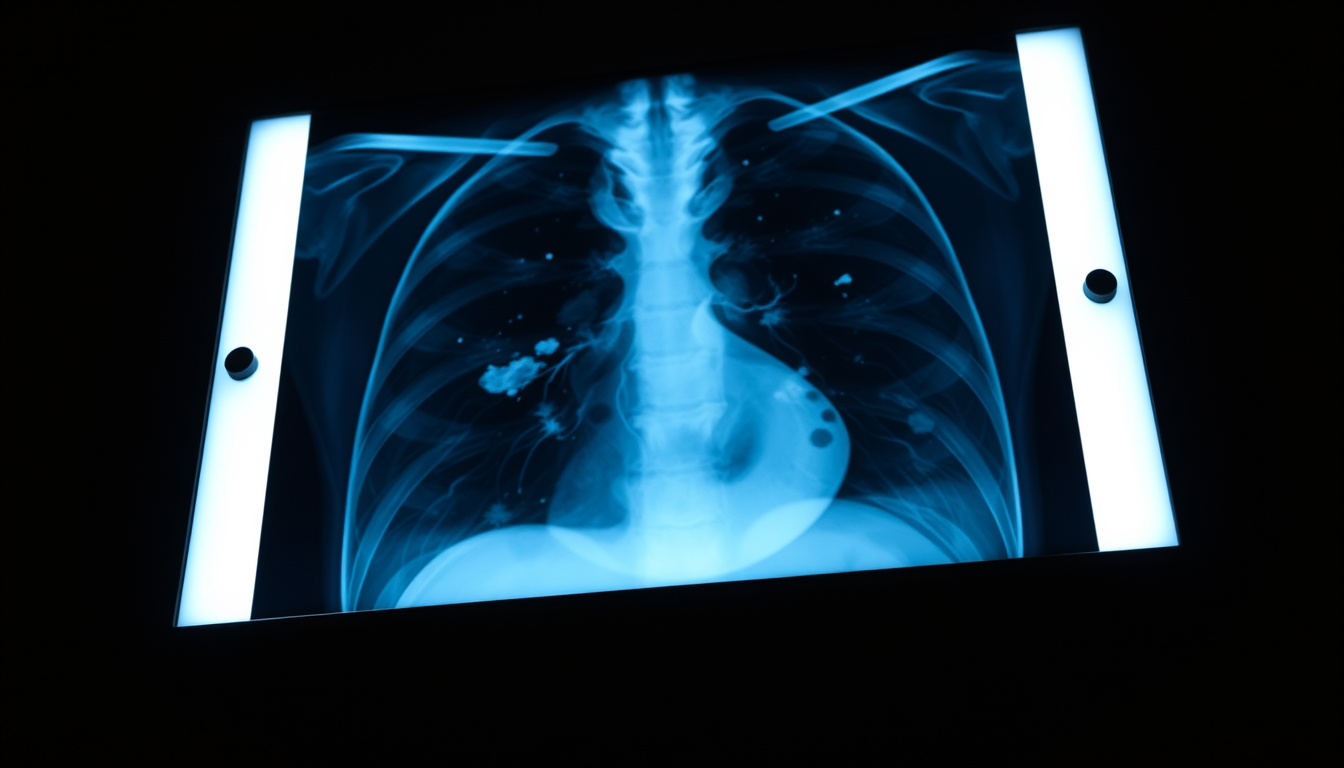
Your lungs rarely announce trouble clearly. By the time most people feel something is genuinely wrong, lung cancer has often grown undetected for months—sometimes years. This guide cuts through the confusion: the symptoms that send people to the doctor, the red flags that slip past the mirror, and what survivors say their bodies were already signaling.
Persistent cough: New cough that doesn’t go away (Mayo Clinic) ·
Chest pain: Ache or pain when breathing or coughing (HSE.ie) ·
Shortness of breath: Common early symptom (NHS.uk) ·
Unexplained weight loss: Losing weight for no reason (HSE.ie) ·
Coughing up blood: Even small amounts (Mayo Clinic)
Quick snapshot
- Cough affects 33.9% of patients at diagnosis (PMC Nationwide Registry)
- Finger clubbing occurs in 35% of NSCLC and 4% of SCLC cases (GatewayC)
- Stage IV accounts for 46.6% of diagnoses (PMC Nationwide Registry)
- Precise timeline for clubbing development varies between individuals
- Whether silent symptoms follow predictable regional patterns
- How body-fighting signs manifest before obvious tumor growth
- Average 570 days from first symptom to diagnosis (MyLungCancerTeam)
- Symptoms typically appear in advanced stages (3–4) (MyLungCancerTeam)
- Clubbing develops slowly—early stages show softening and redness (MyLungCancerTeam)
- Screening improves outcomes for silent lung cancer (Liv Hospital)
- 5-year survival rose from 17% to 27% since 2014 (Liv Hospital)
- Early detection via screening offers best prognosis (Liv Hospital)
These key facts establish the baseline for understanding how lung cancer typically manifests.
| Fact | Detail |
|---|---|
| Most common starting point | Lung airways (bronchi or alveoli) (Johns Hopkins Medicine) |
| Key referral rule | 2-week rule for suspected lung cancer (NICE CKS) |
| Survivor common sign | Chest pain and persistent cough (MD Anderson) |
| Silent cancer rate | 25% found incidentally (Liv Hospital) |
| Clubbing survival link | Asymptomatic diagnosis: 64% 3-year survival vs 30% for symptomatic (MyLungCancerTeam) |
| Localized NSCLC | 67% 5-year survival (Capital Health Cancer) |
What are the first common signs of lung cancer?
Lung cancer carries the label “silent killer” because it can develop without producing clear warning signals. Approximately 25% of cases are discovered incidentally during imaging for unrelated concerns (Liv Hospital).
Persistent cough
Cough is the single most frequent presenting symptom—found in 33.9% of patients at diagnosis (PMC Nationwide Registry). The distinction matters: this isn’t the cough you’ve had for years. A new cough that persists for several weeks, changes in character, or produces unexpected sounds warrants medical attention.
- A new cough that doesn’t go away (Mayo Clinic)
- Changes to a chronic cough, including hoarseness
Chest pain
Chest or shoulder pain often gets dismissed as muscle strain or poor posture, but when it coincides with breathing or coughing, it warrants attention as a potential lung cancer indicator.
- Ache or pain in chest or shoulder when breathing or coughing (HSE.ie)
- Difficulty breathing or feeling short of breath with minimal exertion
Shortness of breath
Dyspnoea—medical term for shortness of breath—ranks as the second most common symptom at 26.7% (PMC Nationwide Registry). This manifests as noticeable breathlessness during activities that previously caused no issue: climbing stairs, walking to the shops, or even standing for extended periods.
Early detection via screening improves outcomes for silent lung cancer cases (Liv Hospital). Screening catches tumors before symptoms develop—when treatment is most effective.
Stage I/II 5-year survival reaches 60–80%. By Stage IV, it drops below 10%. That gap makes early recognition critical—yet symptoms rarely appear until advanced stages (Liv Hospital).
Most people with Stage 1 lung cancer have no symptoms at all (Cancer Therapy Advisor). When symptoms do surface, they emerge in the later stages (3–4), giving the disease a substantial head start.
What is the finger test for lung cancer?
Finger clubbing is a physical change to the fingers and toes that serves as a red flag for lung and heart conditions. The changes occur gradually: early stages show softening of the nail bed and reddened skin near the nails, while advanced stages may involve extra bone formation along finger and wrist joints (Compass Oncology).
Finger clubbing explanation
Clubbing involves swelling of the fingertips, softening of the nail beds, development of shiny skin near the nails, curved or “ropered” nails, and visibly larger fingertip ends (Compass Oncology). The mechanism involves vascular endothelial growth factor (VEGF) triggering capillary changes, edema, and subsequent tissue modifications (Medical News Today).
Approximately 80% of people with finger clubbing have lung cancer, though these figures originate from patient community data (MyLungCancerTeam). Clubbing affects 35% of non-small cell lung cancer (NSCLC) cases compared to just 4% of small cell lung cancer (SCLC) cases (GatewayC).
Self-test description
The Schamroth window test provides a simple self-check: press the backs of your fingernails together. Normally, a small diamond-shaped window of light appears between the nail beds at the cuticles. If this window disappears—meaning the nail beds touch without any gap—clubbing may be present (Roy Castle Lung Cancer Foundation).
Clubbing is generally not an early symptom—it develops in later disease stages. Additionally, clubbing can occur due to heart conditions, liver disease, or familial factors unrelated to cancer (MyLungCancerTeam).
What are the silent symptoms of lung cancer?
“Silent symptoms” describes the subtle, easily dismissed signs that precede or accompany early-stage disease. Lung cancer symptoms often only appear in advanced stages (3–4) (MyLungCancerTeam), and the average time from first symptom to diagnosis runs 570 days—nearly 19 months of potentially unnoticed progression.
Hidden or subtle signs
Beyond the obvious respiratory symptoms, lung cancer can produce broader constitutional effects. These include unexplained weight loss, persistent fatigue that doesn’t resolve with rest, and a general sense of feeling unwell that patients struggle to articulate.
- Feeling very tired all the time (HSE.ie)
- Unexplained weight loss without changes to diet or activity
Unexplained fatigue
Cancer-related fatigue differs from ordinary tiredness. It persists despite adequate sleep, interferes with daily activities, and doesn’t improve with rest. This systemic exhaustion results from the body’s immune response to cancer cells and the energy demands of tumor growth.
Weight loss
Unexplained weight loss occurs when cancer cells alter metabolism, consuming energy while producing substances that suppress appetite. Losing more than 5% of body weight without trying warrants investigation (HSE.ie).
Can you have lung cancer without symptoms?
Yes—and this represents one of the most significant challenges in lung cancer outcomes. Approximately 25% of lung cancers are found incidentally during imaging for unrelated concerns (Liv Hospital). These silent cancers are discovered when patients undergo chest X-rays, CT scans, or other imaging for conditions like pneumonia or cardiac assessment.
Asymptomatic cases
The most common starting point is the bronchi—the main airways leading into the lungs. Tumors in these central locations may not affect surrounding tissue significantly enough to produce symptoms. Cancers in outer lung regions are even harder to detect early due to limited nerve endings and the lungs’ large reserve capacity.
Early stage detection
When symptoms do emerge, they’re often dismissed as routine: a dry cough blamed on allergies, mild breathlessness attributed to being unfit, or shoulder ache written off as sleeping position. This delay has consequences: nearly half of all lung cancers (46.6%) are diagnosed at Stage IV (PMC Nationwide Registry).
The survival difference is stark. Asymptomatic lung cancer diagnosed early shows 3-year survival of 64% compared to just 30% for symptomatic cases (MyLungCancerTeam). This gap makes screening programs particularly valuable for high-risk populations.
Stage 1 lung cancer often has no symptoms (Capital Health Cancer). The absence of symptoms doesn’t mean absence of disease—which is precisely why screening matters for those at risk.
What are early signs your body is fighting lung cancer?
Survivors frequently describe a pattern of subtle, nonspecific changes that preceded their diagnosis. These aren’t dramatic collapses—they’re quiet shifts that accumulate over weeks or months.
Survivor stories
Patient accounts consistently highlight persistent fatigue, unexplained weight loss, and a vague sense that something was “off” long before any respiratory symptoms appeared. Many describe their body sending signals they initially dismissed as aging, stress, or minor illness.
Overlooked indicators
The signs most commonly overlooked include persistent tiredness unrelated to exertion, gradual weight loss without dietary changes, and recurring shoulder or upper back discomfort. The chest pain and cough survivors describe retrospectively often seemed minor at the time—easily attributed to other causes (MD Anderson Cancer Center).
- Persistent fatigue that doesn’t improve with rest
- Unexplained weight loss
- Subtle shoulder or upper back discomfort
- Vague sense of not feeling “right”
For patients diagnosed at stage 1 or 2, 5-year survival ranges from 60–80%, but drops to 30–60% at stage 2 and continues declining to less than 10% at stage 4 (Liv Hospital). That gap is the argument for paying attention to what your body signals—even when those signals seem minor.
“Lung cancer is often called a ‘silent killer.’ It can grow without any symptoms, making it hard to find early.”
— Liv Hospital
“Finger clubbing is an easily forgotten red flag.”
— GatewayC
Related reading: Signs of Kidney Infection
Frequently asked questions
Where do most lung cancers start?
Most lung cancers originate in the bronchi—the main airways leading into the lungs. These bronchial tumors account for the majority of cases, with peripheral lung cancers (in the outer lung tissue) being harder to detect early.
What is the 2-week rule for lung cancer?
The 2-week rule is a rapid referral pathway ensuring patients with suspected lung cancer symptoms receive a specialist appointment within 14 days for urgent assessment and diagnostic testing.
What is the biggest indicator of lung cancer?
A persistent cough that doesn’t resolve is the most frequent warning sign. A nationwide registry study found cough present in 33.9% of patients at diagnosis, followed by shortness of breath at 26.7% (PMC Nationwide Registry).
What are symptoms of lung cancer in females?
Women experience the same core symptoms as men: persistent cough, chest pain, shortness of breath, unexplained weight loss, and fatigue. Research hasn’t identified significant gender differences in symptom presentation, though some studies suggest women may experience additional manifestations like hoarseness or skin changes.
What are lung cancer symptoms on skin?
Lung cancer doesn’t typically cause direct skin symptoms. However, paraneoplastic syndromes associated with lung cancer can produce dermatological changes, including finger clubbing (thickened, curved nails with swollen fingertips), thickened skin on palms and soles, and dark, velvety patches in body folds (acanthosis nigricans).
What are stage 1 lung cancer symptoms?
Stage 1 lung cancer often produces no symptoms at all. When symptoms do occur, they’re typically subtle and easily mistaken for other conditions. Most people with Stage 1 lung cancer have no symptoms (Cancer Therapy Advisor), which is why screening programs target high-risk individuals before symptoms develop.
What are the hidden signs of lung cancer?
Hidden or silent signs include unexplained weight loss, persistent fatigue unrelated to exertion, mild shortness of breath during everyday activities, subtle shoulder or upper back discomfort, and changes to fingernails such as clubbing. These symptoms are frequently attributed to other conditions, causing diagnostic delays.