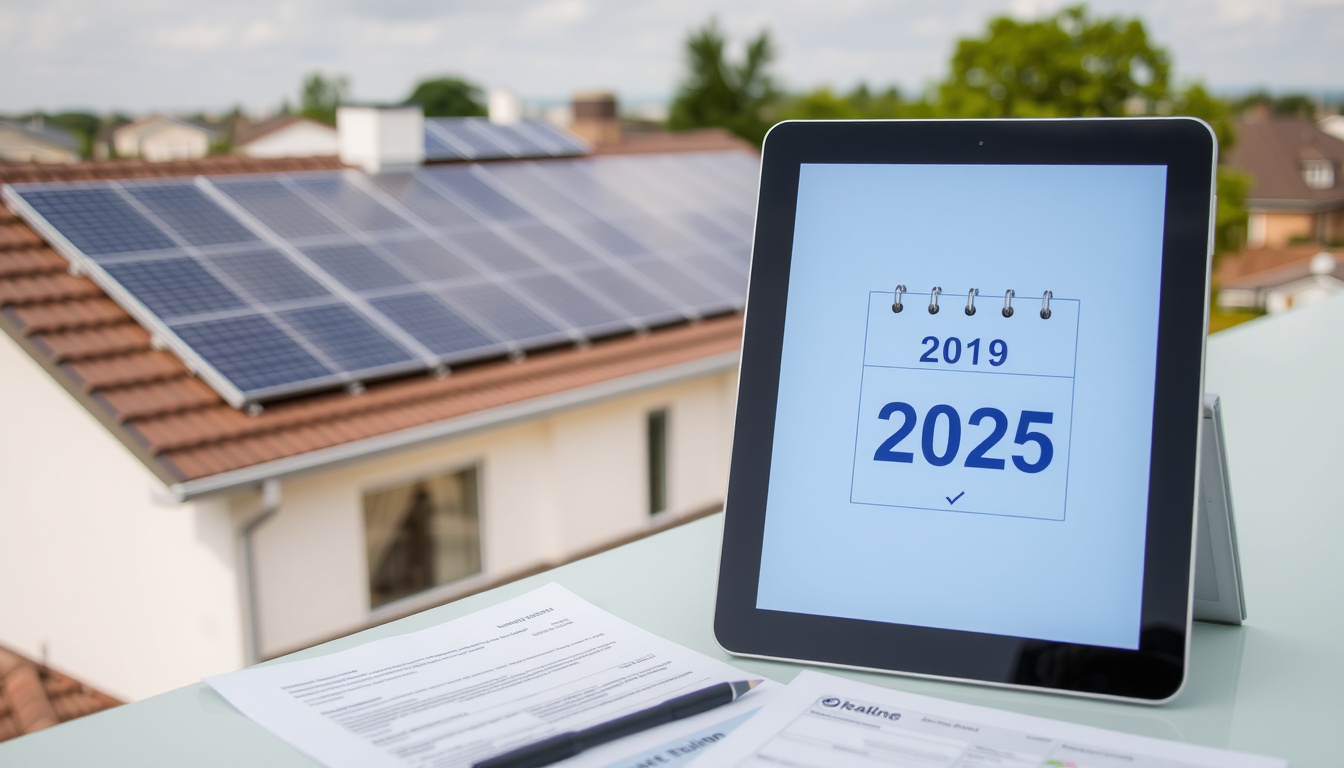
The 30% federal solar tax credit, set to expire December 31, 2025, can slash thousands off a typical $28,000 system, making this year the last chance for homeowners to capture the full benefit.
Average system cost: $28,000 ·
Cost per watt: $2.50 ·
Federal credit: 30% ·
Net cost after credit: ~$19,400 ·
Credit expires: Dec 31, 2025
Quick snapshot
- Federal Residential Clean Energy Credit = 30% of costs (Internal Revenue Service)
- Credit applies to installations from 2022 through Dec 31, 2025 (ENERGY STAR)
- Average system cost approx. $28,000 (EnergySage)
- Whether any state or utility incentives will change after the federal credit ends (SolarTechOnline)
- Exact per-watt pricing varies by region, installer, and equipment quality (SolarTechOnline)
- Credit ends Dec 31, 2025 — no extension past that date (Internal Revenue Service)
- Congressional action in July 2025 reportedly ended the credit early for customer-owned systems (EnergySage)
- After 2025, no federal credit for customer-owned residential solar (TurboTax Support)
- Homeowners who install in 2025 still qualify if system is operational by Dec 31 (TurboTax Support)
| Metric | Value | Source |
|---|---|---|
| Average system cost (before incentives) | $28,000 | EnergySage |
| Average cost per watt (installed) | $2.50 | EnergySage |
| Federal tax credit percentage | 30% | Internal Revenue Service |
| Net cost after 30% federal credit (avg system) | ~$19,400 | EnergySage |
| Typical system size | 6–10 kW | IntegrateSun |
| Cost range (most homeowners) | $15,000 – $35,000 | SolarTechOnline |
| 30% credit no dollar cap | Unlimited | Nexamp |
| Credit eligibility window | 2022–2025 | ENERGY STAR |
| Credit expires | December 31, 2025 | Internal Revenue Service |
How Much Do Solar Panels Cost in 2025?
Three numbers define the market right now: $28,000 (average system), $2.50 per watt (installed), and 30% (the federal credit that brings the net to roughly $19,400). Those figures come from EnergySage, a solar marketplace that tracks real installer quotes across the U.S.
- Average cost per watt ranges from $2.50 to $3.50, according to SolarTechOnline.
- IntegrateSun puts the average at $2.90 per watt for a 6 kW system costing about $17,400 before incentives.
- Total system cost varies by equipment brand, roof complexity, and local labor rates.
A typical U.S. homeowner faces a gross cost of $20,000–$30,000, but after the 30% credit the outlay drops into the $14,000–$21,000 range. Waiting another year eliminates that discount entirely.
How Does the Federal Solar Tax Credit Work?
The Residential Clean Energy Credit gives you a dollar-for-dollar reduction on your federal income tax — not a deduction, but a credit. The Internal Revenue Service (U.S. tax authority) confirms the credit equals 30% of the cost of new qualified solar equipment installed at your primary or secondary residence.
- No cap on the credit amount — claim 30% of whatever you spend.
- Applies to systems placed in service between Jan 1, 2022 and Dec 31, 2025.
- Equipment must be new (not used) and meet applicable safety standards.
One catch: the credit is nonrefundable. If your tax liability is less than the credit, you lose the unused portion. As TurboTax (tax preparation software) explains, you need enough tax owed to use the full 30%.
What Happens After December 31, 2025?
When the clock strikes midnight on New Year’s Eve 2025, the federal solar tax credit for customer-owned residential systems drops to 0%. The Internal Revenue Service (U.S. tax authority) states plainly: the credit is not available for property placed in service after that date.
- Congressional action in July 2025 reportedly accelerated the phaseout, ending the credit earlier than originally planned (EnergySage).
- TurboTax Support notes recent legislation terminated the credit effective December 31, 2025.
- SolarReviews warns that missing the deadline could add thousands to the cost of a home solar system.
“The solar investment tax credit has been the single most effective federal policy for driving residential solar adoption. Its expiration will fundamentally change the economics for homeowners.”
— Analysis from EnergySage (solar marketplace research)
What Factors Affect Solar Panel Installation Costs?
Not every solar quote is the same. Your final price depends on system size, panel efficiency, inverter type, roof condition, and local permitting fees. The pattern is clear: ignoring any one factor can lead to a surprise surcharge.
- System size: A 6 kW system runs about $17,400 before credits (IntegrateSun). Larger homes often need 8–10 kW.
- Panel efficiency: Premium panels (like monocrystalline) cost more but produce more per square foot.
- Roof complexity: Steep, multi-plane, or old roofs add labor and material costs.
- State and utility incentives: Some states offer additional rebates or net metering that reduce net cost.
Many installers quote a “cost per watt” that includes everything. A $2.50/W system on a simple south-facing roof could jump to $3.50/W if structural upgrades are needed. Get at least three itemized bids.
Is Solar Worth the Investment Now?
The short answer: for most homeowners with sufficient tax liability and a suitable roof, yes — especially with the 30% credit available. But the math only works if you plan to stay in the home long enough to recoup the upfront cost (typically 6–10 years).
- Net cost after federal credit: ~$19,400 average.
- Average annual electricity savings: $1,200–$1,800 depending on location and utility rates.
- Payback period: 8–12 years with current average utility rates.
“The 30% tax credit is essentially a one-time discount on the purchase price. Once it’s gone, the upfront cost will be roughly 43% higher for the same system.”
— EnergySage (solar marketplace research)
The implication: if you’ve been on the fence, 2025 is the last year to lock in the federal benefit. Waiting until 2026 means paying full freight.
Confirmed facts
- 30% federal credit available through Dec 31, 2025
- Average cost per watt: $2.50–$3.50
- No cap on credit amount
- Credit is nonrefundable
What’s unclear
- Exact state/local incentive changes post-2025
- Whether some installers will adjust pricing as deadline approaches
- Long-term impact of July 2025 legislation on system leasing vs. ownership
Frequently asked questions
Do I qualify for the 30% tax credit if I install solar in December 2025?
Yes — as long as the system is “placed in service” (operational) by December 31, 2025. The Internal Revenue Service confirms the credit applies to property installed anytime through that date.
What happens if I install solar in 2026?
The federal residential credit drops to 0% for customer-owned systems placed in service after December 31, 2025. No extension is expected based on current law.
Can I claim the credit if I lease solar panels?
Generally no. The credit is available only to the owner of the system. If you lease, the installer (or a third party) owns it and typically claims the credit themselves.
Is the 30% credit a tax deduction or a tax credit?
It’s a tax credit — a dollar-for-dollar reduction of your federal income tax liability. A deduction only reduces your taxable income. TurboTax (tax preparation software) explains this distinction.
How do I find the actual price per watt in my area?
Request quotes from multiple certified installers. Online marketplaces like EnergySage let you compare itemized bids side by side.
Does the tax credit cover battery storage?
Yes, if the battery is charged by solar panels and meets the requirements for qualified clean energy property. The 30% credit applies to battery costs as well.
What if my tax bill is less than 30% of the solar cost?
You only get back what you owe in taxes. Any unused credit does not carry forward. Run the numbers with a tax professional before signing a contract.
Related reading
- Best Apps for Budgeting 2026 — Tips for managing solar loan payments.
- Security Cameras for Your Home: 2025 Buying Guide — Another major home upgrade with similar cost considerations.