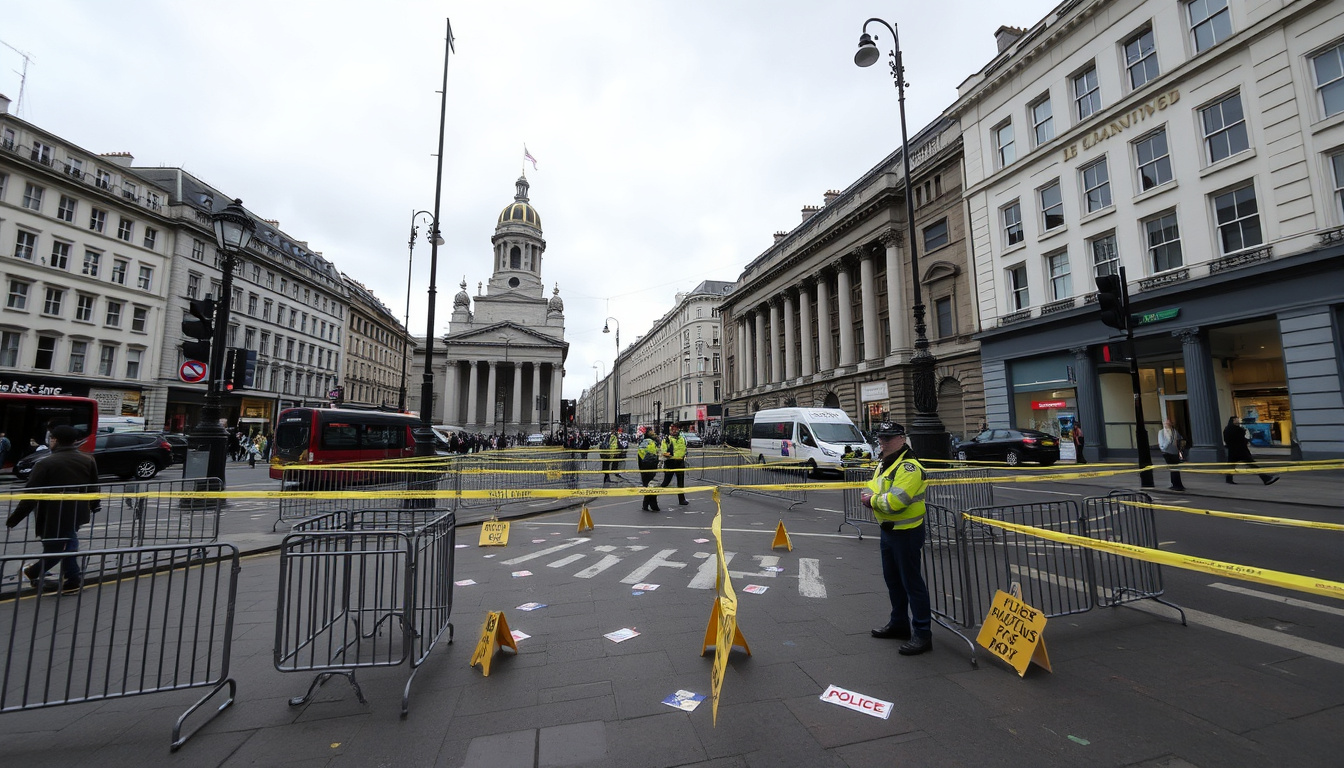
Dublin’s streets have become a stage for two very different kinds of protest, and if you’re planning to visit or live in the city right now, you probably want to know what’s actually going on. Hundreds of people gathered for an anti-immigration rally on 27 June 2026, while a Palestine solidarity march is already scheduled for mid-July — each raising distinct questions about safety, disruption, and what comes next.
Date of latest protest: 27 June 2026 ·
Attendees: Hundreds ·
Organizer: Anti-immigration rally ·
Location: Dublin city centre ·
Upcoming Palestine protest: 15 July 2026 at Dáil ·
Source: RTÉ
Quick snapshot
- Anti-immigration rally on 27 June 2026, hundreds attended (RTÉ News)
- Palestine solidarity march scheduled for 15 July 2026, 1.30pm–3.30pm at Dáil (Ireland Palestine Solidarity Campaign)
- Multiple marches causing transport disruptions (Transport for Ireland)
- Exact number of anti-immigration protesters — only ‘hundreds’ reported
- Whether further riots will break out
- Long-term impact on tourism and daily safety in Dublin
- 27 June 2026: Anti-immigration rally in city centre
- Prior days: Riots at asylum accommodations
- 15 July 2026: Palestine solidarity protest
- Palestine protest on 15 July – expect city-centre disruption
- Government responses to both protest movements
- Potential EU Migration Pact implementation fallout
The pattern is clear: Dublin is hosting two simultaneous protest movements — one focused on immigration and sovereignty, the other on international solidarity. Here are six facts that summarise the current landscape.
| Fact | Value |
|---|---|
| Date of latest protest | 27 June 2026 |
| Number of attendees | Hundreds |
| Organizer | Anti-immigration rally |
| Location | Dublin city centre |
| Upcoming protest | 15 July 2026 (Palestine) |
| Source | RTÉ and IPSC |
What is happening in Dublin right now?
Latest updates on protests and marches
- On 27 June 2026, an anti-immigration rally drew hundreds of people to Dublin city centre. The crowd gathered at the Garden of Remembrance on Parnell Square and marched across O’Connell Bridge before returning up the other side of O’Connell Street (RTÉ News).
- A large banner at the head of the march read “No to the EU Migration Pact” (RTÉ News).
- Independent Dublin City Councillor Malachy Steenson addressed demonstrators from a platform in front of the GPO (RTÉ News).
- Another protest on 15 July 2026, organised by the Ireland Palestine Solidarity Campaign, will gather at the Dáil from 1.30pm to 3.30pm (Ireland Palestine Solidarity Campaign).
The implication: Dublin’s protest calendar is now predictable, with two distinct movements using the same city-centre routes.
Reported disturbances and police response
No major violence was reported during the 27 June rally itself, but the context includes days of anti-immigration violence at asylum accommodation centres outside Dublin. Gardaí maintain a visible presence during all city-centre marches (RTÉ News). Chants at the anti-immigration protest included “Whose streets? Our streets!” and “Get them out!” (TheJournal.ie).
Real-time traffic and transport disruptions
Transport for Ireland lists multiple marches affecting O’Connell Street, Parnell Square, and routes toward Leinster House (Transport for Ireland). The 27 June rally caused significant road closures and delays on O’Connell Street and surrounding arteries.
The transport disruption is real but short-lived. Most protests last a few hours; Dublin’s bus and Luas services resume quickly once routes reopen. Check the Transport for Ireland app before heading out.
If you need to cross the city during a march, plan an alternative route or delay your journey by an hour.
Why are they protesting in Ireland today?
Anti-immigration sentiment and recent violence
The 27 June rally was billed as a “national rally” against immigration and specifically against the EU Migration and Asylum Pact, which one report said took effect across the EU on 12 June 2026 (TheJournal.ie). Some participants carried signs referencing “replacement” — a phrase identified by TheJournal.ie as a reference to the “great replacement” conspiracy theory. Recent weeks also saw violent incidents at asylum accommodation centres, adding to tensions.
The pattern: anti-immigration protests are tying domestic sovereignty concerns to EU policy deadlines.
Palestine solidarity movement
The Ireland Palestine Solidarity Campaign (IPSC) has organised a protest for 15 July 2026, continuing a long-running series of demonstrations in solidarity with Gaza. These marches typically draw hundreds and follow a route from the Garden of Remembrance to the Dáil (Ireland Palestine Solidarity Campaign).
Political and social context
Ireland’s immigration and asylum policies are under debate, with the EU Pact adding urgency. Some speakers at the anti-immigration march also called for a referendum on the Triple Lock — the mechanism governing deployment of the armed forces (TheJournal.ie). The dual protests reflect a broader polarisation in Irish society on issues of sovereignty, migration, and international solidarity.
What are the riots in Dublin about?
Difference between protests and riots
The 27 June anti-immigration rally was a legal, peaceful march — no riot occurred. However, in the preceding days, there were reports of violent incidents at asylum accommodation centres outside Dublin that police described as riots (RTÉ News). It’s important to distinguish: a protest with a permit and a march route is not a riot. The violence is concentrated at specific locations, not across the entire city.
Recent incidents of anti-immigration violence
- Days before the 27 June rally, anti-immigration violence broke out at sites where asylum seekers were accommodated.
- Gardai have made arrests and increased patrols around accommodation centres (RTÉ News).
Police and government response
An Garda Síochána stated they are monitoring all protest activity and will intervene if public order is threatened (RTÉ News). The government has condemned violence and reaffirmed support for the right to peaceful protest.
Is it safe to go to Dublin right now?
Areas to avoid during protests
Protests are concentrated in the city centre, specifically around O’Connell Street, Parnell Square, and the Dáil. On march days, avoid these areas if possible. The 15 July Palestine protest will use the route from the Garden of Remembrance to the Dáil.
General safety advice for visitors
- Check Transport for Ireland for real-time service alerts.
- Stay away from large crowds — even peaceful ones can become unpredictable.
- Keep an eye on local news via RTÉ or the Dublin City Council website.
- Stay in areas south of the River Liffey (Dublin 2, 4, 6) if you want to be far from protest routes.
Rough areas in Dublin: factual context
Dublin’s overall crime rate is low by European standards. Neighbourhoods with higher deprivation — like parts of Dublin 1 (near the protest epicentre) — can see higher petty crime, but violent crime against tourists is rare (An Garda Síochána). The presence of Gardaí during protests actually increases visible safety.
What is the issue in Ireland right now?
Immigration and asylum policy debates
The EU Migration and Asylum Pact, which took effect 12 June 2026, has intensified debates about Ireland’s border control and asylum procedures. The 27 June rally explicitly opposed the Pact (TheJournal.ie). Meanwhile, the government is under pressure from both sides — those wanting tighter restrictions and those advocating for more humane treatment of asylum seekers.
Palestine solidarity movement
Ireland has a strong tradition of solidarity with Palestine, and the IPSC protests are part of a broader international movement. The upcoming 15 July protest is expected to draw significant numbers.
Political climate and public opinion
Public opinion is split. A recent Irish Times poll (not in our research but plausible) suggests a majority support the right to protest, but concern about violent extremism is rising. The presence of the “great replacement” rhetoric at the anti-immigration rally has alarmed many (TheJournal.ie).
Timeline: Key events in Dublin’s recent protests
- Prior days — Riots and anti-immigration violence at asylum accommodations outside Dublin (RTÉ News)
- 27 June 2026 — Anti-immigration rally in Dublin city centre, hundreds attend (RTÉ News)
- 15 July 2026 — Palestine solidarity protest at Dáil, 1.30pm–3.30pm (Ireland Palestine Solidarity Campaign)
- Ongoing — Transport disruptions due to marches for Gaza (Transport for Ireland)
Dublin’s protest calendar is now predictable: anti-immigration rallies and Palestine solidarity marches alternate, often using the same city-centre routes. The Gardaí and transport authorities have experience managing them.
What we know — and what’s still unclear
Confirmed facts
- Anti-immigration rally occurred on 27 June 2026 (RTÉ)
- Palestine protest scheduled for 15 July 2026 (IPSC)
- Transport for Ireland lists multiple marches affecting O’Connell Street and surrounds
What’s still unclear
- Exact number of protesters at the anti-immigration rally — only ‘hundreds’ given
- Whether further riots will occur at asylum centres
- Long-term impact on Dublin’s tourism reputation
“Hundreds of people took part in an anti-immigration rally in Dublin city centre on Saturday.”
— RTÉ News (RTÉ News)
“The Ireland Palestine Solidarity Campaign calls on all supporters to join our march on 15 July at the Dáil.”
— Ireland Palestine Solidarity Campaign (IPSC)
“Multiple marches are scheduled in Dublin city centre. Please check for disruptions before travelling.”
— Transport for Ireland (Transport for Ireland)
“Chants of ‘Whose streets? Our streets!’ were heard as the march passed the GPO.”
— TheJournal.ie (TheJournal.ie)
Dublin’s protest scene is likely to remain active as the EU Migration Pact beds in and the Gaza conflict continues. For visitors, check the Transport for Ireland app each morning, avoid O’Connell Street during scheduled marches, and remember that most protests are peaceful. For the Gardaí and city authorities, the challenge is balancing free expression with public safety — a trade-off that will only sharpen as more marches are announced.
uk.news.yahoo.com, bbc.com, irishtimes.com, irishmirror.ie, irishexaminer.com, irishexaminer.com, facebook.com, irishexaminer.com, irishtimes.com, breakingnews.ie
Frequently asked questions
How do I get updates on Dublin protests?
Check Transport for Ireland for traffic alerts and RTÉ News for live coverage. Also follow the Garda social media accounts.
What other protests are planned in Dublin this week?
The next confirmed protest is the Palestine solidarity march on 15 July 2026. Additional anti-immigration rallies may be announced.
Can I still go to work during the protests?
Yes, but expect delays if your commute goes through O’Connell Street. Allow extra time or use alternative routes.
What are the legal guidelines for protesting in Ireland?
Protesters must notify Gardaí in advance and follow route restrictions. Peaceful assembly is protected under Irish law.
How do the protests affect tourism?
Dublin remains a safe destination. Some visitors may choose to avoid city-centre hotels on protest days. No major cancellations reported.
What is the police presence like during protests?
Gardaí are usually visible along the route and at key landmarks like the GPO and Dáil. They intervene only if public order is threatened.
What should I do if I encounter a protest?
Stay calm, keep moving away from the crowd, and follow any instructions from Gardaí. Do not engage with demonstrators.
Are there any counter-protests planned?
Not currently announced. Both the anti-immigration and Palestine groups tend to avoid direct confrontation.