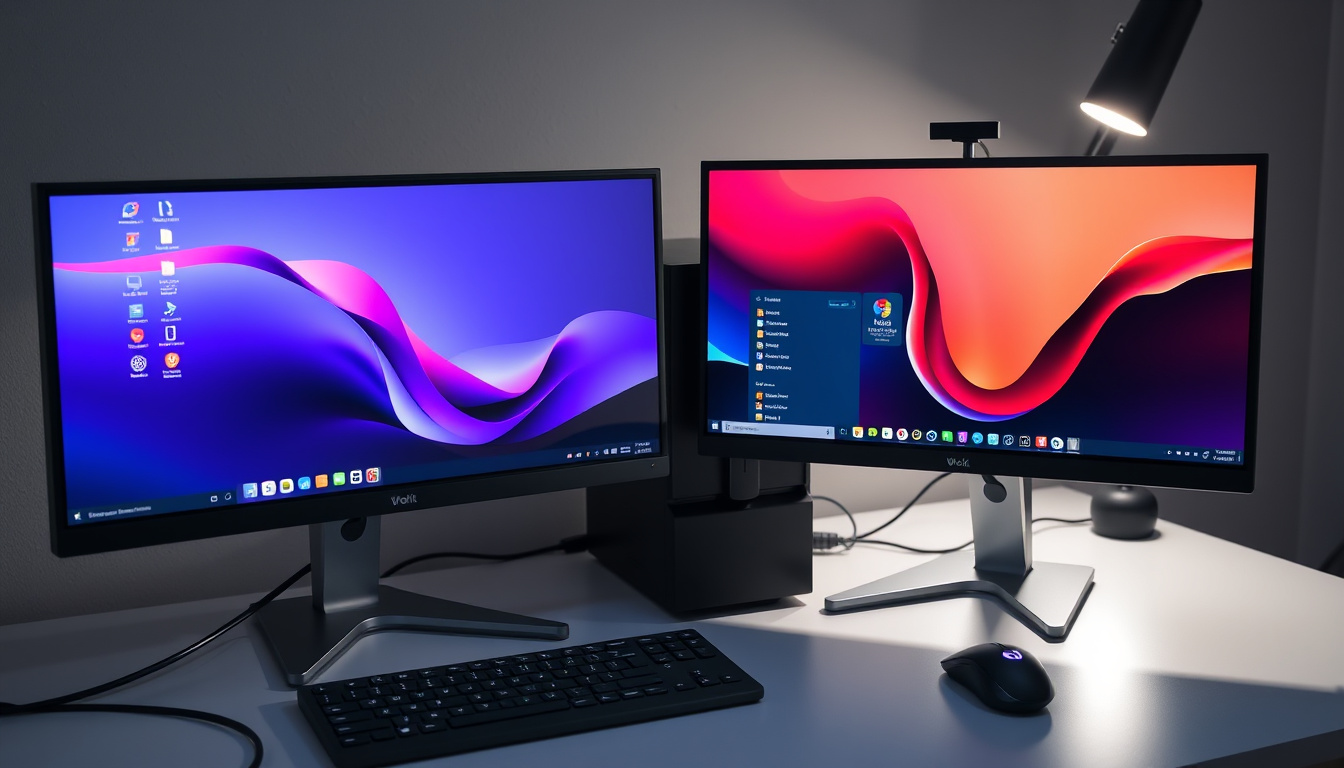
How to Connect Two Monitors: Complete Setup Guide
Expanding your workspace with a second display can transform how you work, allowing simultaneous access to multiple applications without constant window switching. Whether you use a desktop PC, a Windows laptop, or a MacBook, setting up dual monitors involves understanding your hardware ports, selecting the right cables, and configuring your operating system’s display settings. This guide walks through every step of the process, from gathering the necessary equipment to troubleshooting common issues that may arise during setup.
Modern computers support multiple displays through various connection types, with most desktops handling two or more monitors natively and laptops often requiring adapters or docking stations to achieve the same flexibility. The process remains broadly similar across platforms, though specific steps and menu paths differ between Windows and macOS. Understanding these distinctions helps ensure a smooth setup experience regardless of your chosen hardware combination.
Before diving into cables and settings, it helps to assess what connections your current equipment supports. Checking available ports on your computer and the input options on your monitors prevents unnecessary purchases and reveals whether you need adapters, a docking station, or simply the right cable to get started.
What Do You Need to Connect Two Monitors?
Gathering the correct equipment beforehand streamlines the entire setup process. Most dual monitor configurations require compatible video outputs on your computer, matching inputs on your displays, and appropriate cables or adapters to bridge the connection between them.
Quick Dual Monitor Setup Checklist
Check PC/laptop ports (HDMI/DP/USB-C)
Buy matching cables/adapters
Power on and connect
Configure display settings
Key Insights for Dual Monitor Success
- Most desktop PCs support two or more monitors natively through built-in graphics ports
- Laptops frequently require a USB-C docking station or adapter to drive dual displays
- Extending your desktop provides better productivity than duplicating the same content on both screens
- Matching refresh rates between monitors prevents flickering and visual inconsistencies
- Docking stations with multiple video outputs simplify cable management for laptop users
- Quality certified cables under the recommended length ensure stable signal transmission
- Test your setup incrementally, starting with one monitor before adding the second
Dual Monitor Facts at a Glance
| Platform | Common Ports | Max Monitors | Cable Notes |
|---|---|---|---|
| Windows PC | HDMI, DisplayPort, USB-C | 4+ (varies by GPU) | Standard cables, certified for quality |
| Mac | Thunderbolt, HDMI, USB-C | 2-6 (varies by model) | USB-C adapters often required |
| Laptop (general) | USB-C, HDMI (if available) | 1-2 typically | Dock recommended for two outputs |
| Docking Station | Multiple HDMI/DP/USB-C | 2+ | Look for 60W+ power delivery |
How to Physically Connect Two Monitors to Your PC or Laptop
The physical connection phase involves identifying which ports you have available, selecting appropriate cables, and making the actual connections between your computer and monitors. Taking time to understand these basics prevents common frustrations that many users encounter during initial setup attempts.
Understanding Your Connection Options
Three primary cable types dominate modern monitor connections, each with distinct characteristics suited to different use cases. HDMI remains the most common standard, supporting resolutions up to 4K at 60Hz on HDMI 2.0 ports commonly found on docking stations and modern displays. Using high-quality, certified cables under 6 feet helps avoid signal degradation or flickering that can plague longer or lower-quality runs.
DisplayPort offers advantages for users prioritizing higher refresh rates, making it ideal for gaming or video editing workflows. Many docking stations mix DisplayPort and HDMI outputs to accommodate various monitor configurations, providing flexibility when connecting different display types in a single setup.
USB-C connections require either DisplayPort Alt Mode or Thunderbolt compatibility to transmit video signals. Cable length becomes more critical with USB-C, with manufacturers recommending keeping runs under 2 meters to maintain signal integrity. Additionally, USB-C connections used for video output should provide at least 60W of power delivery to charge connected laptops while driving external displays.
When connecting monitors of different sizes, configure each display to its native resolution in your operating system’s display settings. This prevents blurriness and ensures text remains sharp on both screens. Some advanced docking stations include LCD displays that show real-time resolution and refresh rate information for each connected monitor.
Using a Docking Station for Dual Monitors
Docking stations simplify dual monitor setups considerably, especially for laptop users with limited port availability. The setup follows a consistent pattern regardless of whether you use Windows or Mac hardware.
- Connect your laptop to the docking station using the USB-C or Thunderbolt host cable
- Attach your monitors to the dock’s video outputs (HDMI, DisplayPort, or USB-C ports) using quality cables
- Power on the docking station, your monitors, and your laptop in sequence
- Select the correct input source on each monitor (such as HDMI-1 or DisplayPort) using the monitor’s menu controls
- Verify that both displays receive signals before proceeding to software configuration
Not every laptop port supports video output through a dock. Some USB-C ports only handle data or charging, so consulting your laptop’s documentation helps identify which connection will drive external displays reliably.
Wireless Options for Dual Monitor Setups
Wireless alternatives exist for users preferring to minimize cable clutter, though they come with notable limitations compared to wired connections. Windows users can leverage Miracast or Wireless Display Adapters to extend their desktop to a compatible secondary display, though performance depends on maintaining the same network connection and typically delivers lower resolution than wired alternatives. Mac users with Apple TV or compatible smart displays can utilize AirPlay for wireless screen extension, though lag and resolution constraints make these options better suited for casual use than professional workflows where visual fidelity matters.
How to Set Up Dual Monitors on Windows
Windows handles multiple displays through its Display Settings interface, offering granular control over how your screens work together. The configuration process remains largely consistent across Windows 10 and Windows 11, though menu locations and exact wording vary slightly between versions.
Configuring Display Settings in Windows
Once your monitors are physically connected and powered on, Windows should automatically detect the new displays. If your second monitor does not appear, right-click anywhere on your desktop and select Display settings from the context menu. Click the Detect button to prompt Windows to search for connected displays that may not have been recognized automatically.
Within the Display settings panel, you can rearrange the monitors by clicking and dragging their representations to match your physical desk arrangement. This alignment matters for cursor movement and window positioning between screens. Select each display to modify its individual settings, including resolution, orientation (landscape or portrait), and scale percentage for text readability.
The Multiple displays section near the bottom of the settings page controls how your desktop extends across both monitors. Choose “Extend these displays” to treat both monitors as part of a single continuous workspace, which represents the most common configuration for productivity-focused dual monitor setups. The “Duplicate these displays” option shows identical content on both screens, useful for presentations or when you need a mirror of your primary display.
Updating Graphics Drivers
Outdated graphics drivers frequently cause detection problems or performance issues with multiple monitors. Access Device Manager by searching for it in the Start menu, then expand the Display adapters section. Right-click your graphics card (whether NVIDIA, AMD, or Intel) and select Update driver to search for available updates. Keeping drivers current ensures proper support for newer resolutions and refresh rates while resolving known compatibility issues that may affect multi-monitor configurations.
How Many Monitors Can Windows Support?
The practical monitor limit depends primarily on your graphics hardware rather than Windows itself. Entry-level integrated graphics typically support two monitors, while dedicated graphics cards from NVIDIA and AMD can handle three, four, or more displays depending on the specific model. Professional workstation cards offer even greater multi-monitor capabilities for specialized use cases like financial trading floors or video production environments.
When planning a high-monitor-count setup, consider that each additional display requires bandwidth from your graphics system. Running multiple 4K monitors at high refresh rates demands substantial GPU resources and may require specific display configurations to achieve optimal performance.
How to Connect and Configure Two Monitors on Mac
Apple’s macOS provides a streamlined interface for managing external displays, with configuration options accessible through System Settings on modern macOS versions. MacBook users should note that some models have limitations on how many external displays they can support, particularly when relying on built-in ports without additional hardware.
Setting Up External Displays on macOS
Connect your monitors to available ports on your Mac or docking station, then power everything on. Open System Settings and navigate to Displays. Your connected monitors should appear in the display list immediately. Click the Arrange tab to position your screens relative to each other by clicking and dragging them to match your physical desk layout.
Enabling extended desktop mode involves ensuring the “Mirror” checkbox remains unchecked in the Arrange view. When mirroring is off, your Mac treats both displays as part of one continuous workspace, allowing you to drag windows freely between them. macOS automatically applies optimized settings for detected displays, though you can manually adjust resolution, brightness, and color profile through the same settings panel if needed.
MacBook Dual Monitor Limitations
Some MacBook models restrict external display counts due to hardware architecture constraints. Before purchasing additional monitors or adapters, verify your specific model’s capabilities on Apple’s specifications pages. Intel-based MacBooks generally support two external displays through Thunderbolt, though certain configurations may require the use of a docking station to achieve this.
Apple Silicon Macs (M1, M2, M3 chips) have varying support levels depending on the specific chip and generation. Some models can only drive one external display natively, making a compatible docking station essential for two-monitor configurations. Apple’s own Studio Display or Pro Display XDR may offer different capabilities than third-party alternatives, so checking specific compatibility lists remains important.
Using Docking Stations with Mac
Not all docking stations work seamlessly with Mac systems, particularly those designed primarily for Windows compatibility. Verify that any dock you consider explicitly supports macOS and your specific Mac model. Some docks require firmware updates to function correctly with Apple hardware, which the manufacturer typically provides through dedicated utility applications.
After macOS updates, you may need to reconnect USB-C hubs or adapters that previously worked without issues. Testing direct HDMI or USB-C to HDMI connections can help determine whether problems stem from the dock itself or software configuration following a system update.
Troubleshooting Common Dual Monitor Issues
Even with proper planning, issues may arise during dual monitor setup or after extended use. A systematic approach to troubleshooting helps isolate problems efficiently, whether they originate from physical connections, software configuration, or hardware limitations.
Physical connection problems cause the majority of dual monitor failures. Always check cable connections at both ends before exploring software solutions. Verify that power indicators show active status on your docking station and monitors before diving into driver updates or system settings.
Second Monitor Not Detected
| Issue | Solution Steps | Platform |
|---|---|---|
| No detection (cables loose or damaged) | Unplug and reconnect HDMI/DisplayPort/USB-C at both ends; swap cables to test; check dock power lights | Windows and Mac |
| Wrong monitor input selected | Cycle through input sources using the monitor’s on-screen menu | All platforms |
| Drivers or firmware outdated | Update graphics drivers via Device Manager (Windows) or install macOS updates; update dock firmware | Windows primarily |
| Power delivery insufficient | Verify dock provides 60W+ power delivery; restart by shutting down, unplugging everything, waiting 30 seconds | Windows and Mac |
| One monitor works, other does not | Swap monitors and cables to isolate whether the issue is the monitor, cable, or port | Docking station setups |
| Flickering or intermittent signal | Replace long or low-quality cables; check dock status indicators for abnormal blinking patterns | All wired connections |
| USB-C video not detected on Windows 11 | Update USB and video drivers; Windows 11 may have different detection behavior than Windows 10 | Windows 11 |
Resolving Different Sized Monitor Configurations
Combining monitors of different sizes works well when properly configured. Set each display to its native resolution to maintain image clarity and prevent the blurriness that occurs when displays scale content non-optimally. Use your operating system’s display arrangement settings to position the monitors relative to each other in a way that matches their physical placement on your desk, regardless of their actual screen dimensions.
Differences in pixel density between monitors of different sizes may result in text appearing slightly different between displays. macOS handles this more automatically than Windows, but adjusting the scale percentage on each monitor can help create a more consistent visual experience across your dual monitor setup.
If you have followed all troubleshooting steps and one monitor still fails to display properly, the port on your docking station or computer may be faulty. Contact the manufacturer for warranty service or repair options rather than attempting hardware modifications yourself.
What Can You Expect from Your Dual Monitor Setup?
Understanding which aspects of dual monitor setup remain straightforward versus those that may present challenges helps set realistic expectations before investing in equipment or spending time on configuration.
| Common Scenarios | Expected Outcome |
|---|---|
| Modern desktop with multiple ports | Typically plug-and-play; minimal configuration needed beyond display settings |
| Laptop with docking station | Reliable when using a compatible, quality dock with sufficient power delivery |
| Older laptop with limited ports | May require specific adapters; success varies by model and available ports |
| Wireless display extension | Functional but with reduced resolution and potential lag; best for casual use |
| Mixing different sized monitors | Fully supported; requires resolution configuration for each display |
| Multiple 4K monitors at high refresh | Demands capable GPU and quality cables; may require specific port configurations |
Why Use Two Monitors? Context and Benefits
Dual monitor configurations offer substantial productivity improvements for knowledge workers, developers, designers, and anyone who regularly works with multiple applications simultaneously. Research indicates that workers using dual monitors complete tasks more efficiently than single-screen users, with one commonly cited study suggesting productivity gains exceeding 40 percent in certain workflows.
The practical benefits extend beyond raw efficiency metrics. Having a secondary display allows you to keep reference materials visible while writing, monitor email or communication tools without interrupting your primary task, or keep development tools open alongside documentation. Video editors can preview footage on one screen while editing on another, and designers can view their work at actual size on one display while maintaining a cluttered toolbox on the other.
For laptop users especially, connecting an external monitor transforms a portable machine into a full desktop replacement when working from a fixed location. The ability to add screen real estate as needed, then disconnect and return to portability, provides flexibility that single-monitor setups cannot match.
Expert Sources
“Windows supports multiple displays through Display Settings, allowing users to extend their desktop across connected monitors using various video outputs including HDMI, DisplayPort, and USB-C.”
— Microsoft Support Documentation
“Mac computers running modern versions of macOS allow users to arrange and configure external displays through System Settings, with options to extend the desktop or mirror displays as needed.”
— Apple Support Resources
Optimize Your Dual Monitor Experience
With your dual monitors connected and working, taking time to refine the configuration pays dividends in daily usability. Calibrate color profiles if color accuracy matters for your work, adjust the taskbar settings to span both displays or appear only on your primary monitor, and consider the physical positioning that reduces neck strain throughout your workday. Those interested in further productivity improvements might explore other workflow optimization topics or investigate advanced configurations like ultrawide monitors as alternatives to traditional dual display setups.
Frequently Asked Questions
Can I use two different sized monitors for a dual monitor setup?
Yes, combining monitors of different sizes works well. Configure each display to its native resolution in your operating system’s display settings to maintain image clarity. You may need to adjust scaling individually for comfortable text readability on both screens.
Is wireless dual monitor setup possible?
Wireless options exist but come with limitations. Windows supports Miracast for wireless display extension, while Mac users can leverage AirPlay. These alternatives typically deliver lower resolution and may introduce lag compared to wired connections, making them better suited for casual use than professional workflows.
Do I need a docking station to connect two monitors to a laptop?
Many laptops only have a single video output port, making docking stations the most practical solution for dual monitor configurations. Some premium laptops include dual video outputs natively, but for most models, a quality USB-C or Thunderbolt dock provides the additional video ports needed for two external displays.
How do I extend my desktop to two monitors instead of duplicating the display?
On Windows, right-click the desktop, select Display settings, and choose “Extend these displays” in the Multiple displays section. On Mac, open System Settings, go to Displays, select Arrange, and ensure the Mirror checkbox is unchecked. Both methods treat your monitors as one continuous workspace.
Why is my second monitor not detected even though it’s connected?
First, verify physical connections are secure at both ends and that the monitor displays a “no signal” message. Try swapping cables or testing with a known-working monitor. Update your graphics drivers through Device Manager (Windows) or install macOS updates (Mac). If problems persist, the port may be faulty and require manufacturer support.
What cables do I need for a dual monitor setup?
The required cables depend on your available ports. HDMI cables work well for 4K at 60Hz on HDMI 2.0. DisplayPort suits higher refresh rates. USB-C requires DisplayPort Alt Mode or Thunderbolt support. Always use quality, certified cables and keep runs short—under 6 feet for HDMI and under 2 meters for USB-C—to prevent signal degradation.
How many monitors can Windows support?
The practical limit depends on your graphics hardware rather than Windows itself. Entry-level integrated graphics typically handle two monitors, while dedicated graphics cards support three, four, or more displays depending on the model. Check your specific GPU specifications for exact capabilities.