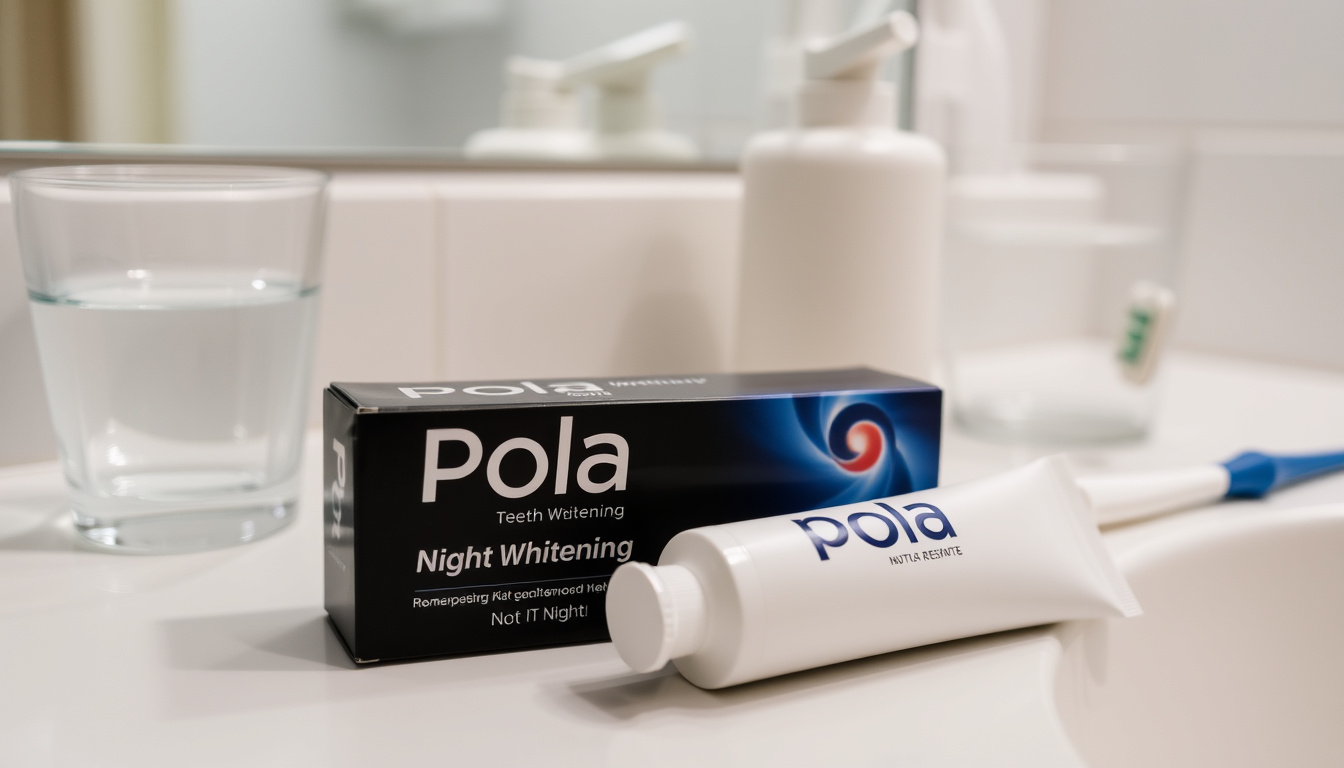
Let’s be honest: professional-grade teeth whitening sounds expensive or complicated. Pola Night from SDI (Southern Dental Industries) flips that — it’s a take-home gel that patients can apply while they sleep, built around a neutral pH and added fluoride to keep sensitivity in check, with wear times, side effects, and real-world results anchored in official instructions and dental-supply data.
Active ingredient concentration: 16% or 22% carbamide peroxide ·
Typical application time per session: 45–60 minutes ·
Recommended maximum usage duration: 14 nights ·
pH level of gel: Neutral pH (approximately 7.0) ·
Fluoride content: Contains fluoride (remineralizes enamel)
Quick snapshot
- Formulated with carbamide peroxide as active ingredient (The House of Mouth (dental retailer))
- Neutral pH reduces enamel damage (SDI Instructions (manufacturer))
- Contains fluoride to help re-mineralize teeth (TDSC (dental supplier))
- Optimal wear time varies by source — official instructions suggest 45 min to overnight per concentration, while retail guidance sometimes says 15 min minimum (Kent Express (clinical overview))
- Retail listings sometimes recommend wear times as low as 15 minutes, conflicting with manufacturer guidance (TDSC product page)
- Long-term sensitivity data beyond a 14-day course isn’t published (SDI Research Abstracts)
- Visible results after 3–7 days; peak whitening at Day 10–14 (The House of Mouth (review article))
- Side effects (sensitivity, gum irritation) usually subside within 2–7 days after stopping (SDI Research Abstracts)
- Results hold 6 months–2 years with good hygiene; touch-ups every 6–12 months maintain brightness (Kent Express (clinical overview))
- Avoid dark foods/drinks for 48 hours post-treatment to prevent staining (SDI Instructions)
Eight specs, one pattern: Pola Night dials down sensitivity via three design choices — neutral pH, high viscosity, and added fluoride — that distinguish it from many over-the-counter strips.
| Specification | Detail |
|---|---|
| Brand | SDI (Southern Dental Industries) |
| Concentration options | 16% and 22% carbamide peroxide |
| Presentation | 3ml x 4 syringes per kit |
| pH | Neutral (approx. 7.0) |
| Fluoride | Yes (re-mineralizes) |
| Typical wear time | 45–60 minutes per session |
| Maximum wear | Up to 8 hours (overnight) |
| Course length | Up to 14 consecutive nights |
How long does it take to whiten teeth with PolaNight?
Typical treatment timeline
- Most users report visible lightening after 3–7 consecutive daily applications, according to a review by dental retailer The House of Mouth (dental retailer).
- The full whitening effect — up to 8 shades brighter — typically appears after 10–14 applications, based on the same source.
- Official SDI Instructions (manufacturer) advise a maximum course of 14 consecutive nights, after which users should pause.
For a busy patient wanting visible change within a week, Pola Night delivers — but the full 14-night course is where the real shift happens. Expecting overnight results? You’ll need patience.
Factors affecting speed of results
- Concentration choice: 16% and 18% gels are worn 90 minutes to overnight; 22% is worn 45 minutes per day, per SDI Instructions (manufacturer).
- Existing stain type: Extrinsic stains (coffee, tea, tobacco) respond faster than intrinsic yellowing, though the gel addresses both.
- Consistency: Skipping nights delays results; daily application is critical, as noted in the Kent Express (clinical overview) clinical overview.
The pattern: Higher concentrations cut wear time but don’t necessarily speed up the visible timeline — the chemistry still needs successive applications to break down stain molecules.
Is Pola Night teeth whitening good?
Pros of PolaNight gel
- Sensitivity-friendly formulation: The neutral pH (around 7.0) and added fluoride help re-mineralize enamel during whitening, reducing the sting commonly associated with peroxide gels, per SDI Instructions (manufacturer).
- High viscosity: The thick gel stays in custom trays without oozing onto gums, limiting soft-tissue irritation. This is emphasized in Kent Express (clinical overview)’s clinical overview.
- Convenience: Overnight wear suits users who prefer to whiten while sleeping; the 10% and 16% concentrations are designed for 2-hour to overnight use, per official SDI Instructions (manufacturer).
Cons and considerations
- Temporary side effects: Tooth sensitivity and gum irritation occur in a subset of users, though SDI Research Abstracts confirm these are transient and typically resolve within 2–7 days.
- Variable retail guidance: Some listings suggest wear times as short as 15 minutes (TDSC product page), conflicting with official SDI ranges — users should follow their dentist’s specific instructions.
- Not for everyone: Pola Night is intended for patients with healthy gums and teeth; those with gum disease, receding gums, or cracked enamel should consult a dentist first.
Patients who value comfort over speed will find Pola Night’s design a clear win. Those chasing max whitening in the shortest daily window should push for the 22% concentration at 45 minutes per session.
Comparison to other at-home kits
Two features, one standout: Most drugstore strips are low-viscosity, acidic (pH 4–5), and fluoride-free. Pola Night’s neutral pH and fluoride content create a fundamentally gentler chemistry.
- vs PolaDay: PolaDay is worn for 30–60 minutes daily (no overnight option) and targets daytime convenience. Pola Night suits night owls and sensitive teeth, per the Kent Express (clinical overview) comparison.
- vs OTC strips: Strip gels often pool on gums and cause uneven whitening. Pola Night’s high viscosity in custom trays delivers predictable coverage.
- vs in-office laser: In-office treatments yield results in one visit (3–4 shades) but cost 5–10× more. Pola Night’s at-home approach requires discipline but saves money.
The catch: Peroxide percentage alone doesn’t define quality — gel chemistry (pH, viscosity, fluoride) matters equally. Pola Night’s formulation gives it an edge in comfort over cheaper alternatives.
How long should you leave PolaNight on for?
Recommended wear time per session
Three concentrations, three different instructions, one official source.
| Concentration | Official SDI wear time |
|---|---|
| 10% carbamide peroxide | 2 hours to overnight |
| 16% / 18% carbamide peroxide | 90 minutes to overnight |
| 22% carbamide peroxide | 45 minutes per day |
These are directly from the SDI Instructions (manufacturer) PDF, the manufacturer’s official guidance. Retail listings occasionally suggest shorter times: TDSC product page notes the gel can work in as little as 15 minutes, but this is not endorsed in the official leaflet.
Can you sleep with PolaNight?
- Yes, for lower concentrations. The 10% and 16%/18% formulations allow overnight wear (up to 8 hours) per SDI Instructions (manufacturer).
- No for 22%. The highest concentration is capped at 45 minutes to limit sensitivity risk.
- Risk of over-wear: Leaving any concentration on longer than recommended may increase tooth sensitivity and gum irritation. SDI Research Abstracts confirm that extended exposure can heighten transient side effects.
If your dentist prescribes 22%, overnight is not an option — stick to 45 minutes. For 10% or 16%, sleeping with the trays is safe, but skip a night if sensitivity flares.
Why this matters: The variety in wear-time guidance across dental supplier sites (Kent Express (clinical overview) and TDSC product page) versus SDI’s official leaflet creates real confusion for patients. Always default to the concentration-specific instructions printed on your syringe or provided by your dentist.
What are the side effects of PolaNight?
Common side effects
- Tooth sensitivity: The most frequently reported side effect, described by SDI Research Abstracts as “transient” and typically subsiding within 2–7 days after treatment ends.
- Gingival (gum) irritation: Mild gum irritation may occur if the gel leaks from trays, though the high-viscosity formulation is designed to minimize this.
- Gastric irritation and sore throat: Less common but noted in SDI Research Abstracts if gel is accidentally swallowed in larger amounts.
How to manage tooth sensitivity
- Switch to lower concentration: Using 10% or 16% instead of 22% reduces peroxide exposure per session.
- Shorten wear time: Reduce sessions to the minimum recommended duration (e.g., 45 min for 22%).
- Use sensitivity toothpaste: Products containing potassium nitrate (e.g., Sensodyne) for 2 weeks before and during treatment can help, as recommended in the Kent Express (clinical overview) overview.
- Take breaks: Skip a night of application if discomfort persists; side effects subside quickly once treatment pauses.
Gum irritation prevention
- Custom-fitted trays only: Pola Night is designed for dentist-provided custom trays, not boil-and-bite options, to minimize spillover.
- Trim excess gel: Use only a pea-sized drop per tooth. Overfilling trays pushes gel onto gums.
- Position trays carefully: Ensure trays seat fully without riding up on gum tissue.
The implication: The very feature that makes Pola Night appealing — peroxide — is also the source of its main side effects. The good news is SDI’s research base consistently calls these effects temporary, with recovery averaging under a week.
How long do PolaNight whitening results last?
Factors that affect longevity
- Dietary habits: Coffee, tea, red wine, and dark berries stain enamel faster. The SDI Instructions (manufacturer) advise avoiding heavy staining foods for 48 hours after each session.
- Oral hygiene: Brushing twice daily and flossing removes surface plaque that attracts stains. Results hold longer for patients with consistent home care.
- Smoking: Tobacco use can reverse whitening within weeks.
Best practices to extend results
- 48-hour rule: Avoid dark foods and beverages for 48 hours after the final session, per SDI Instructions (manufacturer) guidance.
- Maintain with touch-ups: A single touch-up session every 6–12 months maintains brightness, as noted in the Kent Express (clinical overview) clinical overview.
- Regular dental visits: Professional cleanings remove calculus that can dull enamel’s appearance.
The trade-off: Pola Night’s results aren’t permanent — few whitening treatments are. But with touch-ups every 6–12 months, the cost-per-bright-smile works out to a fraction of repeated in-office visits.
Timeline of a typical Pola Night course
- Day 1–3: First visible lightening of enamel
- Day 7: Noticeable whitening; sensitivity may peak
- Day 10–14: Maximum whitening achieved; sensitivity subsides
- 6 months – 2 years: Results maintained with good hygiene and touch-ups
Source: The House of Mouth (review article) and SDI Research Abstracts.
How to apply PolaNight correctly
- Apply a pea-sized drop of gel to each tooth compartment in the custom tray.
- Seat the tray firmly over your teeth, ensuring it fits snugly.
- Wipe off any excess gel that squeezes out onto your gums.
- Wear the tray for the prescribed time (see wear-time table above).
- Remove the tray, rinse it with water, and brush away any remaining gel from your teeth.
- Do not rinse or eat immediately afterward.
Upsides
- Neutral pH and fluoride content protect enamel during whitening
- High viscosity keeps gel in trays and off gums
- Overnight wear available for lower concentrations — convenient for sleep schedules
- Visible results in 3–7 days with full effect by Day 14
- Results last up to 2 years with proper maintenance
Downsides
- Temporary tooth sensitivity and gum irritation are possible
- Requires custom trays from a dentist — not a drugstore impulse buy
- Variable retail guidance on wear times can confuse users
- 22% concentration requires strict 45-minute adherence — no overnight flexibility
- Results require ongoing maintenance to last beyond 6 months
“Pola Night has a neutral pH and a high viscosity, making it ideal for patients with sensitive teeth who prefer to whiten while sleeping.”
Kent Express Blog (dental supplier clinical overview)
“Side effects from Pola Night are usually transient and commonly include tooth sensitivity and gingival irritation. Most side effects subside before treatment is completed and typically take 2 to 7 days to subside on average.”
SDI Research Abstracts (manufacturer clinical data)
“Pola Night can produce up to 8 shades whiter in about 7 to 10 days of continued use.”
The House of Mouth (dental retailer review article)
“For 10% Pola Night, the recommended wear time is 2 hours per day to overnight use. For 16% and 18%, it’s 90 minutes to overnight. For 22%, it’s 45 minutes per day.”
SDI Instructions PDF (manufacturer official leaflet)
Pola Night’s real value isn’t just whitening — it’s a sensitivity-targeted chemistry paired with the flexibility to fit into different lifestyles. For a patient with sensitive teeth who doesn’t want to visit the clinic weekly, the choice is clear: stick to 10% or 16% overnight wear, follow the 48-hour diet rule, and schedule a touch-up every 6 months. For anyone expecting a single tube to fix years of stains without any sensation, the alternative is disappointment.
just4teeth.com, sdi.com.au, dentalab.fi, sdidental.co.uk, youtube.com, dentaltix.com, prodent-dentalbedarf.de
For those considering alternatives to professional treatments, the whitening strips guide offers a helpful comparison of popular options.
Frequently asked questions
Can I use PolaNight if I have sensitive teeth?
Yes — Pola Night is specifically formulated for sensitive teeth. Its neutral pH and added fluoride help re-mineralize enamel during treatment. Using a lower concentration (10% or 16%) is recommended, and wearing it for shorter periods if sensitivity arises. Always consult your dentist first if you have extreme sensitivity.
How often should I repeat a PolaNight whitening course?
Most users repeat a full course (10–14 nights) once every 6–12 months. Single touch-up sessions (1–2 nights) can be used to maintain brightness between full courses. Avoid back-to-back courses without a break.
Can I eat or drink while wearing PolaNight trays?
No. Remove the trays before eating or drinking anything except water. Food and beverages can dilute the gel, reduce effectiveness, and cause staining of the whitening material in the tray.
Is PolaNight safe for crowns or veneers?
Pola Night will not whiten crowns, veneers, or other dental restorations — it only works on natural tooth enamel. The gel can still be used safely, but restorations will not change color, which may create a visible color mismatch.
Do I need to use a custom tray with PolaNight gel?
Yes. Pola Night is designed for dentist-provided custom-fitted trays. Using “boil-and-bite” trays or stock trays significantly increases the risk of gum irritation and uneven whitening. The high-viscosity gel requires a snug fit to work properly.
Can I use PolaNight alongside other whitening products?
No. Do not combine Pola Night with other whitening toothpastes, strips, or rinses. Overlapping peroxide-based products increases the risk of sensitivity, gum irritation, and enamel damage. Stick to one treatment protocol at a time.
What happens if I leave whitening gel on too long?
Leaving the gel beyond the recommended time increases the likelihood of temporary tooth sensitivity, gum irritation, and in rare cases, chemical burns on soft tissue. Remove trays immediately if you feel stinging or burning, and rinse with water.
How do I apply PolaNight correctly?
Apply a pea-sized drop to each tooth compartment in the tray. Seat the tray firmly, and wipe off any excess gel that squeezes out onto gums. Wear for the prescribed time, then remove, rinse the tray with water, and brush away any remaining gel from teeth. Do not rinse or eat immediately afterward.